
Pierre Chamard retweeted

𝗟𝗹𝗼𝘆𝗱 𝗖𝗼𝗹𝗲 et ses 𝗖𝗼𝗺𝗺𝗼𝘁𝗶𝗼𝗻𝘀 mettent le feu aux années 80 avec leur 1er album Rattlesnakes et ce 𝗙𝗼𝗿𝗲𝘀𝘁 𝗙𝗶𝗿𝗲 incandescent.
Si vous n’avez pas de souvenirs sur ce morceau, vous n’êtes pas de ma génération.
Si vous n’avez pas de souvenirs sur ce morceau, vous n’êtes pas de ma génération.
31
56
362
12,450
Pierre Chamard retweeted

🔴 Il y a quatre jours, Bruxelles s'inquiétait du poids d'EDF sur le marché si elle construisait seule les six EPR2. On sait maintenant ce que la Commission réclame en échange de son feu vert.
Selon La Lettre, Bruxelles conditionne l'approbation du financement public des six réacteurs à des concessions sur l'organisation du marché électrique français. Deux demandes sont au cœur des négociations : davantage d'interconnexions entre la France et ses voisins, et des garanties permettant à des acteurs tiers d'accéder à une partie de la production des futurs réacteurs. EDF et l'État défendent une position commune et veulent conclure avant la fin de l'année.
Le second point est décisif. La question n'est plus seulement de savoir si la France peut construire de nouveaux réacteurs, mais qui vendra l'électricité qu'ils produiront, et à quelles conditions.
La France connaît déjà ce scénario. De 2011 à 2025, l'ARENH a obligé EDF à céder jusqu'à 100 TWh de sa production nucléaire par an à ses concurrents, à 42 €/MWh, un prix resté figé pendant plus de dix ans.
Comparons maintenant les calendriers.
Juillet 2026 : l'Allemagne vote une loi pour financer 12 GW de nouvelles centrales, surtout au gaz. 2 septembre : Bruxelles approuve jusqu'à 35 milliards d'euros d'aides.
Novembre 2025 : la France notifie le financement de six EPR2. Mars 2026 : la Commission ouvre une enquête approfondie. Octobre 2026 : toujours aucune décision, mais une liste de conditions.
Moins de deux mois pour des centrales au gaz. Onze mois, et ce n'est pas fini, pour des réacteurs nucléaires.
En mars, Ursula von der Leyen reconnaissait pourtant que l'Europe avait commis une « erreur stratégique » en tournant le dos au nucléaire.
EDF doit prendre sa décision finale d'investissement fin 2026. L'enquête européenne se trouve sur le chemin critique du projet.
🔴 SIX RÉACTEURS, EDF AUX COMMANDES, ET BRUXELLES S'INQUIÈTE DE SA PUISSANCE SUR LE MARCHÉ.
La France a confié à EDF la construction et l'exploitation de six EPR2. Coût estimé : 72,8 milliards d'euros, aux prix de 2020, avec un prêt bonifié de l'État couvrant 60 % des coûts de construction et un mécanisme de soutien des prix sur 40 ans.
Depuis le 31 mars, la Commission européenne mène une enquête approfondie. Elle reconnaît elle-même que le projet est nécessaire.
Ce qui l'inquiète, entre autres, c'est le risque de renforcer la position d'EDF sur le marché de l'électricité.
Mais voilà la particularité de ce dossier : EDF est déjà l'opérateur du parc nucléaire français. Elle possède les équipes d'ingénierie, l'expérience d'exploitation et les filiales industrielles nécessaires pour porter ce programme.
Fallait-il lui demander de renoncer à ses compétences pour rassurer Bruxelles ?
Pendant ce temps, le calendrier tourne : décision finale d'investissement attendue fin 2026, premier béton à Penly envisagé fin 2028, mise en service prévue en 2038.
Contrôler l'argent public est légitime.
Vérifier que les aides ne faussent pas excessivement la concurrence aussi. Mais un programme nucléaire se compte en décennies. Et le financement doit être sécurisé suffisamment tôt pour tenir les échéances.
Si EDF occupe cette place dans le nucléaire français, elle le doit à un choix.
Pendant que l'Allemagne fermait ses dernières centrales en 2023, la France a conservé une filière nucléaire, ses ingénieurs, ses soudeurs, ses entreprises et ses capacités d'exploitation.
Flamanville a coûté cher et accumulé les retards. Il a aussi rappelé combien les compétences industrielles sont difficiles à maintenir et coûteuses à reconstruire lorsqu'on les laisse s'éroder.
Aujourd'hui, la France possède encore une filière capable de porter un programme de cette ampleur.
Personne ne demande de dispenser EDF de tout contrôle. Reste à financer cette capacité industrielle sans compromettre le calendrier.
On peut contrôler la puissance d'un acteur sans oublier que cette puissance repose aussi sur des compétences que l'Europe a intérêt à préserver.
133
705
2,000
115,340
Pierre Chamard retweeted
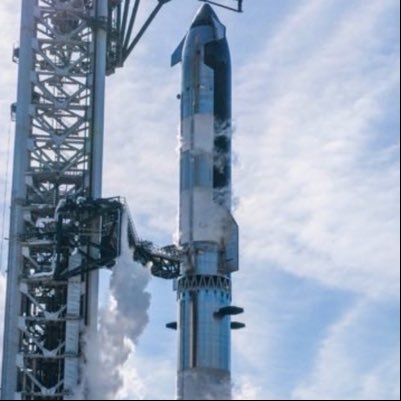
Starlink coming to EasyJet
easyJet has just announced that it will be installing SpaceX's @Starlink on its fleet.
Installations will start in first half of 2027 across the airline’s modern A320, A320neo and A321neo fleet, with the rollout expected to be completed by early 2028.
"easyJet’s investment in a key step in further enhancing the experience for 100 million passengers who already choose to fly with the airline each year."
easyJet CEO Kenton Jarvis:
“Innovation is in easyJet’s DNA and partnering with SpaceX to bring Starlink’s high-speed internet connectivity onboard for the first time will not only further enhance the experience we provide millions of customers, but means we are offering more of the options both business and leisure travellers want when they choose who they fly with. Giving customers the opportunity to get online in the air will mean even greater choice and convenience when you fly with easyJet."


1,088
951
12,710
1,227,687
Pierre Chamard retweeted

All of France was in Limoges’s town hall
engelsbergideas.com/notebook/all-o…
✍️ @murielzagha via @EngelsbergIdeas
👉 The author reflects on the devastating October 2026 arson attack on Limoges's historic, 143-year-old town hall during a wave of nationwide riots.
👉 She contends that the destruction of this architectural landmark represents a profound assault on France's shared history and the inclusive civic vision of the Republic itself.
💡 Muriel Zagha’s poignant analysis elevates the physical destruction of a municipal building into a sobering metaphor for the literal burning away of France's collective democratic heritage.
💡 By highlighting how an emblem of public service and historical resilience was reduced to ashes, she forcefully argues that contemporary rioting has devolved from traditional political protest into a form of cultural amnesia that blindly cannibalises the very institutions built to serve the citizenry.
@Corix_JC @TheAIObserverX @maponi @JagersbergKnut @ahier @ChuckDBrooks @Shi4Tech @CEO_AISOMA @sallyeaves @ThEiLe0 @rvp @dinisguarda @TarakRindani @FrRonconii @Ym78200 @Nicochan33 @Khulood_Almani @TysonLester @SusanHayes_ @EstelaMandela @JoannMoretti @sulefati7 @FernandaKellner @pchamard @NeiraOsci @darioandriani @ALouiseLavalett @Fabriziobustama @amalmerzouk @arlenenewbigg @drsharwood @mikeflache @RLDI_Lamy @smaksked @AMontespan @AnneLaureBEAUD2 @Eli_Krumova @PVynckier @chidambara09 @sminaev2015 @Analytics_699 @NathaliaLeHen @MHcommunicate @DanielleLargier
1
26
26
792
Pierre Chamard retweeted

✈️ The world’s top airlines 💰
(Revenue, July 2025 – July 2026)
1. 🇺🇸 Delta – $68.3B
2. 🇺🇸 United – $62.9B
3. 🇺🇸 American Airlines – $56.0B
4. 🇩🇪 Lufthansa – $47.1B
5. 🇪🇸🇬🇧 IAG – $39.1B
6. 🇫🇷🇳🇱 Air France–KLM Group – $36.0B
7. 🇺🇸 Southwest – $28.9B
8. 🇨🇳 China Southern na – $23.6B
10. 🇨🇳 China Eastern – $19.4B
11. 🇮🇪 Ryanair – $18.2B
12. 🇰🇷 Korean Air – $17.8B
13. 🇨🇦 Air Canada – $16.1B
14. 🇸🇬 Singapore Airlines – $16.0B
15. 🇦🇺 Qantas – $15.4B
16. 🇨🇱 LATAM – $15.0B
17. 🇭🇰 Cathay Pacific – $15.0B
18. 🇺🇸 Alaska Airlines – $14.4B
19. 🇯🇵 ANA – $14.0B
20. 🇬🇧 easyJet – $13.6B
21. 🇯🇵 Japan Airlines – $11.7B
22. 🇮🇳 IndiGo – $10.0B
23. 🇨🇳 Hainan Airlines – $9.4B
24. 🇬🇧 Jet2 – $9.3B
25. 🇺🇸 jetBlue – $9.2B
📝 Delta has been the top airline by annual revenue since the pandemic.
🖇️ Source: CompaniesMarketCap

50
37
209
169,800
Pierre Chamard retweeted

In the end, the aircraft was still on the runway. Does this count as a good landing?🛬
33
10
144
12,830

Pierre Chamard retweeted

𝗧𝗵𝗲 𝗚𝗹𝗼𝗯𝗮𝗹 𝗥𝗮𝗰𝗲 𝘁𝗼 𝗕𝘂𝗶𝗹𝗱 #AI-𝗣𝗼𝘄𝗲𝗿𝗲𝗱 #𝗛𝘂𝗺𝗮𝗻𝗼𝗶𝗱 #𝗥𝗼𝗯𝗼𝘁𝘀 𝗛𝗮𝘀 𝗕𝗲𝗴𝘂𝗻🤖
بدأ السباق العالمي لبناء #الروبوتات البشرية المدعومة بـ #الذكاء_الاصطناعي
The next major #AI platform may not live inside a screen⤵️
It may 𝘄𝗮𝗹𝗸, 𝗹𝗲𝗮𝗿𝗻, e us.
Save this 🔖
Here are 12 companies shaping the humanoid robotics race ⤵️
🇺🇸 1️⃣ 𝗙𝗶𝗴𝘂𝗿𝗲
Building general-purpose humanoid robots for commercial environments.
🇺🇸 2️⃣ 𝗧𝗲𝘀𝗹𝗮
Developing Optimus around AI, manufacturing scale and real-world tasks.
🇩🇪 3️⃣ 𝗡𝗘𝗨𝗥𝗔 𝗥𝗼𝗯𝗼𝘁𝗶𝗰𝘀
Combining cognitive robotics with human-centered industrial applications.
🇨🇳 4️⃣ 𝗨𝗻𝗶𝘁𝗿𝗲𝗲
Advancing increasingly capable and accessible humanoid platforms.
🇨🇳 5️⃣ 𝗔𝗴𝗶𝗕𝗼𝘁
Developing humanoid robots for industrial and commercial deployment.
🇨🇳 6️⃣ 𝗨𝗕𝗧𝗘𝗖𝗛
Moving humanoid robots toward factory and enterprise environments.
🇺🇸 7️⃣ 𝗔𝗽𝗽𝘁𝗿𝗼𝗻𝗶𝗸
Building Apollo for logistics, manufacturing and physically demanding work.
🇨🇳 8️⃣ 𝗚𝗮𝗹𝗯𝗼𝘁
Developing embodied AI for service and industrial applications.
🇺🇸 9️⃣ 𝗔𝗴𝗶𝗹𝗶𝘁𝘆 𝗥𝗼𝗯𝗼𝘁𝗶𝗰𝘀
Deploying Digit for logistics and repetitive workplace tasks.
🇳🇴 10- 𝟭𝗫
Focusing on humanoid robots designed to operate in everyday environments.
🇺🇸 11- 𝗦𝘂𝗻𝗱𝗮𝘆 𝗥𝗼𝗯𝗼𝘁𝗶𝗰𝘀
Building general-purpose robots for practical human environments.
🇺🇸 12- 𝗕𝗼𝘀𝘁𝗼𝗻 𝗗𝘆𝗻𝗮𝗺𝗶𝗰𝘀
Pushing the boundaries of mobility, balance and advanced robotics.
⚡ 𝗕𝘂𝘁 𝘁𝗵𝗲 𝗯𝗶𝗴𝗴𝗲𝗿 𝘀𝗵𝗶𝗳𝘁 𝗶𝘀 𝘁𝗵𝗶𝘀:
AI is moving from 𝗱𝗶𝗴𝗶𝘁𝗮𝗹 𝗶𝗻𝘁𝗲𝗹𝗹𝗶𝗴𝗲𝗻𝗰𝗲 to 𝗲𝗺𝗯𝗼𝗱𝗶𝗲𝗱 𝗶𝗻𝘁𝗲𝗹𝗹𝗶𝗴𝗲𝗻𝗰𝗲.
From systems that 𝗮𝗻𝘀𝘄𝗲𝗿
to machines that 𝘀𝗲𝗲, 𝗺𝗼𝘃𝗲, 𝗹𝗲𝗮𝗿𝗻 & 𝗮𝗰𝘁.
💡 𝗠𝘆 𝗧𝗮𝗸𝗲:
The humanoid robotics race will not be won by whoever creates the most human-looking machine.
It will be won by whoever solves 𝗶𝗻𝘁𝗲𝗹𝗹𝗶𝗴𝗲𝗻𝗰𝗲, 𝗱𝗲𝘅𝘁𝗲𝗿𝗶𝘁𝘆, 𝘀𝗮𝗳𝗲𝘁𝘆, 𝗿𝗲𝗹𝗶𝗮𝗯𝗶𝗹𝗶𝘁𝘆 & 𝘀𝗰𝗮𝗹𝗲.
𝗚𝗲𝗻𝗲𝗿𝗮𝘁𝗶𝘃𝗲 AI ➡️ 𝗔𝗴𝗲𝗻𝘁𝗶𝗰 AI ➡️ 𝗣𝗵𝘆𝘀𝗶𝗰𝗮𝗹 AI
The real question is no longer whether humanoid robots are coming.
𝗜𝘁 𝗶𝘀 𝘄𝗵𝗲𝗿𝗲 𝘁𝗵𝗲𝘆 𝘄𝗶𝗹𝗹 𝗲𝗻𝘁𝗲𝗿 𝗼𝘂𝗿 𝗹𝗶𝘃𝗲𝘀 𝗳𝗶𝗿𝘀𝘁🤖
Which company do you believe will lead the humanoid robotics race?
#HumanoidRobots #Robotics #PhysicalAI #FutureTech
@enilev @Jagersbergknut @TysonLester @CurieuxExplorer @GlenGilmore @FrRonconii @chidambara09 @jeancayeux @mvollmer1 @Nicochan33 @RLDI_Lamy @pchamard @mikeflache @Fabriziobustama @ThEiLe0 @Mack1510019 @ipfconline1 @PawlowskiMario @drsharwood @kalydeoo @baski_LA @AnthonyRochand @smaksked @Eli_Krumova @andresvilarino @gvalan @AI_4_Healthcare @bimedotcom @arlenenewbigg @NewsNeus @domingonarvaez1 @bamitav @jornalistavitor @jblefevre60 @thomas_dettling @FmFrancoise @nafisalam @Mhcommunicate @Corix_JC @c4trends @smoothsale @amalmerzouk @PVynckier @bbailey39 @NathaliaLeHen @jasuja @ralf_ladner @mary_gambara

14
85
362
121,217
Pierre Chamard retweeted
A Critical History of Robot Rights
papers.ssrn.com/sol3/papers.cf…
✍️ @David_Gunkel via @SSRN
👉 In his SSRN preprint, the author traces the intellectual evolution of machine ethics, charting how the discourse transitioned from speculative legal fiction into a mainstream philosophical a systematic overview of how researchers have historically applied, deconstructed, and adapted traditional human-centric legal frameworks to accommodate the emerging moral status of autonomous systems.
💡Gunkel establishes that the long history of debating robot rights has never actually been about the machines themselves, but has instead functioned as a mirror exposing the arbitrary and fragile boundaries we use to define human moral exceptionalism.
@Corix_JC @TheAIObserverX @maponi @sallyeaves @JagersbergKnut @ahier @ChuckDBrooks @Shi4Tech @CEO_AISOMA @ThEiLe0 @dinisguarda @NeiraOsci @TarakRindani @FrRonconii @Ym78200 @Nicochan33 @Khulood_Almani @TysonLester @LouisColumbus @SusanHayes_ @EstelaMandela @JoannMoretti @sulefati7 @rvp @FernandaKellner @pchamard @darioandriani @drsharwood @ALouiseLavalett @Fabriziobustama @amalmerzouk @arlenenewbigg @smaksked @AMontespan @mikeflache @RLDI_Lamy @jenstirrup @Eli_Krumova @PVynckier @chidambara09 @AnneLaureBEAUD2 @sminaev2015 @Analytics_699 @NathaliaLeHen @MHcommunicate @DanielleLargier

0
26
36
831
Pierre Chamard retweeted

The United States spent $954 billion on its military in 2025.
Nearly a trillion dollars in one year, roughly the size of Poland’s entire economy and almost three times China’s military spending.
For a country protected by two enormous oceans, with no comparable military rival on either land border, that is an extraordinary commitment. But America’s military is built to operate far beyond its own shores.
Look at the Bell Boeing V-22 Osprey. The Marines wanted something helicopters could not easily give them, take troops straight off a ship, then fly them much farther and faster, without needing a runway.
So engineers built an aircraft with two engines that tilt into airplane mode, gearboxes joined by a shaft that can transfer power between rotors, and a wing and blades that fold away for storage at sea.
Getting all of that to work was another matter.
The Osprey was supposed to enter service in 1992. It arrived in 2007. Its estimated research and development bill tripled from $4.2 billion to $12.7 billion, while the original plan for 913 aircraft was cut roughly in half.
Hundreds eventually entered service, but mechanical failures and difficult maintenance did not disappear with induction.
Now consider what decades of work like this leave behind. Not just an aircraft, but people who know how to design its transmissions, manufacture its parts, test its systems and keep it flying.
That experience takes years to build. Let it go cold, and you cannot simply buy it back when you need it.
This is part of why the United States always keeps its military-industrial complex running hot. It wants new capabilities, of course, and it wants the industrial muscle to keep developing them even if some of them fail on many metrics.
The Osprey’s enormous overruns were never part of some clever investment strategy. But decades of such ambitious projects have helped America build an industrial ecosystem with extraordinary engineering depth, manufacturing expertise and technological capabilities that few countries can match.
And that is the reason America remains a superpower. It never lets its military industrial complex go cold, even in peacetime. Because when a war against an industrial rival of contemporary scale comes, you cannot wait until then to start sharpening your sword. x.com/Arr3ch0/status…
46
75
953
269,192
Pierre Chamard retweeted
🔴 On a écarté Dassault pour Airbus. Deux ans plus tard, Airbus a augmenté sa facture de 65 %.
2,768 milliards d'euros dans le budget 2026. 4,574 milliards dans le projet de budget 2027. Même avion, même besoin. Et des Atlantique 2 dont les cellules et les moteurs restent d'origine.
Selon le rapporteur du budget de la Marine, Yannick Chenevard, les négociations ont achoppé sur les exigences financières d'Airbus, « conséquence probable de ses déboires sur l'A400M ». Le lancement prévu fin 2026 « semble compromis ».
@grinchmaster168 a trouvé l'image juste : c'est l'artisan qui fait un devis hors de prix pour que le client le laisse tranquille. Airbus voulait-il vraiment ce programme, ou a-t-il laissé pourrir le dossier ?
Pendant ce temps, les Atlantique 2 des années 1990 continuent de protéger la sortie de nos sous-marins nucléaires.
Le choix d'Airbus devait faire gagner du temps à la Marine. Il lui en fait perdre.
🔴 ON A ÉCARTÉ DASSAULT POUR AIRBUS. LA FACTURE BLOQUE TOUT, ET L'AVION POURRAIT ÊTRE AMÉRICAIN.
Chaque fois qu'un sous-marin nucléaire lanceur d'engins quitte l'Île Longue, un Atlantique 2 de la Marine nationale le précède. Sa mission : s'assurer qu'aucun sous-marin étranger ne le suit. La dissuasion française commence là.
Les 18 Atlantique 2 doivent quitter le service en 2040 au plus tard. Leur successeur était choisi : en 2025, la DGA a retenu l'A321 d'Airbus, transformé en avion de patrouille maritime avec Thales, contre le Falcon 10X de Dassault. Budget prévu : environ 3 milliards d'euros. Premier avion : 2034.
En septembre, le lancement a été repoussé. Les offres dépassaient l'enveloppe.
Le rapporteur de la Marine à l'Assemblée, Yannick Chenevard, va plus loin. Il parle d'un « abandon » du lancement, « malgré le succès de l'étude de levée de risque ». La facture aurait augmenté de 65 %. Et il donne la raison : les négociations auraient « achoppé sur une estimation du coût du risque très élevée de la part d'Airbus, conséquence de ses déboires sur l'A400M ».
Autrement dit, Airbus fait payer à l'État français le prix de ses erreurs passées. Il a remporté le marché contre Dassault, puis présenté une facture alourdie par un programme qu'il a lui-même mal maîtrisé.
Le plan B évoqué dans la presse existe déjà : le P-8A Poseidon de Boeing.
Cet avion a déjà croisé ce dossier. À l'origine, le successeur de l'Atlantique 2 devait être franco-allemand : le programme MAWS. Il s'est arrêté quand Berlin a choisi le P-8 pour remplacer ses avions de patrouille. La France a poursuivi seule.
Si Paris se rabat à son tour sur l'avion américain, la protection de la dissuasion française reposera sur un appareil dont la maintenance, les mises à jour et une partie des systèmes dépendent de Washington.
Le chef d'état-major de la Marine prévenait en mai : « Nous n'avons pas le droit à l'erreur. » Entre 2034 et 2040, la marge est déjà mince. Chaque année de report la réduit.
La préférence européenne se décide aussi sur ce genre de dossier, loin des sommets et des grands discours : un avion de patrouille, un budget, une signature qui tarde.
Et le Falcon 10X écarté en 2025 n'a pas disparu.
8
33
156
9,254
Pierre Chamard retweeted

Au-delà du confort des élèves, les conditions d’apprentissage interrogent les missions mêmes de l’école. Comment concilier contraintes budgétaires et exigences éducatives ?
🔷 Un article de Forum protestant
urls.fr/J2p-5h
🔷 Un article de Forum protestant
urls.fr/J2p-5h
0
3
4
146
Pierre Chamard retweeted

The total control and fluidity of pulling a hard bank right over the coastline is absolute art.
Could your stomach handle the intense loops and twists inside this cockpit?
Could your stomach handle the intense loops and twists inside this cockpit?
14
93
368
15,165
Pierre Chamard retweeted

From the A-10 pilot’s POV, this is close air support training in action, as the Warthog lines up a range run and fires its devastating 30 mm cannon.
The A-10 Thunderbolt II carries the GAU-8/A Avenger, a seven-barrel rotary cannon engineered to fire heavy ammunition at high rel assembly distributes firing across multiple barrels, helping manage the heat and wear generated during bursts.
But the cannon is only part of the system. The aircraft’s sighting equipment, stable gun platform and the pilot’s ability to account for range, aim and aircraft movement all matter when engaging a target.
This is mechanical engineering, ballistics and pilot skill working together in one of military aviation’s most distinctive attack aircraft.
What impresses you more: the GAU-8’s engineering or the pilot’s precision?
4
22
183
8,620
Pierre Chamard retweeted

A huge thank you to @justinaversano for collecting a physical print of Prémonition. Such a special moment. ♥️

37
24
345
6,810
Pierre Chamard retweeted

Why #Cyber Resilience Plans Fail in Practice
buff.ly/9e39NpA
#tech #incidentresponse #crisismanagement #cyberresilience #cyberthreats #cyberattacks #databreaches #business #cybersecurity #leadership #management #governance #CEO #CIO #CTO #CISO @Dsiliconreview na @kalydeoo @Ym78200 @CurieuxExplorer @mvollmer1 @JoannMoretti @anand_narang @EvanKirstel @SpirosMargaris @ipfconline1 @Jeffkagan @AndresVilarino @efipm @FMFrancoise @MHcommunicate @JeromeMONANGE @mary_gambara @drsharwood @smoothsale @debashis_dutta @devbhatt72 @MarshaCollier @PamMktgNut @arlenenewbigg @JagersbergKnut @TysonLester @GlenGilmore @pchamard @baski_LA @AnthonyRochand @NewsNeus @domingonarvaez1 @bamitav @jornalistavitor @c4trends @amalmerzouk @ralf_ladner @netzpalaver @nafisalam @cto_software @Oschonschek @Matt_Rosenquist @Shirastweet @Kevin_Jackson @JimMarous @chidambara09

0
13
21
374
Pierre Chamard retweeted
#AI is rewriting the C-suite playbook
buff.ly/VX9Hvjm
#tech #digital #innovation #disruption #business #leadership #management #governance #organization #CEO #CTO #CDO #AIStrategy #digitalstrategy #digitaltransformation @techradar @IBM @jblefevre60 @pierrepinna ieuxExplorer @mvollmer1 @JoannMoretti @anand_narang @EvanKirstel @SpirosMargaris @ipfconline1 @Jeffkagan @AndresVilarino @efipm @FMFrancoise @MHcommunicate @JeromeMONANGE @mary_gambara @drsharwood @smoothsale @debashis_dutta @devbhatt72 @MarshaCollier @PamMktgNut @arlenenewbigg @JagersbergKnut @TysonLester @GlenGilmore @pchamard @baski_LA @AnthonyRochand @NewsNeus @domingonarvaez1 @bamitav @jornalistavitor @c4trends @amalmerzouk @ralf_ladner @netzpalaver @nafisalam @cto_software @Oschonschek @Matt_Rosenquist @Shirastweet @Kevin_Jackson @JimMarous @chidambara09

2
10
17
271
Pierre Chamard retweeted
Three horizons of quantum: A business road map to the future computing economy
mckinsey.com/capabilities/t…
✍️ Arvind Govindarajan, Tanguy Catlin et al. via @McKinsey
👉 The authors map the commercial evolution of quantum technology across three operational horizons, projecting it could generate up to $2.7 trillion in global economic value by 2035.
👉 They outline a strategic roadmap spanning immediate quantum sensing applications to the eventual arrival of fault-tolerant systems, warning executives that delaying investment today will lock them out of the essential partnerships, talent pools, and intellectual property needed to survive the looming disruption.
💡 By structuring the notoriously abstract timeline of quantum computing into actionable corporate horizons, the authors transform a distant sci-fi threat into an immediate boardroom urgency—effectively reminding leaders that by the time a breakthrough goes mainstream, the competitive advantage has already been permanently lost.
@Corix_JC @TheAIObserverX @maponi @IngridVasiliu @JagersbergKnut @ahier @ChuckDBrooks @Shi4Tech @CEO_AISOMA @sallyeaves @ThEiLe0 @dinisguarda @TarakRindani @FrRonconii @Ym78200 @Nicochan33 @Khulood_Almani @TysonLester @SusanHayes_ @sulefati7 @EstelaMandela @JoannMoretti @NeiraOsci @FernandaKellner @pchamard @drsharwood @darioandriani @ALouiseLavalett @Fabriziobustama @amalmerzouk @arlenenewbigg @mikeflache @AMontespan @RLDI_Lamy @smaksked @Eli_Krumova @PVynckier @chidambara09 @sminaev2015 @Analytics_699 @NathaliaLeHen @MHcommunicate @DanielleLargier
1
28
34
753

