

He who shapes power, data centers, chips and models into an economically feasible endpoint, disproportionately shapes AI/SI right now.
Why?
Power is THE binding constraint in AI/SI. Few really have it.
Data centers don’t work without power. This is not about promises of power tomorrow. Or forecasted power in 2028. Power TODAY.
Chips can’t operate profitably unless installed in a functional data center. If you can install chips, it’s because you’ve solved the power problem.
Models aren’t economically viable unless run on cost effective infrastructure which requires a functional data center with low input costs and reliable management. This can’t happen without power.
AI/SI ROI doesn’t pencil unless models generate profitable outputs which necessarily needs functional data centers as the critical input. Again, power.
Ergo, he who can shape data centers, chips and models together into a tightly coordinated stack is someone who has solved power.
Solving power allows you to disproportionately shape AI/SI right now.
Why?
Power is THE binding constraint in AI/SI. Few really have it.
Data centers don’t work without power. This is not about promises of power tomorrow. Or forecasted power in 2028. Power TODAY.
Chips can’t operate profitably unless installed in a functional data center. If you can install chips, it’s because you’ve solved the power problem.
Models aren’t economically viable unless run on cost effective infrastructure which requires a functional data center with low input costs and reliable management. This can’t happen without power.
AI/SI ROI doesn’t pencil unless models generate profitable outputs which necessarily needs functional data centers as the critical input. Again, power.
Ergo, he who can shape data centers, chips and models together into a tightly coordinated stack is someone who has solved power.
Solving power allows you to disproportionately shape AI/SI right now.
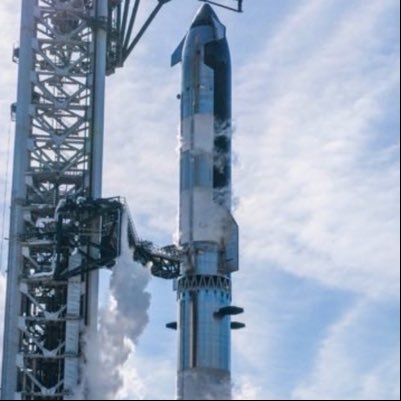
@XFreeze There will be a total of around 1.2M Blackwells at Colossus 2 by end of year
317
305
3,137
552,863

Yup
Chamath: The AI Boom Has a Borrowing Problem
“The entire United States economy is levered to the AI complex.
So very narrowly, we're talking about seven or eight companies that set the tone for the entire country. And whether we like it or not, that is where we are.
Why do I rtant companies in the world are in a massive spending binge, right?
These were highly profitable, highly cash accretive, highly cash flow generative businesses that have said, ‘We're going to put the foot down on spending because we believe in what's coming into the future.’ That's what drives GDP and it's what drives growth.
Now, as they do that though, they deplete their cash and they have to raise debt.
The AI complex now owes $340-400 billion to the market. And you'd say, ‘Okay, why is that important?’
The problem is this: These companies are raising so much money it starts to crowd out the capital markets.
And the most important part of the capital market that it starts to crowd out, is the appetite for government treasuries.
And what you can see here is that when you look at these AI firms, the amount of money that they need to raise through the end of '27, it's 30% of all of what the Treasury's about to issue in that same period.
So, whether we like it or not, they are going to start competing for demand.”

80
46
699
179,353
Pod!!!!!!
POD UP! 🚨
-- Anthropic S-1 Shocker: Greatest Business Ever?
-- AI's Biggest Financial Risk
-- Google’s $500B Wipeout
-- Midterm Predictions
(0:00) Bestie Intros
(3:22) Anthropic S-1 Breakdown: Greatest Business Ever?
(32:47) AI's Biggest Problem and Anthropic's Doomer gle Sheds $500B Market Cap in Worst Day Ever: What Went Wrong?
(1:14:17) Final Midterm Predictions and Scenarios
34
17
383
82,859
Nice
Drink w/Me is excited to announce our first regional meetup in NYC next Friday! drinkwithme.com/rsvp.html?even… @chamath @Sommjoshua


10
4
96
81,371


@standuquesne Welcome to the Thunderdome, Stan!
22
10
1,230
174,100
I like Will’s writings - I always learn something that helps me refine my mental models.
The benefits of abundant intelligence will accrue far outside of San Fransisco.
Spent the last year writing about capital, sovereignty, and the coming reordering of economic power.
THE COMMANDING HEIGHTS
Commanding-Heights.com


31
52
952
182,834
The evolution of the Amazon Prime Subscription for the modern age is at hand…
DOORDASH TO ACQUIRE INSTACART IN $17 BILLION DEAL
$DASH has agreed to acquire $CART for $65 per share.
Instacart shareholders can receive cash, DoorDash stock or a combination, with stock limited to 25% of the total consideration.
DoorDash plans to retain Instacart's brand, nology products while combining DashPass and Instacart+ into a single membership.
Instacart customers would gain access to over 50,000 additional stores, while combined membership savings are estimated at $100 million annually.
The deal is expected to close in late 2027 or H1 2028, pending shareholder and regulatory approvals.


55
23
1,047
249,598
@spcohn An alternative analogy would be to compare it to route planning instead.
4
0
23
5,363
Super interesting comparison of GPU finance and the AI buildout to airlines. I’ve seen two other people make this comparison now:
1. Ken Griffin
2. Sridhar Ramaswamy
Both are very, very smart so worth learning more.
1. Ken Griffin
2. Sridhar Ramaswamy
Both are very, very smart so worth learning more.
A lot of ink has been spilled on GPU financing lately. I spent over a decade trading ABS on Wall St, and structured over $2B+ of debt financings as an operator (including at @tryramp). Figured I'd try to make sense of this market, so I went back to a framework I knew well: ft engine ABS.
My take: a GPU neocloud runs on airline economics, and the debt behind it looks a lot like aircraft engine ABS.
The parallels:
• Perishable inventory. An empty seat after the door closes is gone forever. So is an idle hour on an energized H100 rack.
• 85%+ of cost is fixed (servers, 10-year rack leases, 10-14% debt service). One more hour of compute costs pennies of power.
• Utilization is everything. Airlines break even around 80% load factor, a levered GPU cluster around 65-75%. The returns live in those last 25 percentage points.
• NVIDIA is Boeing and Airbus rolled into one. Powered shells and grid interconnects are the new airport slots.
• Wall St copied the aircraft financing playbook: take-or-pay contract plus servers in a bankruptcy-remote SPV, 70-80% LTV.
Part 1 of my blog post goes into a lot more detail:
alexyangsong.com/blog/aluminum-…


177
126
1,761
628,451
Good read…
anthropic is probably the best business in AI right now and i still wouldn’t touch it on day one. the whole thing is set up for suppliers and insiders to sell into the index buying. x.com/i/article/2114…

69
99
1,214
297,447
Last thought:
The liquidated damages clauses of the contracts between neoclouds and their offtakers will be the final boss battle.
If you don’t have experience building highly available compute, you will have outages that stress your uptime commitments. If you can’t remedy them, your offtaker will be extremely punitive.
Terms that look good on paper now starts to shrivel under the LD terms of offtaker contracts.
You’re already starting to see a few of these blow up - you lose your IG wrapper, a big hyperscaler dumps you etc etc.
So anyone in the data center game needs to ultimately be excellent at management/uptime/maintenance. If you’re not, you may wilt when you inevitably have to manage some moment of downtime.
The liquidated damages clauses of the contracts between neoclouds and their offtakers will be the final boss battle.
If you don’t have experience building highly available compute, you will have outages that stress your uptime commitments. If you can’t remedy them, your offtaker will be extremely punitive.
Terms that look good on paper now starts to shrivel under the LD terms of offtaker contracts.
You’re already starting to see a few of these blow up - you lose your IG wrapper, a big hyperscaler dumps you etc etc.
So anyone in the data center game needs to ultimately be excellent at management/uptime/maintenance. If you’re not, you may wilt when you inevitably have to manage some moment of downtime.
51
16
469
100,281
Some more thoughts:
1. In Texas, getting mineral rights waivers are harder and take longer than ever. Case law is useful but it’s even more critical than ever to have these in place especially in West Texas where there is lots of activity.
2. East Texas is not buildable unless you’re a neocloud and can take the legal risk. Hyperscalers or foundational model companies may capitulate and come here but it will be a last resort type of thing.
3. Power pipeline is clogged everywhere. Utilities are completely overwhelmed and will ratchet their pipelining process to flush out the squatters. This will mean higher capital commitments earlier in the process for those that are real.
4. Builders don’t have the economic authority to offer local incentives to get the utility to move them up in the queue. The ultimate offtaker isn’t as aggressive as they should be to accelerate grid connections. When the builder/offtaker is the same, these conditions get much better. This is a big benefit for being a well funded IG hyperscaler.
5. Consumer pushback is still ratcheting up. Data centers are an easy target against the oligarchy who, collectively, still haven’t done enough to win society to their side.
1. In Texas, getting mineral rights waivers are harder and take longer than ever. Case law is useful but it’s even more critical than ever to have these in place especially in West Texas where there is lots of activity.
2. East Texas is not buildable unless you’re a neocloud and can take the legal risk. Hyperscalers or foundational model companies may capitulate and come here but it will be a last resort type of thing.
3. Power pipeline is clogged everywhere. Utilities are completely overwhelmed and will ratchet their pipelining process to flush out the squatters. This will mean higher capital commitments earlier in the process for those that are real.
4. Builders don’t have the economic authority to offer local incentives to get the utility to move them up in the queue. The ultimate offtaker isn’t as aggressive as they should be to accelerate grid connections. When the builder/offtaker is the same, these conditions get much better. This is a big benefit for being a well funded IG hyperscaler.
5. Consumer pushback is still ratcheting up. Data centers are an easy target against the oligarchy who, collectively, still haven’t done enough to win society to their side.
35
22
469
145,190
As someone with a portfolio of energized land assets here is what I am seeing:
1. Neoclouds are disorganized and poorly capitalized. Some are definitely better than others however.
2. Hyperscalers are intractable, bureaucratic organizations that take 3 months to do an NDA and want 18mo escrow periods. We built our portfolio by competing against these terms because of our speed and simplicity. The more future assets orgs like ours win, the bigger the problem for the hyperscalers downstream (see 3).
3. There are delays in the existing pipeline that will catch people off guard in 2027. Hyperacalers will (obviously) react by focusing on their own internal compute needs over any third party. If the third party is a model company, they will tell them to go through their model router where they will also take a non-trivial vig. Them telling Ant they have no compute for them (rumored in Ant’s S-1) if true is a huge tell that this is already happening.
All of this is to say that it does look like there will be a lot of partially stranded compute and compute sitting in inventory in 2027 than is currently forecasted. This is bought and paid for but effectively underearning (below total cost of capital) or collecting dust. We see this as true for everyone - model companies, hyperscalers, neoclouds except ONE (you can guess which one).
This dislocation will benefit two kinds of orgs: the non-bureaucratic big scalers who can build industrial scale quickly and the nimble, well capitalized players feeding them.
2027 will be a turbulent year because it will clear out a bunch of wrong/bad bets. It will also be a consolidation year for a few.
1. Neoclouds are disorganized and poorly capitalized. Some are definitely better than others however.
2. Hyperscalers are intractable, bureaucratic organizations that take 3 months to do an NDA and want 18mo escrow periods. We built our portfolio by competing against these terms because of our speed and simplicity. The more future assets orgs like ours win, the bigger the problem for the hyperscalers downstream (see 3).
3. There are delays in the existing pipeline that will catch people off guard in 2027. Hyperacalers will (obviously) react by focusing on their own internal compute needs over any third party. If the third party is a model company, they will tell them to go through their model router where they will also take a non-trivial vig. Them telling Ant they have no compute for them (rumored in Ant’s S-1) if true is a huge tell that this is already happening.
All of this is to say that it does look like there will be a lot of partially stranded compute and compute sitting in inventory in 2027 than is currently forecasted. This is bought and paid for but effectively underearning (below total cost of capital) or collecting dust. We see this as true for everyone - model companies, hyperscalers, neoclouds except ONE (you can guess which one).
This dislocation will benefit two kinds of orgs: the non-bureaucratic big scalers who can build industrial scale quickly and the nimble, well capitalized players feeding them.
2027 will be a turbulent year because it will clear out a bunch of wrong/bad bets. It will also be a consolidation year for a few.
@Yuchenj_UW I think we’re going to see a lot of stranded compute in partially complete data centers
589
767
9,534
2,994,552
