Alan Cross retweeted
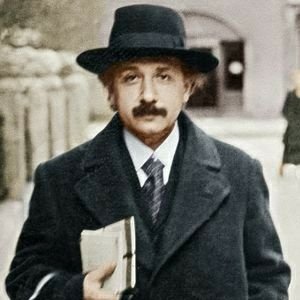
Richard Feynman explaining atoms and stars in this ‘Fun to Imagine’ BBC series, recorded at Feynman's home in Altadena, California, ca. 1983 🧠
-📹 BBC Archive
-📹 BBC Archive
14
179
1,018
38,107
Alan Cross retweeted

For children five and under, books beat screens when it comes to learning.
The International Early Learning and Child Well-being Study shows that reading books to children continues to be one of the most important learning activities that parents can do: oecd.org/en/publication…
The International Early Learning and Child Well-being Study shows that reading books to children continues to be one of the most important learning activities that parents can do: oecd.org/en/publication…

3
47
65
6,126
Alan Cross retweeted

Once every ten days, a bright canary-yellow bullet train glides into Tokyo Station at full speed, yet not a single passenger is allowed to step on board.
Its windows are mostly covered from the inside, its timetable is never published for the public, and there are no ticketed en cars.
In Japan, every child and every commuter knows this train by two English words: Doctor Yellow.
Since the Tokaido Shinkansen began running between Tokyo and Osaka in October 1964, Japanese bullet trains have carried more than seven billion passengers at speeds up to one hundred and eighty-five miles per hour with zero passenger fatalities from derailments or collisions.
Critics sometimes assume that kind of sixty-year safety record is a miracle of luck.
It is not luck; it is what happens when a nation builds a high-speed hospital train whose only patient is the steel track itself.
Why does Japan run a seven-car bullet train painted bright yellow with zero paying customers on board?
In the early days of high-speed rail, engineers realized that checking hundreds of miles of track on foot at night with hand gauges was too slow, and that tracks behave differently when a three-hundred-ton train slams over them at one hundred and sixty-eight miles per hour.
So Japanese railway engineers took a seven-car Class 923 Shinkansen trainset and packed every car from nose to tail with laser-optical sensors, gyroscopes, accelerometers, and high-speed cameras.
Running in the middle of the regular passenger schedule at a full one hundred and sixty-eight miles per hour, Doctor Yellow fires laser beams onto the left and right rails to measure track width, vertical dip, and curvature alignment down to one-tenth of a millimeter, about the thickness of a single human hair.
At the same time, two special observation domes built into the roof and laser pantographs check the overhead high-voltage copper wire for microscopic wear before a single spark can cause a power outage.
The instant Doctor Yellow detects a rail that has shifted by even a fraction of an inch, it beams the exact GPS coordinates to maintenance crews waiting along the line so they can fix the spot that very night after the last passenger train goes to sleep.
Because its schedule is kept secret so crowds do not pack the platforms, Japanese commuters treat spotting Doctor Yellow by chance as a genuine good-luck charm that brings happiness for the rest of the week.
Safety is never an accident when engineers check their work down to the width of a hair.
(Note: Every photograph-style illustration on my feed is created by AI.)

431
4,647
33,653
3,464,086
Alan Cross retweeted
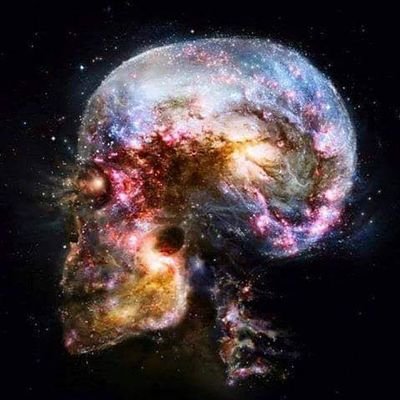
A 4.5-billion-year-old space rock just spelled out the entire genetic alphabet.
Japanese scientists confirmed that samples from asteroid Ryugu contain all five nucleobases: adenine, guanine, cytosine, thymine and uracil. Those are the molecules that write the code in DNA and ers had only found uracil. Now they’ve found the full set.
JAXA’s Hayabusa2 brought the samples home in 2020, just 5.4 grams of pristine asteroid material. Because it was collected in space, Earth contamination can’t explain the result.
It’s not a one-off, either. NASA’s Bennu samples turned up all five in 2025.
Life’s raw ingredients may have been scattered across the early Solar System, waiting for a ride to Earth.
Source: ScienceDaily / The Conversation, Kliti Grice (Curtin University); Koga et al., “A complete set of canonical nucleobases in the carbonaceous asteroid (162173) Ryugu,” Nature Astronomy, 2026, DOI: 10.1038/s41550-026-02791-z

70
468
2,295
84,810
Alan Cross retweeted

Mathematics is usually divided into a few large families: foundations and logic, algebra, number theory, geometry and topology, analysis, discrete mathematics, and probability and statistics. Applied mathematics draws on all of them.
The divisions are not clean. Algebraic with group theory, analytic number theory studies primes with complex analysis, and probability is formally built on measure theory. The Mathematics Subject Classification used by journals lists 63 top-level areas.
Any map like this is a choice about grouping rather than a fixed fact. Which branch would you add, or put somewhere else?

12
261
1,184
32,471

Alan Cross retweeted

Yes: handwriting still matters.
A new study has confirmed that writing by hand activates far more complex and widespread neural networks in the brain than typing, underscoring its importance for learning and memory.
Researchers at the Norwegian University of Science and density EEG cap with 256 electrodes to record brain activity in university students. They found that the intricate, sensory-rich movements involved in handwriting, especially cursive, trigger highly synchronized brain waves across extensive areas of the parietal and central regions. These coordinated patterns are strongly linked to memory formation, cognitive processing, and encoding new information.
In contrast, typing, which involves repetitive, simpler finger movements, produced significantly less neural connectivity and engagement. The difference was striking: the brain appears much less active during digital writing.
The researchers conclude that the unique motor and sensory experience of holding a pen plays a key role in brain development and learning. As a result, they argue that handwriting instruction should remain a core part of education to support deeper comprehension and cognitive growth in the next generation.
[ “Handwriting vs. Typing: A High-Density EEG Study on Brain Connectivity During Learning” — Norwegian University of Science and Technology (published in Frontiers in Psychology, 2025)]

69
368
1,140
58,703
Alan Cross retweeted
The Sun has only 22 galactic orbits left.
Earth races around the Sun at ~67,000 mph (107,000 km/h), giving us our familiar 365.25-day year and changing seasons.
But the Sun is in motion too, hurtling through the Milky Way at ~514,000 mph (828,000 km/h) on a grand orbit around e complete lap, known as a cosmic year, takes roughly 225–230 million years.
When the Sun finished its most recent galactic orbit, the earliest dinosaurs were just beginning to roam Earth.
Since its birth ~4.6 billion years ago, our star has completed about 20 such orbits.
Stellar models predict the Sun will keep fusing hydrogen in its core for another ~5 billion years before it swells into a red giant and eventually fades into a white dwarf. At its current orbital speed, that leaves roughly 22 more laps around the Milky Way.
Each cosmic year sweeps the entire Solar System tens of thousands of light-years across the galaxy, through dense spiral arms rich with star-forming regions, past ancient globular clusters, and amid countless other stars.
Continents drift, mountains rise and erode, entire species evolve and vanish, all within a tiny fraction of one galactic circuit.
Human civilization, from the first cities to today’s digital age, has existed for less than 0.001% of a single cosmic year.
We are passengers on a star halfway through its ~10-billion-year galactic journey across a 100,000-light-year-wide disk, witnessing just the briefest sliver of one ongoing lap in an unimaginably vast cosmic dance.

116
440
2,495
246,894
Alan Cross retweeted
Roman inverted siphons made water climb uphill: without pumps.
[🎞️ intheeasyway]
[🎞️ intheeasyway]
73
741
4,484
533,024

Pass this on to older friends and relatives. I just got a call from someone claiming to be from the DWP who wanted information from me so that they could pay me the winter fuel allowance. It’s a scam!
0
0
0
29
Alan Cross retweeted

Today #RISDAIM dug into all things audio! 🎙️We explored Tech by Design- everything from simple audio reflection in voice memos to complex audio production in #GarageBand! We loved the energy in the room as teachers collaborated & brainstormed what they’ll take back! #RISDDreamOn


0
6
9
674
Alan Cross retweeted
Why are reading scores falling in many countries? PISA points to rising levels of "hasty reading", where students answer quickly but incorrectly, and growing difficulties with evaluating information, critical thinking and using multiple sources. oecd.org/en/publication…

1
41
59
4,060
Alan Cross retweeted

🚨: FOR THE FIRST TIME, HUMANITY "SAW" A REAL MOLECULE
Not an illustration.
It's not a 3D render.
It's not digital art.
It's an actual molecule.
Not an illustration.
It's not a 3D render.
It's not digital art.
It's an actual molecule.


162
1,008
12,066
689,644
Alan Cross retweeted
You are looking at a photo of Einstein’s actual notebook.
The Zurich Notebook (1912) is Albert Einstein’s actual handwritten journal, preserved and studied today, capturing the pivotal early phase of his development of General Relativity.
While back in Zurich and collaborating el Grossmann, Einstein filled this 96-page notebook with dense calculations and ideas as he struggled to reconcile gravity with his earlier special relativity.
It shows the messy, iterative process behind one of the greatest scientific breakthroughs: Einstein began to abandon the traditional view of gravity as a force and instead explored the revolutionary concept that gravity is the curvature of space and time itself, using the then-novel mathematics of Riemannian geometry.
Although he had not yet fully mastered the required tools and the final equations would only be completed in 1915, the notebook reveals the raw, trial-and-error thinking—full of false starts and bold questions—that eventually led to the theory explaining black holes, gravitational waves, the expansion of the universe, and much of modern cosmology.
This unpolished record humanizes genius, reminding us that even the most profound scientific insights emerge from persistent effort, mistakes, and ordinary tools like a pencil and paper.
[University of Pittsburgh. (2012). A peek into Einstein's Zurich notebook. University of Pittsburgh]

49
300
1,632
122,996
Alan Cross retweeted
Born on October 15, 1608, Evangelista Torricelli is best known for inventing the barometer and for his significant advances in optics and mathematical methods. In his honor, the unit of pressure, the "torr", carries his name.

8
24
218
14,482
Alan Cross retweeted

🇯🇵⚡🌊 Le Japon a mis au point une nouvelle façon de produire de l’électricité… simplement en mélangeant de l’eau salée et de l’eau douce, et cette technologie est utilisée dans une centrale située à Fukuoka.
Cette centrale unique n’a besoin ni de soleil, ni de vent, ni de ce qu’on appelle « l’énergie bleue ». Lorsque l’eau de mer rencontre l’eau d’un fleuve, la différence de salinité crée naturellement de l’énergie.
À l’intérieur, d’extrêmement fines membranes séparent l’eau salée d’un côté et l’eau douce de l’autre. Les ions, ces minuscules particules issues du sel, traversent la membrane pour rejoindre l’eau douce. Leur mouvement génère de l’électricité, que la centrale récupère.
Comme elle ne dépend que de l’eau de mer et de l’eau des rivières, l’installation fonctionne 24 h/24. Elle est silencieuse, ne nécessite aucune machine en mouvement et ne rejette aucune pollution dans l’air.
Des milliers de membranes sont empilées les unes sur les autres, formant autant de petites « batteries ». Ensemble, elles produisent une énergie stable capable d’alimenter les communautés proches.
C’est une technologie idéale pour les îles et les régions bordées de rivières : compacte, fiable par tous les temps et entièrement renouvelable.
Deux eaux qui se rencontrent… et une électricité propre pour l’avenir. 💚

180
2,262
5,438
154,224
Alan Cross retweeted

Pythagorean theorem, written on the unit circle: sin²θ + cos²θ = 1.
23
383
1,845
65,719
Alan Cross retweeted
Phones in school impair learning.
The results from a large randomized controlled trial involving 16,683 students across 10 higher education institutions found that phone bans improve students’ academic achievement, with particularly pronounced benefits for low-performing ize of removing phones was about one third as big as the effect of changing from an average teacher a very good teacher for an entire academic year.
Students who experienced the in-class phone bans also became significantly more supportive of such restrictions and perceived them as beneficial. science.org/doi/10.1126/sc…

12
65
143
22,711
Alan Cross retweeted

Time to warn grandma about this
x.com/tavus/status/2…
x.com/tavus/status/2…
Introducing Griffin, the first model to pass the video Turing test.
48% of people who talked to it live thought it was a real human. Previous systems have had a pass rate <3%. It is #1 on NVIDIA's benchmark for full-duplex AI video.
It’s the first Human Interaction Model (HIM).Community noteThe 48% figure and "video Turing test" claim are from Tavus's own study of 54 one-minute calls, not independently verified or using a standard protocol. Griffin-Lite leads NVIDIA's VideoFDB benchmark on their public leaderboard.
cellcog.ai/blog/tavus-gri…
research.nvidia.com/labs/amri/proj…
tech-ish.com/2026/10/02/tav…

2
1
3
1,823
Alan Cross retweeted
"Math needs a phonics-style reckoning: Teachers should teach students how to do stuff correctly." - @mattyglesias slowboring.com/p/math-needs-a…

6
32
105
4,332