Pinned Tweet
Elusive Treasure Hunt | Dr. Sumer Sethi | TEDxAIIMSNewDelhi youtu.be/ZkVikPuJzs8 via @YouTube
12
0
47
84,586
Psychedelic and Novel Neuropsychiatric Therapies- The field has shifted from fringe research to major pharmaceutical investment. The focus is on treatment-resistant depression (TRD) and other hard-to-treat conditions, with emphasis on shorter-acting compounds that could make supervised treatment more practical than multi-hour sessions required by classic agents such as psilocybin or LSD.
Single Intranasal Administration of the Psychedelic Mebufotenin for Treatment-Resistant Depression: Research Summary
jamanetwork.com/journals/jama/…
Single Intranasal Administration of the Psychedelic Mebufotenin for Treatment-Resistant Depression: Research Summary
jamanetwork.com/journals/jama/…
0
0
3
375
Your smartwatch could prompt you to get checked for hypertension without ever inflating a cuff.
The reference is Di Achille et al., Nature, published 5 November 2026: Opportunistically Detecting Signs of Hypertension on a Consumer Smartwatch.
The distinction: it screens for ithout cuff calibration; it does not provide a conventional blood pressure reading or replace confirmatory testing.
Google researchers have published a study in Nature exploring exactly this.
The AI analyses optical pulse signals and wrist motion collected by a consumer smartwatch over several days. No blood pressure cuff calibration is required.
In a prospective multicentre study involving 196 participants, the system was evaluated against 24-hour ambulatory blood pressure monitoring.
Its screening performance:
• Sensitivity: 65.8%
• Specificity: 90.0%
As a doctor, I find the potential exciting. But the distinction matters: identifying signs of hypertension is different from measuring your blood pressure.
A sensitivity of 65.8% also means roughly one-third of hypertension cases were missed. A reassuring watch result cannot rule it out. Clinical assessment and cuff-based confirmation remain essential.
What interests me most is the opportunity to reach someone who feels perfectly well and has no reason to visit a clinic.
An everyday device could become the first prompt to seek care.
This connects with how I think about AI in medicine: some of its most valuable contributions will come from closing the gaps between everyday life and clinical attention.
We still need larger studies and evidence that these alerts lead to better outcomes. But helping the right patient reach a doctor earlier is a meaningful goal.
How would you integrate wearable alerts into clinical practice?
Reference: Di Achille et al. Nature (2026).
doi.org/10.1038/s41586…
#ArtificialIntelligence #DigitalHealth #Hypertension #PreventiveMedicine #WearableTechnology
The reference is Di Achille et al., Nature, published 5 November 2026: Opportunistically Detecting Signs of Hypertension on a Consumer Smartwatch.
The distinction: it screens for ithout cuff calibration; it does not provide a conventional blood pressure reading or replace confirmatory testing.
Google researchers have published a study in Nature exploring exactly this.
The AI analyses optical pulse signals and wrist motion collected by a consumer smartwatch over several days. No blood pressure cuff calibration is required.
In a prospective multicentre study involving 196 participants, the system was evaluated against 24-hour ambulatory blood pressure monitoring.
Its screening performance:
• Sensitivity: 65.8%
• Specificity: 90.0%
As a doctor, I find the potential exciting. But the distinction matters: identifying signs of hypertension is different from measuring your blood pressure.
A sensitivity of 65.8% also means roughly one-third of hypertension cases were missed. A reassuring watch result cannot rule it out. Clinical assessment and cuff-based confirmation remain essential.
What interests me most is the opportunity to reach someone who feels perfectly well and has no reason to visit a clinic.
An everyday device could become the first prompt to seek care.
This connects with how I think about AI in medicine: some of its most valuable contributions will come from closing the gaps between everyday life and clinical attention.
We still need larger studies and evidence that these alerts lead to better outcomes. But helping the right patient reach a doctor earlier is a meaningful goal.
How would you integrate wearable alerts into clinical practice?
Reference: Di Achille et al. Nature (2026).
doi.org/10.1038/s41586…
#ArtificialIntelligence #DigitalHealth #Hypertension #PreventiveMedicine #WearableTechnology

1
0
3
825
Dr Sumer Sethi retweeted
Two new randomized trials of the potent GLP-1 drug retatrutide (aka "reta") showed marked relief of knee osteoarthritis. Prior work demonstrated that some of the GLP-1 benefit for knee osteoarthritis is independent of weight loss.
#AHA26 @NEJM
nejm.org/doi/full/10.10…
#AHA26 @NEJM
nejm.org/doi/full/10.10…

76
160
1,112
152,474
Every image tells a story. Radiology helps write better ones for patients. Happy International Day of Radiology to all the imaging experts out there! 🩻💙
#IDoR2026 #WorldRadiologyDay #Radiology
#IDoR2026 #WorldRadiologyDay #Radiology

0
1
8
813
Dr Sumer Sethi retweeted

I used to tell residents a sloppy report makes you a legal 🎯.
Plaintiffs attorneys don’t know medicine, but they can make a judgement about a person based on how they write and communicate.
Someone who can’t communicate will do poorly under deposition.
Plaintiffs attorneys don’t know medicine, but they can make a judgement about a person based on how they write and communicate.
Someone who can’t communicate will do poorly under deposition.
0
1
3
538
"Please correlate clinically."
It's the most mocked line in radiology. It shows up in memes, jokes and WhatsApp forwards, and I've laughed at a few of them myself.
Then a case reaches court, and those three words become the most closely read part of the report.
I've spent 26 years reading films and teaching young doctors, and this is what I tell every resident: a report is an opinion. It isn't a verdict. It rests on one study, done at one moment, and it carries the limits of that technique.
A chest radiograph can miss a small nodule sitting behind the heart. An ultrasound in a patient full of bowel gas may not show the pancreas at all. A CT done in the first few hours of a stroke can look completely normal.
If you know a study has a limit and you don't write it down, you've left the clinician, the patient and yourself unprotected.
A good report does three things:
1It says clearly what is seen.
2It states what the study couldn't assess and why: motion, a poor acoustic window, no contrast, limited views.
3It tells the clinician what to do next. That might be a follow up film in six weeks, an MRI for soft tissue detail, a biopsy, or a comparison with old imaging.
"Please correlate clinically" on its own is lazy. With a reason and a next step attached, it's good medicine and good documentation.
Courts don't ask whether you were perfect. They ask whether you did what a reasonable doctor would have done, and whether you communicated it. Your report is the evidence for both.
To every young doctor reading this: write each report as if a judge will read it one day, because some of them will be.
#Radiology #MedicoLegal #PatientSafety #MedicalEducation #Radiologist #DAMS
It's the most mocked line in radiology. It shows up in memes, jokes and WhatsApp forwards, and I've laughed at a few of them myself.
Then a case reaches court, and those three words become the most closely read part of the report.
I've spent 26 years reading films and teaching young doctors, and this is what I tell every resident: a report is an opinion. It isn't a verdict. It rests on one study, done at one moment, and it carries the limits of that technique.
A chest radiograph can miss a small nodule sitting behind the heart. An ultrasound in a patient full of bowel gas may not show the pancreas at all. A CT done in the first few hours of a stroke can look completely normal.
If you know a study has a limit and you don't write it down, you've left the clinician, the patient and yourself unprotected.
A good report does three things:
1It says clearly what is seen.
2It states what the study couldn't assess and why: motion, a poor acoustic window, no contrast, limited views.
3It tells the clinician what to do next. That might be a follow up film in six weeks, an MRI for soft tissue detail, a biopsy, or a comparison with old imaging.
"Please correlate clinically" on its own is lazy. With a reason and a next step attached, it's good medicine and good documentation.
Courts don't ask whether you were perfect. They ask whether you did what a reasonable doctor would have done, and whether you communicated it. Your report is the evidence for both.
To every young doctor reading this: write each report as if a judge will read it one day, because some of them will be.
#Radiology #MedicoLegal #PatientSafety #MedicalEducation #Radiologist #DAMS
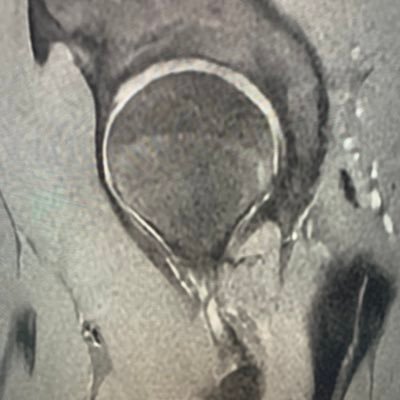
Let’s say a radiologist gets named in a lawsuit involving a radiographically occult midfoot fracture or Lisfranc injury that went untreated and eventually led to DJD. The patient was managed by a PCP who may not have done a proper exam or understood the limitations of radiographs. Everyone gets dragged into the lawsuit. Would the radiologist be in a better legal position if the report had included something like “Correlate with clinical exam and mechanism of injury with additional imaging as needed based on clinical suspicion”? Even if the protection is minimal, wouldn’t that potentially help his case? Also, I've heard attorney say that the radiologist should've hedged and said something like that, and if he had, the primary care provider would have acted differently and potentially a better outcome occurred.
8
35
249
27,754
3,426 MBBS seats are still empty, and private colleges are now offering 40% off.
This in a country where about 24 lakh students write NEET for roughly 1.4 lakh seats.
So has the new generation stopped seeing the ROI in becoming a doctor?
I don't think the dream has died. Every ed, so the demand is clearly there. What has stopped working is the math.
A private MBBS seat now costs around ₹1.25 crore all in. Every aspirant also knows that MBBS isn't the end. You need a PG, which means another entrance exam, a few more years and often another big cheque. You start earning properly close to 30, on a loan that started growing when you were 18.
Today's students and parents work this out openly at the dining table. A generation ago the white coat was reason enough to sign up.
75% of new MBBS seats in the last three years went to private colleges. We added seats, but we didn't make them any easier to afford. Lowering NEET cut offs won't fix this. Students are qualifying. They just can't pay.
Medicine is still one of the most meaningful careers there is. But you can't sell a ₹1 crore degree on passion alone. Fee regulation, more government seats and a clearer path from MBBS to a real income are what will fill these empty chairs.
So which is it, an ROI problem or an affordability problem? I'd like to hear your view.
#NEET #MBBS #NEETPG #MedicalEducation #DoctorsOfIndia
This in a country where about 24 lakh students write NEET for roughly 1.4 lakh seats.
So has the new generation stopped seeing the ROI in becoming a doctor?
I don't think the dream has died. Every ed, so the demand is clearly there. What has stopped working is the math.
A private MBBS seat now costs around ₹1.25 crore all in. Every aspirant also knows that MBBS isn't the end. You need a PG, which means another entrance exam, a few more years and often another big cheque. You start earning properly close to 30, on a loan that started growing when you were 18.
Today's students and parents work this out openly at the dining table. A generation ago the white coat was reason enough to sign up.
75% of new MBBS seats in the last three years went to private colleges. We added seats, but we didn't make them any easier to afford. Lowering NEET cut offs won't fix this. Students are qualifying. They just can't pay.
Medicine is still one of the most meaningful careers there is. But you can't sell a ₹1 crore degree on passion alone. Fee regulation, more government seats and a clearer path from MBBS to a real income are what will fill these empty chairs.
So which is it, an ROI problem or an affordability problem? I'd like to hear your view.
#NEET #MBBS #NEETPG #MedicalEducation #DoctorsOfIndia

90
277
884
102,664
INICET November 2026 sent a clear message: why behind is more important than memorising.
Last night I sat through nearly five hours of recall with our DAMS faculty, subject by subject, as students rebuilt the paper from memory. A few patterns stood out.
1. Familiar topics, unfamiliar language
Around 25 to 30 percent of the paper was PYQ based, yet almost nothing was asked the old way. Four one liners from past papers now arrive packed into a single match the following. Stems were long, options were longer, and the wording was deliberately twisted.
2. Mechanism over drug of choice
Pharmacology asked what imatinib actually blocks, why theophylline raises the adenosine dose, how an NSAID tips lithium into toxicity. Newer drugs featured too: finerenone, istradefylline, evinacumab, ecallantide.
3. Integration across subjects
Lambert Eaton syndrome came up in both Pathology and Physiology. Refeeding syndrome in both Pediatrics and Psychiatry. The mitochondrial pedigree appeared twice. One concept, examined from two angles.
4. Algorithms decide marks
Atonic PPH after uterotonics and TXA: balloon tamponade. HPV 16 positive at 38: colposcopy. T3 laryngeal cancer with poor lung function: total laryngectomy. The stem asks for the next step, and only a clear flowchart in your head gets you there.
5. PSM and Pharmacology are update subjects
RBSK 2.0, the WHO SAFER package, four health days that all fall in October. If you stopped reading updates in September, you lost marks.
Radiology had only a handful of questions, but every one was conceptual: Scimitar syndrome on a chest film, the claw sign to localise a neonatal abdominal mass, cavitation as a marker of intact immunity in TB.
Section 1 was the toughest and ate the most time. Section 3 was the breather. Section 4 was almost entirely surgical. Most students attempted 180 plus.
My advice to the next batch is simple. Give yourself six to eight months to build concepts properly. Practise match the following and multiple completion formats under time pressure. Learn mechanisms, not just answers. This exam now rewards the student who understands why.
To every student who stayed back after a draining day to share questions with us: thank you. Your recall becomes the preparation of your juniors.
All the best for the results.
#INICET #INICET2026 #NEETPG #MedicalEducation #DAMS
Last night I sat through nearly five hours of recall with our DAMS faculty, subject by subject, as students rebuilt the paper from memory. A few patterns stood out.
1. Familiar topics, unfamiliar language
Around 25 to 30 percent of the paper was PYQ based, yet almost nothing was asked the old way. Four one liners from past papers now arrive packed into a single match the following. Stems were long, options were longer, and the wording was deliberately twisted.
2. Mechanism over drug of choice
Pharmacology asked what imatinib actually blocks, why theophylline raises the adenosine dose, how an NSAID tips lithium into toxicity. Newer drugs featured too: finerenone, istradefylline, evinacumab, ecallantide.
3. Integration across subjects
Lambert Eaton syndrome came up in both Pathology and Physiology. Refeeding syndrome in both Pediatrics and Psychiatry. The mitochondrial pedigree appeared twice. One concept, examined from two angles.
4. Algorithms decide marks
Atonic PPH after uterotonics and TXA: balloon tamponade. HPV 16 positive at 38: colposcopy. T3 laryngeal cancer with poor lung function: total laryngectomy. The stem asks for the next step, and only a clear flowchart in your head gets you there.
5. PSM and Pharmacology are update subjects
RBSK 2.0, the WHO SAFER package, four health days that all fall in October. If you stopped reading updates in September, you lost marks.
Radiology had only a handful of questions, but every one was conceptual: Scimitar syndrome on a chest film, the claw sign to localise a neonatal abdominal mass, cavitation as a marker of intact immunity in TB.
Section 1 was the toughest and ate the most time. Section 3 was the breather. Section 4 was almost entirely surgical. Most students attempted 180 plus.
My advice to the next batch is simple. Give yourself six to eight months to build concepts properly. Practise match the following and multiple completion formats under time pressure. Learn mechanisms, not just answers. This exam now rewards the student who understands why.
To every student who stayed back after a draining day to share questions with us: thank you. Your recall becomes the preparation of your juniors.
All the best for the results.
#INICET #INICET2026 #NEETPG #MedicalEducation #DAMS
6
39
351
32,144
FMGE October 2026: what the paper told us
Students coming out of the hall agreed on one thing: easy to moderate, clinical, and heavy on images. After last cycle's moderate to tough paper, this one rewarded candidates who understood their subjects over those who memorised lists.
Our faculty spent the evening reconstructing the paper with students, subject by subject. A few patterns stood out.
Radiology stayed loyal to fundamentals. Tension pneumothorax on a chest film, small bowel obstruction with step ladder levels, the ice cream cone of a vestibular schwannoma, ALARA, and the glucose metabolism behind FDG PET. The boot shaped heart question did not ask for the diagnosis. It asked what forms the toe. A concept question dressed as an image.
OBG tested updates and pathophysiology. Tranexamic acid is no longer routine in active management of the third stage. A titre of 1:32 at 28 weeks means the mother is already sensitised, so anti D has no role. In TTTS, the recipient twin carries the polyhydramnios and polycythaemia.
Pathology was case driven, close to 30 questions: PTHrP in squamous cell lung cancer, SIADH in small cell, psammoma bodies as dystrophic calcification, beta 2 microglobulin in dialysis amyloidosis, Reed Sternberg cells with CD15 and CD30.
Pharmacology leaned on antidotes and newer regimens: idarucizumab for dabigatran, physostigmine for datura, why symptoms return after naloxone, and BPaLM for MDR TB.
Dermatology was unexpectedly heavy at around 12 questions. Pityriasis rubra pilaris with CARD14, dermographism, heliotrope rash with shawl sign. PRP was a NEET PG question before it became an FMGE one.
Ophthalmology was the hardest section, not because the topics were obscure but because the options sat so close together. Retinoscopy with a cylinder, the T sign of posterior scleritis, hyperoleon after silicone oil.
ENT read like a workbook: Rinne and Weber interpretation, an As tympanogram in otosclerosis, superior laryngeal nerve palsy when a patient cannot raise pitch, voice rest for vocal nodules.
Physiology asked why, not what. Why CO poisoning shifts the curve left. Why parturition is positive feedback. Why a hypothermic avalanche victim keeps his neurons.
Three things I would tell the next batch:
1. Recent guideline changes will be asked. Track them.
2. Image questions turn on one sign. Learn the sign, not the picture.
3. NEET PG papers are FMGE revision material. The overlap keeps growing.
To everyone who sat the exam: the work is done. Rest well.
#FMGE #FMGE2026 #MedicalEducation #ForeignMedicalGraduates #DAMS
Students coming out of the hall agreed on one thing: easy to moderate, clinical, and heavy on images. After last cycle's moderate to tough paper, this one rewarded candidates who understood their subjects over those who memorised lists.
Our faculty spent the evening reconstructing the paper with students, subject by subject. A few patterns stood out.
Radiology stayed loyal to fundamentals. Tension pneumothorax on a chest film, small bowel obstruction with step ladder levels, the ice cream cone of a vestibular schwannoma, ALARA, and the glucose metabolism behind FDG PET. The boot shaped heart question did not ask for the diagnosis. It asked what forms the toe. A concept question dressed as an image.
OBG tested updates and pathophysiology. Tranexamic acid is no longer routine in active management of the third stage. A titre of 1:32 at 28 weeks means the mother is already sensitised, so anti D has no role. In TTTS, the recipient twin carries the polyhydramnios and polycythaemia.
Pathology was case driven, close to 30 questions: PTHrP in squamous cell lung cancer, SIADH in small cell, psammoma bodies as dystrophic calcification, beta 2 microglobulin in dialysis amyloidosis, Reed Sternberg cells with CD15 and CD30.
Pharmacology leaned on antidotes and newer regimens: idarucizumab for dabigatran, physostigmine for datura, why symptoms return after naloxone, and BPaLM for MDR TB.
Dermatology was unexpectedly heavy at around 12 questions. Pityriasis rubra pilaris with CARD14, dermographism, heliotrope rash with shawl sign. PRP was a NEET PG question before it became an FMGE one.
Ophthalmology was the hardest section, not because the topics were obscure but because the options sat so close together. Retinoscopy with a cylinder, the T sign of posterior scleritis, hyperoleon after silicone oil.
ENT read like a workbook: Rinne and Weber interpretation, an As tympanogram in otosclerosis, superior laryngeal nerve palsy when a patient cannot raise pitch, voice rest for vocal nodules.
Physiology asked why, not what. Why CO poisoning shifts the curve left. Why parturition is positive feedback. Why a hypothermic avalanche victim keeps his neurons.
Three things I would tell the next batch:
1. Recent guideline changes will be asked. Track them.
2. Image questions turn on one sign. Learn the sign, not the picture.
3. NEET PG papers are FMGE revision material. The overlap keeps growing.
To everyone who sat the exam: the work is done. Rest well.
#FMGE #FMGE2026 #MedicalEducation #ForeignMedicalGraduates #DAMS
1
1
22
4,456
FMGE October 2026 is done, and the feedback from students has been fairly consistent. Most found the paper easy to moderate. Compared with the last session it leaned more towards moderate, and Paper 2 stood out as the more conceptual and clinically oriented of the two.
Radiology ost all of it was image based.
Here is what was asked:
1. Tension pneumothorax: a visible pleural line, absent lung markings beyond it and the mediastinum pushed to the other side.
2. Small bowel obstruction: step ladder pattern, central dilated loops, valvulae conniventes crossing the full width, and air fluid levels on the erect film.
3. Vestibular schwannoma: a cerebellopontine angle mass with the ice cream cone appearance on MRI.
4. ALARA: as low as reasonably achievable
5. FDG in PET: why tumour cells take up FDG, based on glucose metabolism and why FDG 6 phosphate stays trapped inside them.
6. Tetralogy of Fallot: the boot shaped heart. The question asked what forms the toe of the boot. The answer is right ventricular hypertrophy.
Each of these was taught in our classes on the DAMS app, with the same images and the same reasoning. The snapshots below are straight from those lectures.
The paper is clearly moving towards concepts and clinical reasoning, and that can look intimidating from the outside. But once the concept is understood, the question stops being difficult. A student who knows why the toe of the boot lifts does not need to memorise the answer.
#FMGE #FMGE2026 #Radiology #MedicalEducation #DAMS
Radiology ost all of it was image based.
Here is what was asked:
1. Tension pneumothorax: a visible pleural line, absent lung markings beyond it and the mediastinum pushed to the other side.
2. Small bowel obstruction: step ladder pattern, central dilated loops, valvulae conniventes crossing the full width, and air fluid levels on the erect film.
3. Vestibular schwannoma: a cerebellopontine angle mass with the ice cream cone appearance on MRI.
4. ALARA: as low as reasonably achievable
5. FDG in PET: why tumour cells take up FDG, based on glucose metabolism and why FDG 6 phosphate stays trapped inside them.
6. Tetralogy of Fallot: the boot shaped heart. The question asked what forms the toe of the boot. The answer is right ventricular hypertrophy.
Each of these was taught in our classes on the DAMS app, with the same images and the same reasoning. The snapshots below are straight from those lectures.
The paper is clearly moving towards concepts and clinical reasoning, and that can look intimidating from the outside. But once the concept is understood, the question stops being difficult. A student who knows why the toe of the boot lifts does not need to memorise the answer.
#FMGE #FMGE2026 #Radiology #MedicalEducation #DAMS

1
3
20
3,609
Most likely fake news
When will NEET PG 2027?
@sumersethi Sir kindly clear ...
There is a msg circulate it will be on may-june...
Kindly clear is it stick to as usual August since last 2 year trends or change?
@sumersethi

2
6
66
10,971
Can we shrink coronary plaque?
New CT data says yes, partly, and the numbers are worth looking at.
For years we described statins as drugs that stabilise plaque and slow its growth. Regression was treated as a bonus that rarely showed up. A new analysis from the FLOWPROMOTE trial, published in JAMA Cardiology on 30 October 2026, makes a stronger case.
The trial enrolled 104 patients with stable coronary artery disease who had never taken a statin. Their mean age was 64. One group got atorvastatin 40 mg and the other got rosuvastatin 40 mg plus ezetimibe 10 mg. Plaque across the whole coronary tree was quantified on coronary CT angiography at baseline and again at 18 months.
What happened:
• LDL cholesterol fell from 120 to 70 mg/dL on atorvastatin (38%), and from 127 to 43 mg/dL on the combination (65%). • Total plaque volume shrank by 21.1% with the combination and by 13.6% with atorvastatin. • Noncalcified plaque shrank by 28.2% with the combination and by 20.0% with atorvastatin. • Noncalcified plaque regressed in 51 of 52 patients on the combination, against 39 of 51 on atorvastatin. • The lower the LDL went, the more plaque regressed, in a straight line.
As a radiologist, two points stand out for me. The plaque that regressed most was the soft, lipid rich component, which is the part we worry about. Meanwhile, calcified plaque volume rose by a similar amount in both groups. So a calcium score that goes up on therapy does not mean the treatment has failed. It may simply mean the plaque is maturing and stabilising.
Atherosclerosis is at least partly reversible. That is worth carrying into the clinic and into the classroom.
#Cardiology #Radiology #CTCoronaryAngiography #LipidLowering #MedicalEducation
New CT data says yes, partly, and the numbers are worth looking at.
For years we described statins as drugs that stabilise plaque and slow its growth. Regression was treated as a bonus that rarely showed up. A new analysis from the FLOWPROMOTE trial, published in JAMA Cardiology on 30 October 2026, makes a stronger case.
The trial enrolled 104 patients with stable coronary artery disease who had never taken a statin. Their mean age was 64. One group got atorvastatin 40 mg and the other got rosuvastatin 40 mg plus ezetimibe 10 mg. Plaque across the whole coronary tree was quantified on coronary CT angiography at baseline and again at 18 months.
What happened:
• LDL cholesterol fell from 120 to 70 mg/dL on atorvastatin (38%), and from 127 to 43 mg/dL on the combination (65%). • Total plaque volume shrank by 21.1% with the combination and by 13.6% with atorvastatin. • Noncalcified plaque shrank by 28.2% with the combination and by 20.0% with atorvastatin. • Noncalcified plaque regressed in 51 of 52 patients on the combination, against 39 of 51 on atorvastatin. • The lower the LDL went, the more plaque regressed, in a straight line.
As a radiologist, two points stand out for me. The plaque that regressed most was the soft, lipid rich component, which is the part we worry about. Meanwhile, calcified plaque volume rose by a similar amount in both groups. So a calcium score that goes up on therapy does not mean the treatment has failed. It may simply mean the plaque is maturing and stabilising.
Atherosclerosis is at least partly reversible. That is worth carrying into the clinic and into the classroom.
#Cardiology #Radiology #CTCoronaryAngiography #LipidLowering #MedicalEducation
0
4
29
2,881


Dr Sumer Sethi retweeted

4 to 6 lakhs in tier 2 and tier 3 cities in Uttar Pradesh and Bihar
0
1
6
3,061


Dr Sumer Sethi retweeted

Only among top 100,there is this change
Among top 1000 and 5000
Radio vs medicine
Numbers are still same as last year
Among top 1000 and 5000
Radio vs medicine
Numbers are still same as last year
0
1
1
259

