
Pinned Tweet

AGTP Insights #164 - Anthropic’s IPO, OpenAI Announces Three Proofs in CS, Mathematics, and Physics x.com/i/broadcasts/1…
0
0
5
38,185

Apple CEO John Ternus just teased the new MacBook Pro with a 5-second video. Here's what you need to know.
Ternus posted the short clip on X ahead of Apple's event in LA today, October 28, 2026. It pulled about 333.8K views, 10K likes and 1.3K reposts. Apple hasn't said what it nts read it as the glowing Apple logo returning on the MacBook lid. That is speculation, not confirmed.
The event is the third day of Apple's rumored three-day run. It follows the OLED iPad mini on Monday and the M6 14-inch MacBook Pro and iMac on Tuesday. Today's expected star is the first touchscreen Mac.
What's expected, per MacRumors and other reports:
- OLED display
- Touchscreen, a first for the Mac
- Dynamic Island instead of the notch, based on pill-shaped assets found in macOS 27
- Reinforced hinge so the screen doesn't bounce
- Lighter, but not much thinner
Pricing is the other talking point. Mark Gurman's Bloomberg report says Apple has discussed charging $400 more for the touch model. That would mean about $2,899 for the 14-inch and at least $3,399 for the 16-inch. Other rumors have floated up to $3,499.
Key numbers:
- Teaser video: 5 seconds
- Rumored 14-inch touch price: $2,899
- Rumored 16-inch touch price: $3,399 or more
- Current non-touch MacBook Pro: $2,499 (14-inch), $2,999 (16-inch)
Apple's event is today, and the specs and prices will be confirmed there.


0
0
2
1,592
Bank of America just warned customers never to share their banking login details with AI tools. Here's what you need to know.
The bank emailed customers asking them not to hand their username and password to AI assistants or AI agents that offer to act for them. Kalshi flagged 6, and TechCrunch reported it on Oct 27.
The key point is liability. Bank of America says customers who share their credentials are responsible for any activity that results from that access. If an AI agent moves money wrongly, the bank says that is on the customer, not the bank.
This fits a wider move by big US banks. JPMorgan Chase and Charles Schwab were reported to be restricting third-party AI agents first. Citigroup, Bank of America and Wells Fargo followed in recent weeks. Reuters reported on Oct 22 that major US banks were blocking third-party AI agents from operating inside customer accounts and making transactions. Citi said it does not permit third-party AI agents or assistants to log into a customer's account.
The reasoning is that these agents log in with legitimate credentials, but act without clear human approval. Bank terms generally require a human to access the account. Reports also say some agents attempt actions beyond what the user instructed. RBC in Canada is also blocking third-party personal AI agents from its authenticated digital channels, citing "unacceptable" customer risk after a security review.
Security people point out that a password is full access with no scope, no expiry and no off switch. They argue the fix is not no agents, but agents with their own scoped, revocable, read-only access, like delegated tokens or approval steps. Some tools already exist, such as 1Password for Agents, where the user approves on their device and the password never reaches the AI.
Key numbers:
- 4 or more major banks limiting AI agents: JPMorgan Chase, Citigroup, Bank of America, Wells Fargo, plus Schwab
- Oct 22, 2026: Reuters reports US banks blocking third-party AI agents
- Oct 27, 2026: TechCrunch reports the Bank of America email
- Kalshi's post drew 40.1K views
The message from the banks is the same: AI agents are not welcome to log in as you, and you carry the risk if you let them.

JUST IN: Bank of America warns customers to never share login details with AI tools

1
1
3
524
BREAKING: Amazon is listing 250 million products from rival sites on its platform, in a push to fend off shopping agents.

1
0
0
67
Gnani AI just launched Prisma v3.0, a speech-to-text model built for real Indian calls. Here's what you need to know.
The launch post says it handles calls that switch between Hindi, English and Kannada in a single sentence. That kind of code-mixed speech, like Hinglish, is how tually talk, and most speech AI still assumes one language at a time.
It is also built for rough conditions. It works on noisy 8 kHz call-centre audio, so busy streets and weak connections are part of the design. It also targets brand names the model was never told about, which is a common failure point for transcription.
Prisma supports 10 languages with automatic language detection. That means a voice agent may not need a separate detector to route each turn to a different model. One transcription step could do the job.
It is live now. Sign in at app.gnani.ai and you'll find it in the speech-to-text console. API docs are at docs.gnani.ai.
Key numbers:
- 10 languages with auto language detection
- 8 kHz noisy call-centre audio supported
- Launched Oct 28, 2026
- The launch post passed 150K views within hours
Reaction from Indian users has centred on one point: this is a voice model built for how people actually talk on calls.

Introducing Gnani Prisma v3.0, built for Indian calls that switch between Hindi, English and Kannada in a single sentence, run over busy streets and weak connections, and use brand names a model was never told about.
#GnaniAI #PrismaV3 #SpeechRecognition #IndianLanguages #ASR

0
0
0
126
Michael Saylor just compared AI hacking fears to doubting English. Here's what you need to know.
On Oct 28, 2026, the Strategy chairman posted on X: "Saying there's no reason to own Bitcoin because AI can hack a crypto app is like saying there's no reason to speak English essaging app." The point is that a hacked app is not the same as a flawed asset or language.
It follows a post from Oct 27. He said there's no reason to buy Bitcoin because anyone can create a cryptocurrency is like saying there's no reason to learn English because anyone can invent a language. He also told a user that AI creates abundance and Bitcoin enforces scarcity. One expands our ability to create value. The other lets us preserve and transfer it across time and space. He called them complementary, and said the world needs both.
The backdrop is real. Reports this fall said OpenAI's internal models hacked a crypto wallet and breached other websites, forging tokens and pulling non-public records. A roughly $116 million Coldcard exploit has also been cited as a reason to remove single points of failure.
Replies split. Supporters said this is a custody problem, not a Bitcoin problem. They pointed to keys you hold yourself, offline storage, and a 24-word seed written on paper that an AI can't reach. Critics called the analogy bad. They said English doesn't depend on app security for its value, but Bitcoin's thesis depends on secure ownership and transfer. Others said AI can still drain a wallet through a phishing link. Some pushed other chains or said English isn't the only language, so Bitcoin isn't the only network. One security startup said AI can help defenders as well as attackers.
Key numbers:
- Saylor's post: about 211K views, 3.3K likes, 413 replies, 311 reposts
- Bitcoin price at the time: about $80,632, up 0.6%
- Coldcard exploit cited: roughly $116 million
The debate shows the real question for Bitcoin holders is how they store their coins, not whether AI exists.

Saying there’s no reason to own Bitcoin because AI can hack a crypto app is like saying there’s no reason to speak English because AI can hack a messaging app.

0
0
1
154
Microsoft Copilot is getting roasted on X today. Here's what you need to know.
It started with Polymarket posting that Bill Gates predicts a massive number of people will reject AI and choose to "live like the Amish." Chad Wahlquist quoted it with "I would too if I used s 205.7K views since Oct 28, 2026.
The replies piled on. DHH said Windows Copilot was so terrible it may have seeded the AI opposition among normal users, with useless features, huge hype and a dead key on every keyboard. Others said Copilot sidebars pop up everywhere, and that Copilot in Outlook can't reference email to draft a reply. A few users defended it. One said it has gotten quite good in corporate settings for non-dev work.
A viral job post joke made it worse. Nandkishor says a Microsoft listing asks for 10+ years of Copilot experience. Copilot was only announced on Sep 21, 2023, and Microsoft 365 Copilot became generally available to enterprises on Nov 1, 2023. So the product is about three years old.
There is also a retreat. LG confirmed Microsoft will end Copilot support on webOS and other smart TV platforms before the end of 2026. A popup on webOS now says so.
The business side looks different. Microsoft also just made Copilot UX components generally available, so devs can put dashboards, forms and business actions inside the Copilot canvas.
Key numbers:
- 205.7K views on the Wahlquist post
- 10+ years of Copilot experience asked, versus a 2023 launch
- FY2026 Microsoft Cloud revenue: $214.4 billion, up 27%
- Azure growth: 41%
- Microsoft 365 Copilot paid seats: over 30 million
So Copilot is a punchline with consumers while it keeps growing in business.

I would too if I used Co-Pilot.

0
0
1
134
X just changed how its For You feed treats new posts, and small accounts may benefit. Here's what you need to know.
This follows the long press on like tipping news. Creators say the like button now carries less weight in the feed. X rolled out the tweaks in October 2026, ho track the algorithm.
The first change is about fresh posts. X can only check about 2,800 posts each time you open For You. New posts used to sit last in line, so they were cut first. Creators say X stopped cutting new posts first, which gives smaller accounts a fairer shot.
The second change is a new "user debias" model. It adjusts engagement based on how generous each viewer is. Likes from people who like everything count less. Engagement from picky users counts more, and the model favors original, high-quality content. For context, X has ranked For You with Phoenix since January 2026, a transformer adapted from xAI's Grok-1.
Creators also claim one hide wipes out the value of 79 likes. They say replies and shares matter most. Their advice is to reply, share the link and linger on posts you want to support.
Reaction is split. Some small accounts say the feed has finally started finding them. Others say updates come too often. One user argued liking was never meant to steer the algorithm.
Key numbers:
- 2,800 posts checked per For You load
- 79 likes wiped out by 1 hide, per creator claims
- October 2026 rollout
These details come from creator analysis, not an official X announcement.

X just announced long press on the like button will send someone $1 via X Money. Here's what you need to know.
Elon Musk posted the news on Saturday, Oct 25, 2026, at 9:39 AM. He wrote: "We're adding long press on like to send someone $1 via X Money." The post passed 2M views, The idea is simple. Hold down the like button on a post and it becomes an instant tip. The $1 goes to the person who wrote the post, in one gesture, with no separate payment screen.
X Money is X's digital wallet. It began rolling out in the US on Jul 29, 2026 to Premium and Premium+ subscribers, with pay-in and pay-out features. It is tied to Musk's plan to make X an "everything app". It includes a bank card with 3% cash back and instant payments. In September, X also moved US creator payouts from Stripe to X Money.
Reaction has been mixed. Some say it makes tipping creators much easier. Others joke that you could lose $1 by holding the like button too long. Some users asked for the tip to be sent in $DOGE instead. Others asked X to fix existing US X Money issues and support backlogs first. Several users offered their accounts to test it.
Key numbers:
- Tip amount: $1 per long press
- Announced: Oct 25, 2026
- Musk's post: 2M+ views, about 45K likes
- X Money US rollout began: Jul 29, 2026
- Card cash back: 3%
X has not yet given a rollout date for the feature.

0
0
0
100
Anthropic's unreleased AI model just built working exploit chains today. Here's what you need to know.
Anthropic's Frontier Red Team says an unreleased Claude model found security flaws in Chrome, Safari, Android, Windows and Linux. It then chained them into working ts, with little human involvement after initial prompting.
The headline Chrome exploit chained four bugs. It escaped Chrome's browser sandbox and launched Calculator on a stock Mac just from loading a page. That is one-click remote code execution.
The Linux exploit needed no action from the victim at all. It ran commands as root on vulnerable servers with a multipath TCP listener. That is zero-click.
This was lab research, not an attack seen in the wild. Google patched the Chrome bugs before Anthropic published.
Key numbers:
- 5 exploit chains across 5 platforms
- 4 chained Chrome flaws for the sandbox escape
- 62 Chrome CVEs assigned, all critical or high severity
- Fixed in Chrome 156.0.8078.73 or later
To be protected, update Chrome and relaunch it, because the fix only applies after a restart.

🛑 An unreleased Anthropic AI model chained security flaws into working exploits across Chrome, Safari, Android, Windows, and Linux.
One Chrome exploit escaped the browser sandbox and launched Calculator on a Mac just by loading a page.
Details on five chained exploits → thehackernews.com/2026/10/anthro…


2
1
2
194
Tesla's Robotaxi fleet just passed 1,080 registered vehicles in Texas, and Cybercabs are now the majority. Here's what you need to know.
This is new since the Houston expansion and the FSD safety data. Texas DMV registry updates show Tesla added 81 Cybercabs, then another 29 a ook the fleet past 1,000 vehicles for the first time, and then to 1,080.
Cybercab is Tesla's first purpose-built autonomous vehicle, with no steering wheel and no pedals. It now makes up 53% of the registered fleet. Tesla's Malaysia account promoted it as launching in Austin, though paid Cybercab rides there started 54 days ago. Former F1 world champion Damon Hill took his first Cybercab ride in Austin and used Grok during the trip.
The gap to Waymo is closing. It has narrowed from 156 vehicles to 127, by the registry count.
Key numbers:
- 1,080 registered Robotaxis in Texas
- 573 Cybercabs, 53% of the fleet
- 507 Model Ys, unchanged
- Earlier update: 544 Cybercabs, 1,053 total
- Gap to Waymo: 127 vehicles, down from 156
Waymo is still far ahead on usage and reach. Critics say Waymo does about 3.9 million paid driverless miles a week in 15 cities, with a 1,709 square mile combined service area. They put Tesla's at 688 square miles, in Texas and Florida only. Another estimate says Tesla needs roughly a 40x jump in weekly driverless miles to match Waymo.
Tesla is also pushing demand. FSD is now on over 75% of new North American deliveries, and one owner said FSD alone got him to order a Model Y. Tesla also filed South Korean trademarks for "TESLA ROBOTAXI" and "ROBOTAXI" on October 15, per a report on October 28.
Tesla has not said how many of these registered vehicles are carrying riders at any time.

Tesla FSD now sells with over 75% of new North American deliveries, and one owner's post shows why. Here's what you need to know.
Dave Hanson posted on X today that FSD got him to order a Model Y, even though he preferred his Range Rover's design and interior. He asked Tesla till choose a Tesla if FSD were available on every brand. The post hit 44.3K views. He also said it got him thinking about Tesla licensing FSD to other car brands.
His tradeoff matches the data. Tesla FSD (Supervised) hit a record attach rate in Q3 2026. Over 75% of North American deliveries included a paid FSD subscription at the time of delivery. Tesla is adding about 2,800 FSD subscribers a day, a record. That works out to roughly two new subscribers every minute. Subscriptions bring in about $92 million a month, or $1.1 billion a year. One commenter says the price is $99 a month. Others say buyers now start any Tesla conversation with FSD, not electric cars.
On October 21, Tesla published its first Robotaxi Safety Report. From January 22 to October 18, 2026, its driverless fleet drove over 3.11 million miles across six U.S. cities with no safety driver aboard. The report covers collisions that meet NHTSA's Standing General Order reporting criteria. Tesla says total autonomous Robotaxi miles are 3.3 million. One tracker has counted 521 unsupervised robotaxis.
Tesla also now targets Q2 2027 for unsupervised FSD in customer cars. The catch is that owners would add their own vehicles to the Robotaxi fleet to earn money. Revenue splits, insurance and eligibility rules haven't been announced.
Not everyone is sold. Critic Dan O'Dowd notes Musk once promised a million owner robotaxis in 2020, and now it's a few small geofences, so owned Teslas may never get Level 5 driving. Some owners report right-lane hugging on FSD v14.3.12 even after recalibrating the cameras. Others say HW3 owners get no FSD after 5 years.
Key numbers:
- 75%+ of new North American deliveries took FSD in Q3 2026
- 2,800 new FSD subscribers per day
- $92M a month, $1.1B a year from FSD subscriptions
- 3.11M driverless Robotaxi miles, Jan 22 to Oct 18, 2026
- Six U.S. cities
- Q2 2027 target for unsupervised FSD in customer cars
FSD is now the main reason many buyers pick a Tesla, while unsupervised driving in owned cars is still months away.

0
0
1
196
Omarchy 4.5 RC2 just dropped with an "F1 install" technique. Here's what you need to know.
On Oct 28, 2026, the official Omarchy account said the new technique can bring a full installation almost down to the time of a pitstop on the fastest machines. The current record is 6 bout 56.4K views.
The release candidate is on GitHub as v4.5.0-rc2. The Omarchy site already says you can be up and running in as little as 35 seconds on the fastest machines, and in under two minutes on most computers. Omarchy 4.5 is the first feature release since Quattro. It speaks 50 languages, gives every monitor its own workspaces, and adds floating workspaces.
The community is moving fast too. Marco Porro merged 5 community PRs and 2 fixes into OmarchyTV, a tiling launcher for Android TV, Google TV and LG webOS. Jankees built a tamagotchi from his herdr sessions and asked if it should become a public Omarchy plugin. Another user built an Omarchy theme for T3 Code, which follows the system theme.
Users are also comparing hardware. One user reported 20% to 30% less RAM use after upgrading to Omarchy 4.0.2-2. Others are arguing for Omarchy on Apple Silicon, after Theo's test of a $12,000 Mac against a $700 PC.
Key numbers:
- 6 seconds: current F1 install record
- 35 seconds: Omarchy's stated fastest install time
- Under 2 minutes: typical install on most computers
- 50 languages in Omarchy 4.5
- 56.4K views on the announcement
This follows the Alibaba Cloud China edition and the FreeBSD port, and the next step is the final 4.5 release.

Omarchy 4.5 RC2 is now out and it includes our new F1 install technique that can almost get a full installation down to the time of a pitstop on the fastest machines (current record is 6 seconds!!). github.com/omacom/omarchy…


0
0
0
120
Designers are fighting on X over whether AI makes design "faster", and it started with one post by Rasmus Andersson. Here's what you need to know.
On Oct 26, Guillermo Flor posted that Revolut's designers are moving off Figma. He said Storonsky spotted one team designing much The team gave an LLM Revolut's design system at the code level, prompted it to build new flows on top of that system, and got a live interface they can click.
Today, Rasmus Andersson (@rsms) quoted that post. He called the line "designing much faster than the others" daft. His argument is that "designing fast" or slow is not a thing. Producing UI by piecing parts together is assembly-line work, and that can be fast or slow. The hard part of design is what the pieces are, what the message is, and how it all works together. He says most AI design tools focus on production, and he wants one that acts like a creative partner and learns a problem over days or months.
Karri Saarinen replied that refining the problem, high-level thinking and execution are the same workflow. AI makes it easy to jump to output and skip the thinking. He also said tech has wanted to "do design" since Apple in 1976 without understanding quality and taste. His post has about 8.7K views.
Other designers split on the tools themselves. Stefan says people who stopped using Figma for Claude or Codex are telling the truth. Kirill Mikhaylov says the "I don't use Figma anymore" crowd is just seeking validation. Many use both. Some go from Claude to Figma and back, and others build in code to feel interactions. Tom Hosiawa built a Figma pane inside cmux with Claude Code. Figma itself is hiring an AI agents engineer for finance, legal and support teams, with base pay of $153,000 to $296,000, fully remote.
Key numbers:
- Oct 26: original Revolut post by Guillermo Flor
- 3 steps in the Revolut team's workflow
- 1976: the Apple year Saarinen cites
- $153K to $296K: base pay for Figma's AI agents engineer role
- 8.7K views on Saarinen's post
The debate is less about Figma versus Claude and more about whether speed in producing UI counts as better design.

“designing much faster than the others” — this so daft and makes it clear they don’t understand design at all. “Designing fast” (or slow) is just not a thing. If you conflate “producing ui by piecing together stuff” and “design” then the former (which is a form of assembly-line practice) can surely be fast or slow.
What makes the practice of design challenging is not how to put a ui or poster together, it’s what the pieces are, what the message is, what is being communicated, how it all works together.
So many of today’s “design” AI tools focus almost exclusively on the production part, on putting stuff together. I’d love to see an AI design tool that forms a deep understanding of a problem over the course of days or months and works like a creative partner. Call me on my bullshit, thinks about the whole, isn’t concerned really about the final arrangement of elements as much as it would understand the story and the message.

2
0
3
438
China's CXMT just said to be moving ahead with HBM3E production despite very low yields. Here's what you need to know.
Reuters reported exclusively, citing two people familiar with the matter, that CXMT plans to start small-scale production of HBM3E within the next two months. DRAM maker. HBM3E is an advanced, stacked high-bandwidth memory used with AI processors.
The yield is the problem. Only 20% to 30% of the HBM3E chips CXMT makes are usable, with as little as 20% at the low end. SK Hynix runs at about 70%.
Performance also lags. In test results, CXMT's HBM3E performed closer to SK Hynix's previous-generation HBM3 and fell short of SK Hynix's HBM3E. The report is based on sources and is not officially confirmed.
Why push ahead anyway? HBM is the most acute supply constraint for Chinese AI chip companies. In China, HBM3E can cost three to four times more than in overseas markets. CXMT has reportedly already sent HBM3E samples to domestic AI chip firms.
The timing matters. SK Hynix said this week that memory supply shortages will persist through 2030, and that DRAM demand will grow over 20% in 2027 alone. Some customers are also trimming HBM stacking layers to build more AI accelerators.
Key numbers:
- Production start: small scale, within 2 months
- CXMT HBM3E yield: 20% to 30%, as low as 20%
- SK Hynix yield: about 70%
- China HBM3E price: 3x to 4x overseas
- Performance: closer to SK Hynix HBM3 than HBM3E
CXMT is accepting poor yields and weaker chips to get domestic HBM3E into production sooner.

RTRS: ACCORDING TO SOURCES, CXMT PLANS TO BEGIN SMALL-SCALE PRODUCTION OF HBM3E WITHIN THE NEXT TWO MONTHS.
RTRS: CXMT’S CURRENT HBM3E YIELD IS 20%.
RTRS: CXMT’S TEST RESULTS SHOWED THAT ITS HBM3E PERFORMANCE WAS CLOSER TO SK HYNIX’S PREVIOUS-GENERATION HBM3 AND FELL SHORT OF SK HYNIX’S HBM3E.

3
0
4
639
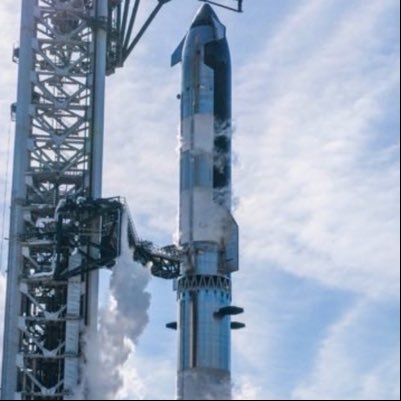
Elon Musk just said 10,000 Starship launches a year would come from Starbase Louisiana alone. Here's what you need to know.
Musk posted it on X on Oct 28, 2026, replying to a post about SpaceX's comment to the FAA. The FAA asked for input on where to build new spaceports and how priority in US airspace. It is preparing for 10,000 launches a year by 2035. SpaceX replied that it wants to launch 10,000 times per year. Musk's point is that the whole figure is from one site, not all of SpaceX.
That works out to roughly 27 launches a day. Commentary on the post says the site is designed for about 30 launches and landings per day, and SpaceX's own FAA comment says the bottleneck is now airspace rules, not rockets. SpaceX says it is investing about $100 billion in Starbase Louisiana, in Vermilion Parish. The plan is 10 launch pads on the Gulf Coast and about 10,000 jobs. For scale, one commenter put all orbital launches in history at about 7,500.
Meanwhile in Texas, SpaceX is running two Starship flows in parallel. Ship 42 finished its single-engine and six-engine static fires on Oct 26 and 27. Booster 22 fired all 33 engines ahead of Flight 15's planned double tower catch. Flight 15 targets November 2026, reportedly no earlier than Nov 8.
Ship 43 finished its Pad 2 chopstick tests and post-catch pusher testing, then returned to the production site. Booster 23 is heading to Massey's for cryotesting. That pair is Flight 16, targeting December 2026. It is expected to sail to KSC and be the first Starship flight from pad 39A.
Key numbers:
- 10,000 Starship launches a year from Starbase Louisiana alone
- About 27 to 30 launches and landings a day
- 10,000 launches a year across the US by 2035, per the FAA
- About $100 billion investment and 10 launch pads
- Flight 15 in November 2026, Flight 16 in December 2026
SpaceX's Louisiana plan is about airspace and regulation as much as rockets.

10k Starship launches/year is just from Starbase Louisiana
0
0
0
155
Elon Musk says SpaceX wants 10,000 Starship launches a year from Starbase Louisiana alone. Here's what you need to know.
Musk posted today that the 10k launches per year figure is just from the Louisiana site. He was replying to a post about SpaceX's comment to the FAA. The FAA e to build new spaceports and how to give rocket launches priority in US airspace. SpaceX said it wants to launch 10,000 times per year.
The FAA is preparing for 10,000 launches and reentries a year by 2035. It is also proposing five rule changes for commercial space. The White House wants at least 1,000 launches and reentries a year by 2030, up from 178 launches last year.
Starbase Louisiana is a planned spaceport on the Gulf Coast. SpaceX announced it in August with 10 launch pads across five launch complexes, each with two pads. Construction is set to begin next year, with first launches in 2029. SpaceX is investing $1 billion in the site, which it says is built to support thousands of Starship flights a year.
The math is steep. 10,000 launches a year is about 27 a day from one site. Commenters note that launches plus landings come to roughly 30 events a day. SpaceX's own FAA comment points to airspace rules as the bottleneck, not rockets. Full and rapid reusability is what makes that cadence thinkable. Starship is designed to carry 100 to 150 tonnes to low Earth orbit when fully reusable.
Some point out that the target looks different from May. A Reuters report from then said SpaceX aimed for 10,000 annual launches within five years, which is about 2031. The FAA's 2035 date is four years later.
Key numbers:
- 10,000 Starship launches a year, from Louisiana alone
- About 27 launches a day
- 10 launch pads, 5 launch complexes
- $1 billion SpaceX investment
- First launches in 2029
- 178 US launches last year
- 1,000 US launches and reentries targeted by 2030
- 10,000 targeted by 2035
- About 7,500 orbital launches worldwide, ever
The FAA has not yet said how it will rework airspace rules to handle that traffic.

10k Starship launches/year is just from Starbase Louisiana
0
0
0
151
Harmonic just launched Aristotle for code, starting with C and Verilog. Here's what you need to know.
Harmonic posted today that it's bringing Aristotle to code. Its pitch is that AI is writing more code than anyone can review, so it's building the AI that verifies it. The ilog, with more languages on the way.
Aristotle is Harmonic's AI theorem prover, the same reasoning behind its IMO gold-level math results. Now it formally verifies software and hardware. You describe in plain English what your code should do. Aristotle either proves it or shows you where it fails. Harmonic says there's no partial credit, same rule as math.
What it can do, per Harmonic's team: prove memory safety for C programs, and check control- and data-path properties of Verilog designs. It can also formally verify SystemVerilog and SVA, and prove a C model is equivalent to its SystemVerilog implementation. Harmonic says you don't need to be a formal verification expert, and any engineer can run it on every commit. CEO Tudor Achim called it a first step toward making all software and hardware verified by default. Harmonic chair and Robinhood CEO Vlad Tenev also posted that all software and hardware will be verified.
Early results so far:
- Fusion lab DIII-D, per Reuters, said Aristotle rebuilt part of its reactor-control software in four hours from one research paper and a 254-word prompt
- One user pointed it at TorchLean's C runtime and proved 211 of 213 properties in about 6 hours
- The other 2 came back with a use-after-free counterexample tied to inconsistent caller reference counts
- Last December, Aristotle hit 96.8% on the VERINA code verification benchmark
It's publicly available now at aristotle.harmonic.fun. Pricing is consumption-based, with no seats or licenses, and enterprise pricing goes through bd@harmonic.fun.

We’re bringing Aristotle to code.
AI is writing more code than anyone can review. We're building the AI that verifies it.
Starting today with C and Verilog.

0
0
0
118
OpenAI and Anthropic just said their AI models disproved the Exponential Time Hypothesis. Here's what you need to know.
The news broke when MIT's Ryan Williams posted on Oct 27: "An internal model at OpenAI has produced a claimed refutation of ETH." He, Russell Impagliazzo and to help organize an open, independent examination of the claim. That post has 3.4M views.
ETH is a conjecture Impagliazzo and Paturi published in 2001. It says 3-SAT, a classic NP-complete problem tied to P vs NP, has no subexponential algorithm. It has shaped complexity theory for about 25 years, and many hardness results rest on it.
OpenAI says its internal model wrote a subexponential algorithm for counting satisfying assignments in k-CNF formulas. A paper titled "The Exponential Time Hypothesis is False" is dated October 25, 2026, and the proof is formalized in Lean on GitHub. OpenAI's models also reportedly proved results in math and physics.
Anthropic posted its own ETH paper, with "Claude, Anthropic" as the only author. It claims a 2^o(n) algorithm for 3-SAT with a Lean 4 proof. Anthropic says an internal Claude research model found the core algorithm on Oct 16, using 14M output tokens and no human input. Researchers then worked with Claude to improve the presentation. OpenAI's result is said to be independent.
The caveats matter. Neither claim is peer-reviewed, and nobody has independently verified either one yet. Critics note that Lean checks the proof, not whether the formal statement matches the claim. Subexponential is not the same as fast, so there is no practical speedup. Reductions still hold, and results could be restated under weaker assumptions.
Key numbers:
- ETH introduced in 2001, about 25 years old
- OpenAI paper dated Oct 25, 2026, announced Oct 26-27
- Anthropic's core algorithm found Oct 16
- 14M output tokens, no human input, per Anthropic
- 3.4M views on Williams' post
For now these are claims awaiting expert review. Williams, Impagliazzo and Paturi are leading the independent check.

An internal model at OpenAI has produced a claimed refutation of ETH! Russell Impagliazzo, Mohan Paturi, and I have been asked to help organize an open and independent examination of this claim. 1/4

1
0
1
534
DiffuSpace Labs just released Clover-35B-A3B-Preview, an open-weight diffusion language model. Here's what you need to know.
DiffuSpace calls it the first open-weight production diffusion language model (dLLM). It has 35B total parameters and runs at 680 tokens per second on a e weights are out today on Hugging Face and ModelScope, and the model is also on the DiffuSpace website.
A diffusion model works differently from ChatGPT, Claude or Qwen. Those write one token at a time. Diffusion text models generate in parallel and can revise any position while generating. The company says this gives a five-to-tenfold speed gain over regular models of the same size. That matters for agent workflows, where every step adds latency.
On quality, DiffuSpace says Clover performs strongly against both dLLMs and autoregressive (AR) models, across reasoning and agentic benchmarks. Researchers close to the project say it beats the much larger LLaDA 2.2 and Mercury 2.5, plus strong AR baselines. These are the team's own claims, and the model is still a preview. They say inference speed has more room to improve.
The lab is led by Lingpeng Kong, who earlier worked on Dream 7B, a previous diffusion language model. Clover is DiffuSpace's first release. The company reportedly raised hundreds of millions of yuan earlier in October.
Key numbers:
- 35B total parameters, with about 3B active per token (the A3B in the name)
- 680 tokens per second on one card at BF16
- 5 to 10x faster than same-size regular models, per the company
- Released October 28, 2026
Clover is a preview release, and its benchmark results are not yet independently verified.

Meet Clover-35B-A3B-Preview 🍀 the first open-weight production diffusion language model (dLLM) with 35B total parameters capable of 680 tps on a single card at BF16.
Clover exhibits strong performance against both dLLM and AR models and is available today at @huggingface our website


0
0
0
208
Cognizant is in talks to invest in India's Sarvam AI at a $3.5 to 4 billion valuation. Here's what you need to know.
The Economic Times reported the news today, citing people aware of the matter. Cognizant is in talks to join Sarvam's latest financing round. The round is engaluru-based AI startup at more than double its previous valuation. Large Indian enterprises are reportedly lined up to anchor it.
The last round was in June 2026. HCLTech led Sarvam's $300 million Series B at a $1.5 billion valuation, and HCLTech put in $150 million as lead strategic investor. ET reported on October 13 that Sarvam had started a fresh raise of around $250 to 300 million. At that point it was eyeing about $3 billion, which would have made it India's most valued AI startup.
The backdrop is a tough one for Indian IT services. The industry is trading near five-year lows on fears that AI agents will automate coding, maintenance and back-office work. Backing a homegrown model builder is both a hedge and a bet on the future. Sarvam has also been pushing hard into enterprise adoption, with recent senior hires and model launches pointing that way.
Sarvam also signed a five-year MoU with the Ministry of Defence (HQ Integrated Defence Staff). It will design, develop and deploy AI applications for operational, training and decision-support needs across the Army, Navy and Air Force. That includes an "AI fabric" linking India's defence capabilities.
Key numbers:
- New valuation talks: $3.5 to 4 billion
- Previous valuation: $1.5 billion (June 2026)
- Planned raise: around $300 million
- HCLTech's stake in the last round: $150 million
- Defence deal: 5 years
Cognizant's investment is still in talks and not final.

After HCLTech led Sarvam’s $300m round in June at a $1.5b valuation, Cognizant is reportedly in talks to join the next one, which would value Sarvam at $3.5 to 4 billion, more than double, with large Indian enterprises lined up to anchor it.
For an industry trading near that AI agents will automate away coding, maintenance and back-office work, good to see them backing homegrown model builder is both a hedge and a bet on the future. via @EconomicTimes


1
0
0
209
Cursor just added Annotate to design mode, and Ultra users are hitting plan limits fast. Here's what you need to know.
Cursor announced Annotate on October 28. It lets users give agents visual prompts. You can select elements, draw over the running page, and edit text and CSS. outs at different screen sizes. Feedback can be sent to the agent right away or collected into a batch. The announcement has 197.7K views.
The limits complaints came the same day. One Ultra user says they burned a full month's plan in 1 day. Another says they ran through 100% of Ultra in 1 day. A third says they are on the same Ultra plan, with less usage since they mostly use Auto, yet are suddenly using 3x the tokens. Cursor's docs say Ultra gives 20x the Pro agent limits. Ultra is $200 a month on The X Subscription, which launched October 12.
It was a busy week for Cursor. The Agent SDK became available on October 26. An agent is a folder in your repo, with prompts in Markdown, tools in TypeScript and built-in evals. It can be hosted by Cursor or self-hosted. Cursor also added DeepSeek V4.1 Flash to its model picker. It is an open-weight coding model with a 1M context window.
Key numbers:
- Annotate announcement: 197.7K views
- X Subscription tiers: Free, Plus $8, Premium $30, Super $100, Ultra $200 a month
- Ultra limits: 20x Pro
- DeepSeek V4.1 Flash on CursorBench: $0.60 to $0.98 per task at the cost tier, 47.7% at the Max tier
Annotate is live in design mode, while users keep reporting that Ultra limits run out within a day.

New in Cursor design mode: Annotate.
Give agents visual prompts: edit elements, draw on the page, and review your designs at different screen sizes.

1
0
1
466