

Industry is converging on graphs with typed ontologies:
@WeAreLegora just introduced Ontological Legal Research → ontology to model legal domain
@harvey launched Harvey Graph for US case law & private context graphs for users
@Atlassian Teamwork Graph grew from 150B to 250B objects and relationships
@SAP is acquiring TechWolf: context graph that maps job tasks, skills and the market
@Oracle built Graph Memory with typed links that track how facts change over time
@getpostman Context Graph API maps resources and dependencies, so agents can see what breaks
@WeAreLegora just introduced Ontological Legal Research → ontology to model legal domain
@harvey launched Harvey Graph for US case law & private context graphs for users
@Atlassian Teamwork Graph grew from 150B to 250B objects and relationships
@SAP is acquiring TechWolf: context graph that maps job tasks, skills and the market
@Oracle built Graph Memory with typed links that track how facts change over time
@getpostman Context Graph API maps resources and dependencies, so agents can see what breaks
0
0
5
246


Andrew Altshuler retweeted

Amazing technology is being developed and released at a rate humans can hardly keep up with.
Agents are shipping software faster than we can yap about it.
Agents are shipping software faster than we can yap about it.
309
50
1,204
47,309
Andrew Altshuler retweeted

We can probably make agents 100x more efficient with better context and retrieval systems.
23
261
19,117
340,842
My personal expertise graph
runs on @omnigraphdb
operated by @bot
Tracks:
Ideas
Events
Claims
People
Products
Signals
Companies
Concepts
Highlights
Explanations
Case studies
Organizes them into Domains & Threads
with full provenance:
Span → Artifact → Source
Has a thin custom UI↓
runs on @omnigraphdb
operated by @bot
Tracks:
Ideas
Events
Claims
People
Products
Signals
Companies
Concepts
Highlights
Explanations
Case studies
Organizes them into Domains & Threads
with full provenance:
Span → Artifact → Source
Has a thin custom UI↓

1
2
13
470
Andrew Altshuler retweeted

I wonder when we'll see an infra/observability company who takes the bold step to not invest time in shipping a human-readable UI, and instead doubles down on providing an excellent set of tooling for agents
26
2
87
20,231

Andrew Altshuler retweeted
i’m becoming incredibly graph pilled lately.
i used to be dismissive of them, not seeing how they were actually useful over RAG or postgres.
but i now see a future where graphs are a central data structure for every company’s world model
are you guys graph pilled yet?
i used to be dismissive of them, not seeing how they were actually useful over RAG or postgres.
but i now see a future where graphs are a central data structure for every company’s world model
are you guys graph pilled yet?
61
6
142
12,008
Andrew Altshuler retweeted

Using SlateDB + Lance + Datafusion to save a customer millions of dollars a year in vendor costs. This is gonna be my goto stack for a lot of things.
15
13
182
21,611
Andrew Altshuler retweeted

When I wire up several agents on one project, the hard part is the memory they share. One agent updates a fact, another overwrites it an hour later, and when something breaks nobody can tell what changed or why.
Omnigraph from @ModernRelay goes straight at that. It is a graph data in object storage, on local disk or any S3 compatible bucket, in the open Lance format. You declare a typed schema and the engine checks every write against it. Graph traversal, vector search and full text run together in one query.
Branching is the part I would test first. Each agent or task gets its own branch of the graph, proposes changes there, and you review and merge them into main. That is the same Git habit I teach every cohort I run, now applied to agent memory. It is MIT licensed and written in Rust.
Would you give each agent its own branch, or one per task?
github.com/ModernRelay/om…
Omnigraph from @ModernRelay goes straight at that. It is a graph data in object storage, on local disk or any S3 compatible bucket, in the open Lance format. You declare a typed schema and the engine checks every write against it. Graph traversal, vector search and full text run together in one query.
Branching is the part I would test first. Each agent or task gets its own branch of the graph, proposes changes there, and you review and merge them into main. That is the same Git habit I teach every cohort I run, now applied to agent memory. It is MIT licensed and written in Rust.
Would you give each agent its own branch, or one per task?
github.com/ModernRelay/om…

4
1
5
193
Every vertical AI startup [in the limit] converges to a domain graph
We built context graphs to help agents work through long-horizon legal tasks.
Starting with Legal Agent Bench tasks in 11 categories like M&A diligence and contract negotiation, we had agents build context graphs of the underlying documents (without access to the eval tasks or grading rubrics).
Context graphs dramatically improved agent performance on LAB tasks:
- Firm Knowledge tasks: 65% → 80%
- Precedent lists tasks: 67% → 80%
- Matter counting tasks: 53% → 83%
They also boost agent efficiency: we found a 48% cost reduction for agents given access to a context graph to assist their work.
Full video below - more to come soon.

0
0
4
226
yup
after switching our approach to building a "FirmOS", I'm increasingly confident that the future of agent collaboration within organizational settings is going to be a "company operating system" or CompanyOS, designed for agent and human collaboration
instead of a "company brain" that holds everything, the OS is for storing rules, processes, decisions made, which tools to use and how. it can mirror some data, but the source of truth is often best held in your existing tools (CRM, etc.). it's continuously updated and used by your agents
i think of this as a "flipped playbook" where instead of writing down the company rules first and following them (which is kind of like waterfall development), you're constantly updating the playbook as you decide or learn new things day-to-day running the business

0
0
0
231
Andrew Altshuler retweeted

Beads by @Steve_Yegge is a graph issue tracker for coding agents. Omnigraph is a graph database.
So we rebuilt it as an Omnigraph cookbook:
- issues are nodes, blockers are edges
- "ready" is computed on every read
- atomic claims: one task, one agent
github.com/ModernRelay/om…
So we rebuilt it as an Omnigraph cookbook:
- issues are nodes, blockers are edges
- "ready" is computed on every read
- atomic claims: one task, one agent
github.com/ModernRelay/om…
1
1
4
234
Andrew Altshuler retweeted

Okay, @ClaudeDevs mods are wild.
Made one for @omnigraphdb and now I watch every query on the graph as Claude works.
Plus a full graph browser right inside Claude Code
Made one for @omnigraphdb and now I watch every query on the graph as Claude works.
Plus a full graph browser right inside Claude Code
11
10
216
19,068

Andrew Altshuler retweeted
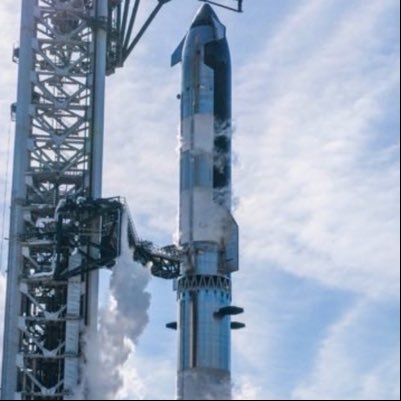
The future light cone of discoveries rounds up to 100% engineering, as the set of physics rules that govern our reality is very tiny compared to what can be done with those rules.
The reason I didn’t choose a career in physics, my favorite subject, is that I would be stuck waiting for a new collider or telescope. Better to advance technologies that ultimately enable discovery of new physics.
The reason I didn’t choose a career in physics, my favorite subject, is that I would be stuck waiting for a new collider or telescope. Better to advance technologies that ultimately enable discovery of new physics.
784
1,058
15,049
371,402
it all converges:
shared world model for agents to stays current, coherent & deconflicted
great paper on graph world models:
arxiv.org/abs/2609.19315
shared world model for agents to stays current, coherent & deconflicted
great paper on graph world models:
arxiv.org/abs/2609.19315

0
1
8
1,252