

I accidentally forgot to pay the power bill and they turned it off. Happy little accident, because now I get to enjoy the wood stove while re-seating a few hundred 223 rounds (I loaded these originally for a precision bolt action which I traded a few years ago for a 556 and need rounds). Pure zen, memories of hunting trips past, deer season in a couple weeks, good day to zero in the scope too.

9
1
64
2,824
Here's a very crude simplified chutes roadmap/plan, for near term:
- move the most unprofitable things off of the subnet, including today's announcement of some (not all) additional inference options (not paid via emissions)
- this allows us to scale the things we want and need to avoid capacity issues/better direct incentive - this includes models we use to build data pipelines and relationships to other teams/networks/etc
- add options that are completely revenue positive (hourly pricing/rentals/simple docker based jobs/etc), TEE, private, secure, priced above cost, more extensive version of private chutes we have today basically
- expand the hourly compute offerings to also include CPU only (e.g. to run agents, web browsers, sandboxes, non-GPU work of any kind)
- use some of the incentive for ideally non-datacenter based model training and serving
- build a non-extractable product on chutes from the models we build, via dynamic edge nodes, possibly from the epigenesis work (smaller faster cheaper faster than lora customizations from the sparse sections of pretrained model, participant supplied)
- models and pipeline etc. will be open source, the customization and ensemble thereof will live only in chutes, inc. the continuously evolving set of served variations/RL/etc.
We'd like, to the extent we can, attract participants who want to build and have no obligation to pay datacenters or any particular hardware vendor, to keep the value inside the subnet at all times by attacking sell pressure at the source (DC commitments, chip purchases, etc).
We will continue to have secure TEE inference and GPUs; not elimating anything wholesale, just focusing more on a commodity that doesn't have to flow out to DCs and single hardware vendors.
NVIDIA reportedly has 75% profit margins, revenue for the sake of revenue fueling GPU reselling goes straight to one place, basically. Fine, I guess, but I'd rather work together as individuals with whatever hardware we can bring, to a reasonable degree.
10
20
110
5,635
True? No clue. The point of parallax is to put the network into as many hands as possible in a verifiable trustless way, and for the output (the models) to not require yet another source for the wealthiest companies on earth to monopolize (that is, a model that can run even on a phone and not require "now's" completely unaffordable mega GPU).
The current AI marketplace is fueled by a massive debt market with very few beneficiaries at the world's expense. If you like K shaped economies here it is in plain sight; trickle up resources, consolidating into a few, spreading the gap at ever-increasing speed. Whether this is self serving for Mr. Musk to gather up more resources for pennies on the dollar or a true statement is irrelevant, the outcome is the same.
Will it crash tomorrow, next week, never? No clue, but I would rather not build the foundation on this gamble.
I'm possibly (probably?) doing it wrong, but the goal is and has always been, people first, which means accessibility first. Let's make "good enough" models with no kill switch and no hardware moat. Please and thank you.
If we get superintelligence out into the universe without/at the cost of consciousness to witness it, we have accomplished nothing, and have in fact forgotten the whole point.
@chamathuch.
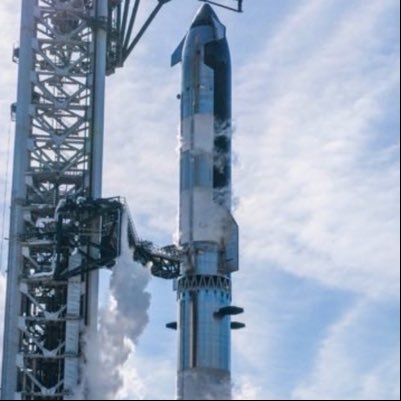
As of the past few weeks, debt markets have almost entirely shut off access to money for any company that doesn’t have substantial revenue independent of AI data centers.
SpaceX closed $40B of debt for GPUs, but we’re investment grade and have Starlink & launch revenue.
That means the 200+ neoclouds are going to see guppy-level death and consolidation. Some will make it through, but not many.
2
13
57
2,211
My kids didn't fully grasp how juice comes from fruit, so we did a thing! Perhaps a bit whimsical but the colors differentiate the parts well.
Had to burn off whatever oils and grease and who-knows-what from all the parts, cut out some cracks, re-file the threads, sand and wire hen food safe wax and oil all the contact parts with industrial enamel for the outer parts. Fun!
Had to burn off whatever oils and grease and who-knows-what from all the parts, cut out some cracks, re-file the threads, sand and wire hen food safe wax and oil all the contact parts with industrial enamel for the outer parts. Fun!


9
0
57
2,329
Florian's building super cool stuff, go check it out!
Introducing DecisionModels @decisionmodels_
I've spent the last four weeks benchmarking decision models (I run JevBench).
Today I'm launching the place to actually use the best ones:
decisionmodels.io
➡️Top open models
➡️Up to 4x faster on our own REAX engine
➡️From ens.
Expect more reveals soon, and read 👇

2
10
74
3,699
There are ~two economies: attention and revenue. Focus on whichever you like but if you only pick one, it probably eventually breaks.
Free high intelligence = maximum attention (but probably financial/resource crisis), and conversely maximally expensive commodities restricting access rugs the attention eventually and likewise probably leads to collapse.
Parallax and the new "living model" type system created out of it is perhaps a way to foster both by decreasing prices (run on phone, macbook, spark, whatever) rather than increasing them further (with larger and larger models), and ideally maintaining the intelligence (and boosting creativity/customization via this epigenesis project to prevent too much concentration into any single company/model).
Ideally, everyone just brings their own resources to fund the training (sparks + apple + amd) then they own the output forever and can shape it any which way with baking in their own memory/knowledge/rules into the otherwise sparse weights after training.


1
13
66
2,802


github.com/chutesai/epige…
Still experimenting, but seems to check out. Smaller, faster, better? Models that grow with you (or your repo, or proprietary company docs, etc.)
Short term exact recall is the context window.
Context window feeds training continuously, binary s stored knowledge and higher order perceptual understanding over time, not just RAG.
Sparse MSA global attention already selects most important tokens to attend to in longer context, so you can reinforce those parts more.

There's another magic trick (aka cool math) I believe this parallax enforced sparsity enables by the way...
arxiv.org/abs/1711.05769 <- prune weights, adapt the pruned weights, sharply cuts catastrophic forgetting risk.
If you have a model with the enforced sparsity, 50% of the weights are locked in to particular patterns. What if you mask the other expert weights leaving only those sparse contiguous weights to learn new data?
That's the intuition, perhaps it works, perhaps not. But... if it does, it would make the base model significantly more malleable for new domains/tasks/whatever. SFT/continued pretraining with less risk of catastrophic forgetting and without lots of magic tricks and RL and re-sampling in your own words etc.
6
10
53
2,288
And yes I realize it's not actually epigenetics and the analogy breaks down a bit, but it sounded fun.
0
0
5
429
Ledger itself ok, but fraudulent products less so of course. This is why I tell people I don't trust anything with a circuit board lol.
These keystone tablets are pretty cool, handed a few out at exploit summit. Even better if you leave out some of the words and remember them. se)
These keystone tablets are pretty cool, handed a few out at exploit summit. Even better if you leave out some of the words and remember them. se)

Ledger is investigating reports of loss of funds from users in South East Asia who purchased products from a reseller named CryptoBillis. As a precaution, and pending the results of our investigation, we have asked CryptoBilis to pause all sales and shipments of Ledger devices. We recommend Ledger users who purchased from this reseller in the last 90 days to not initiate set up if you have not done so yet. If you have set up your Ledger device, consider moving assets to a new Ledger signer (with new seed). We will continue to inform customers of updates as the investigation progresses.
Reach out to Ledger customer support through official channels with any questions: support.ledger.com

4
1
53
4,723
271 views, zero likes, what? Pretty neat. arxiv.org/html/2506.1377…
[Tech Blog] LittleBit revolutionizes LLM compression with ultra-low bit-widths, enabling powerful models to run on tiny memory budgets while maintaining top-tier performance.
#AI #LittleBit #LLMCompression #EfficientAI
research.samsung.com/blog/LittleBit…

3
4
28
2,154
parallax.chutes.ai/m/parallax-8b-…
Still chugging along great, EDA seems much better! Also 7 host failures so far with automatic expert ownership failover.
I did experiment also with triadic linear attention adapted to EDA and it didn't seem to have much benefit (probably skill issue on my part): arxiv.org/abs/2609.36529
Still chugging along great, EDA seems much better! Also 7 host failures so far with automatic expert ownership failover.
I did experiment also with triadic linear attention adapted to EDA and it didn't seem to have much benefit (probably skill issue on my part): arxiv.org/abs/2609.36529
EDA is superior to GDN-2 as it turns out, it avoids the failure mechanism entirely (so far), and the new run (lambda) is blowing past this one (kappa). Might add in triadic EDA next for better long context capability.
2
5
44
1,644
My two cents on this "math is solved" and "maybe we lose cryptography" question (not that anyone asked of course).
The questions are the important part, I think. What was the inspiration that led to the question which then ultimately created the answer? Having answers to old questions is very nice, but more importantly I think we just need to now use that knowledge to ask better questions.
Don't be a doomer, ask bigger questions now that we have more powerful tools to help answer them. Don't let answers to old questions extinguish the creative spark, if you will.
3
2
69
2,495
There's another magic trick (aka cool math) I believe this parallax enforced sparsity enables by the way...
arxiv.org/abs/1711.05769 <- prune weights, adapt the pruned weights, sharply cuts catastrophic forgetting risk.
If you have a model with the enforced sparsity, 50% of the weights are locked in to particular patterns. What if you mask the other expert weights leaving only those sparse contiguous weights to learn new data?
That's the intuition, perhaps it works, perhaps not. But... if it does, it would make the base model significantly more malleable for new domains/tasks/whatever. SFT/continued pretraining with less risk of catastrophic forgetting and without lots of magic tricks and RL and re-sampling in your own words etc.
2
8
52
4,077
EDA is superior to GDN-2 as it turns out, it avoids the failure mechanism entirely (so far), and the new run (lambda) is blowing past this one (kappa). Might add in triadic EDA next for better long context capability.
Kappa run is now stopped, not too bad overall! We passed llama 3.2 1b on ARC-C, OBQA, TQA, etc., nearly matched on ARC-E, SciQ, etc. Considering that was 9T tokens and we hit those numbers on the 576B checkpoint, AND we did so around 90% cheaper per token, I'd call it a solid preliminary win!
Issues with the run:
1. In one of the Gated DeltaNet-2 heads, the per-channel decay gate underflowed, causing state wipe, and ourput RMSNorm amplified near-zero outputs ~1000x into fleet wide grad spikes.
2. Very late/slow nodes were so far behind their evidence was discarded, not a huge effect but we should have had better tolerance for stale data and partial updates.
3. We packed samples but didn't do masking/etc. which is sub-optimal for pretraining (not a huge diff but worth fixing anyways).
4. The first and last layers being GDN2 may be suboptimal also, vs. SWA, no clear evidence but might be worth switching up the order a bit for those two.
We have a fix for this GDN2 issue, but while that was still running I also tested EDA (arxiv.org/abs/2606.26560…) and it actually addresses some of the root cause directly (and seems to have better loss than GDN2 anyways) so we'll probably switch to EDA once all tests come back clean and pass the kappa's instability regime (and waiting until we have highly optimized tilelang kernels for EDA to keep MFU/throughput high).
Onwards and upwards 🚀
2
2
35
2,881
Kappa run is now stopped, not too bad overall! We passed llama 3.2 1b on ARC-C, OBQA, TQA, etc., nearly matched on ARC-E, SciQ, etc. Considering that was 9T tokens and we hit those numbers on the 576B checkpoint, AND we did so around 90% cheaper per token, I'd call it a solid preliminary win!
Issues with the run:
1. In one of the Gated DeltaNet-2 heads, the per-channel decay gate underflowed, causing state wipe, and ourput RMSNorm amplified near-zero outputs ~1000x into fleet wide grad spikes.
2. Very late/slow nodes were so far behind their evidence was discarded, not a huge effect but we should have had better tolerance for stale data and partial updates.
3. We packed samples but didn't do masking/etc. which is sub-optimal for pretraining (not a huge diff but worth fixing anyways).
4. The first and last layers being GDN2 may be suboptimal also, vs. SWA, no clear evidence but might be worth switching up the order a bit for those two.
We have a fix for this GDN2 issue, but while that was still running I also tested EDA (arxiv.org/abs/2606.26560…) and it actually addresses some of the root cause directly (and seems to have better loss than GDN2 anyways) so we'll probably switch to EDA once all tests come back clean and pass the kappa's instability regime (and waiting until we have highly optimized tilelang kernels for EDA to keep MFU/throughput high).
Onwards and upwards 🚀
13
23
134
19,108
And I think we will increase model width and remove shared experts, reasoning was lackluster, probably because of this. Not sure yet, because the GDN2 issues are a real confounder.
0
0
4
381
Oh, and the prelim vllm code is up here now: github.com/chutesai/vllm
~23k tps decode (at high batch) on a single 5090 (and actually ~28k tps with fp16 gdn2), ~70ktps prefill depending context length.
Will get the llama.cpp fork, mobile inf. code, and training code cleaned up and open sourced soon too.
~23k tps decode (at high batch) on a single 5090 (and actually ~28k tps with fp16 gdn2), ~70ktps prefill depending context length.
Will get the llama.cpp fork, mobile inf. code, and training code cleaned up and open sourced soon too.
2
3
25
1,122