
Nick retweeted

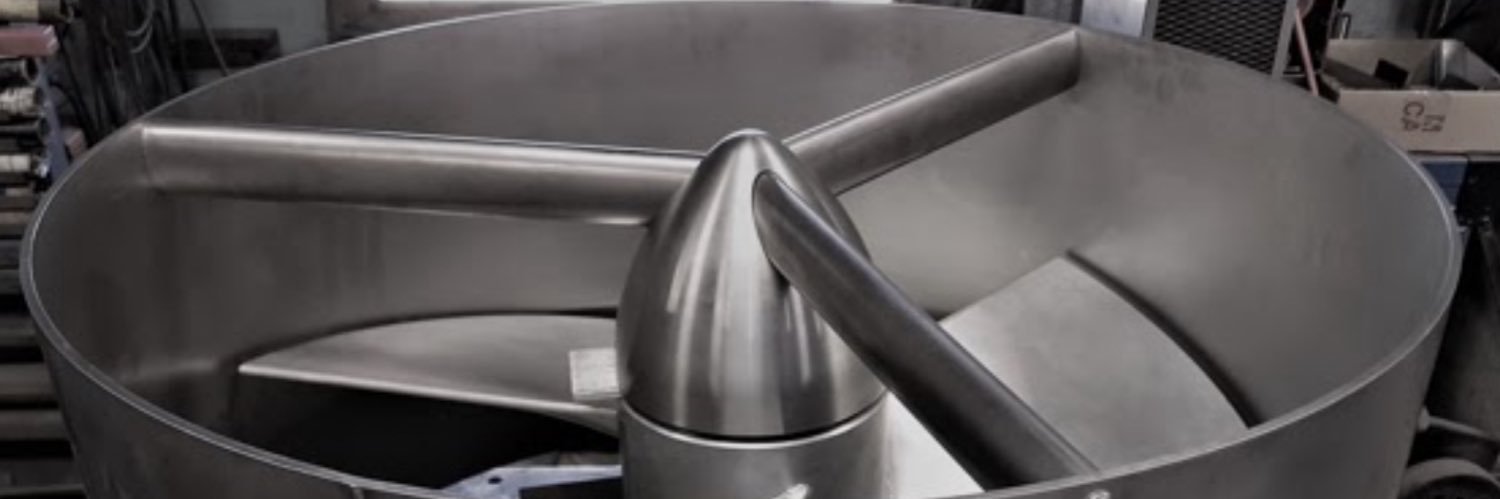
Today at DM we cast our largest parts yet.
Drag bits like these are usually machined from solid bar.
That's a lot of steel turned into chips, and a lot of machine time for a consumable part.
Instead, we cast near-net blanks in 4140 Steel. 4 parts, 22 lbs each, no tooling, to get carbide brazed and finish machined.
Next: hundreds per month. 🇺🇸


31
16
457
13,693

Nick retweeted

Waymo is the magikarp of driverless vehicles. Zero self-preservation instincts. And almost certainly the cause of one accident I had the privilege of rubbernecking on one of Houston’s goofiest roundabouts.
1
1
0
80
Nick retweeted

We've been extending Zoo's platform into toolpathing and CNC operations. Today, we bring our CNC service from a private alpha to a public beta.
For the last year we've been developing our agentic CAM platform, running on our own machines. Zoo's CAM mirrors our CAD platform, a here both traditional edits and agentic edits are built on top of our scripting language, KCL.
Toolpaths are defined in KCL, dynamically linked to surfaces, bodies, and any other parameters. This is alongside the CAD definition in KCL, allowing a common source of truth both for designers and agentic workflows.
Our CNC service's private alpha involved building automations on top of our CAM workflows to allow quick turn, high mix manufacturing in our prototype Factory 1.0., which will expand into Factory 2.0 Q1 2027.
With our public beta, anyone can upload parts to our portal, which are reviewed by our auto-quoter and agentic toolpathing. For now we're manually reviewing those to verify their performance and accuracy before releasing quotes to customers.
Once we find the auto-quoter and agentic toolpathing to be sufficiently accurate and comprehensive, we will stop manual review and automatically release quotes to customers.
These quotes will include agentically generated design-for-manufacturability feedback, based on driving factors for machine run time, setup cost, and more. Our goal is context-aware design change recommendations to help our customers achieve faster/cheaper manufacturing.
We will also be releasing this capability via Zookeeper, where you will be able to receive/accept quotes within your prompt workflows, and via our API for third part integration.
Our CAM platform will be released publicly as an extension to our GUIs, KCL, and APIs next year.
The only way to train an industrial superintelligence is to combine CAD, CAM, analysis, and more into one design-to-production platform. We do that today.


We built the software. Now we’re machining the parts.
Zoo’s manufacturing beta is open: custom CNC-machined aluminum parts, made in our own shop.
Have a part in mind? Submit it for consideration:
zoo.dev/manufacturing

9
10
68
5,455


I’m confused where is the topology optimization

Figured out the superheavy gridfin structure from second principles and my memory without ever directly seeing it
Started by just figuring out the shape and dimensions of the socket itself, as one does, and then I mapped the weld spots visible on the walls of the socket. This se spots are all in uniform rows, rather than being paired, so I already knew it used ribs instead of full stringers, in addition to the hoops between them. Basically the moment I finished mapping that I recognized that *exact* pattern from a year and a half ago. This little bugger at McGregor. Matched the dimensions and patterns perfectly.
Then I remembered seeing that exact cradle that it is being transported on before. After searching for a little bit, here's three of those identical cradles at Starbase several months ago, in addition to a smaller, fourth cradle, that is able to perfectly bridge the gap of the center piece that the sockets all join to. I can also see on this cradle for the center piece, that the middle support on it only has one side, showing it must carry that T-shape.
I'm always telling people that you can find whatever you want if you just try looking. The material is almost always just out there waiting to be found.
Obviously still a bit more to be done here this isn't final but this is effectively the entire primary structure.


5
4
324
22,451

Nick retweeted

If you’re trying to understand why ~22 hours from launch to catch this is the graphic for you
42
117
1,944
139,579
Nick retweeted

I’m joining the war on alcohol on the side of alcohol
its remarkable how little gen z drinks. it doesnt hit you til youre out w gen z coworkers, and even if youre the most washed up blown out millenial chungus who can only have like 2 beers, these teetotaling ipad babies will make you feel like orson wells shooting a wine commercial

10
23
500
13,582
Nick retweeted

Bloomberg: The Pentagon has tasked US robotics startup Machina Labs with trying to mass-produce cheap attack drones in quickly assembled modular factories as autonomous systems continue to change modern warfare. Link in comment
11
11
213
13,179
LLM "one-shotted" a surgical instrument from a picture
(it didn't but made a thing shaped object in 10 seconds)
however, if you give it files of a verified design, and let it make changes... it does indeed one-shot a whole host of well constrained updates, including assemblies.
(it didn't but made a thing shaped object in 10 seconds)
however, if you give it files of a verified design, and let it make changes... it does indeed one-shot a whole host of well constrained updates, including assemblies.


0
0
7
486


Nick retweeted

Live footage of @emm0sh
"Most hardware engineering is actually software engineering in disguise."
4
2
26
1,535

Nick retweeted

Not quite as beautiful as the real thing but here’s my two attempts at painting it


0
1
12
252


Nick retweeted

Obligatory hydroformed bellows posting:
Interesting arrival on the @ScarbsTech workbench.
A bellows link for the exhaust to turbo of a 2014 Red Bull RB10, to allow for vibration/expansion.
Inconnell 625 & 356 grammes 77mm OD - 77MM long.
#F1 #F1tech



8
24
367
27,491
If core temp is all that matters, a bath is significantly faster…?
most people sauna incorrectly
> here’s three levels of sauna
> each triggers different benefits
> pick your fighter
LEVEL 1
11 minutes at 176°F (80°C) in a dry sauna
> your heart rate climbs
> blood vessels widen
> more blood flows to your skin
> if you’re new, start here
Frequent sauna use ik of cardiovascular death and lower overall mortality.
LEVEL 2
20 minutes at 200°F (93°C) in a dry sauna
My results:
> 10+ yr reduction in vascular age
> detox of environmental toxins
> 87% less microplastics in blood
> 100% elimination of microplastics in semen
Studies show 4-7 times/week at this level is linked to a reduction in mortality, heart disease, & dementia risk.
LEVEL 3
Targeting a core body temperature of ~102.2°F (39°C). I achieve this at 31 minutes at 200°F (93°C) in a dry sauna. I tracked this via a pill I swallowed.
This is the deep repair tier. When your core body temperature hits a threshold that activates heat shock proteins it helps repair damaged proteins.
For me, this took 33 minutes, but everyone’s number is different.
I know not everyone has access to a sauna. You don’t need to do everything I do.
I share these experiments so you can find something useful for your own life.
If one thing I share helps you take better care of yourself, that’s a win. Do the best you can with what you have & know I’m rooting for you.


0
0
3
1,726