
SessionShare retweeted

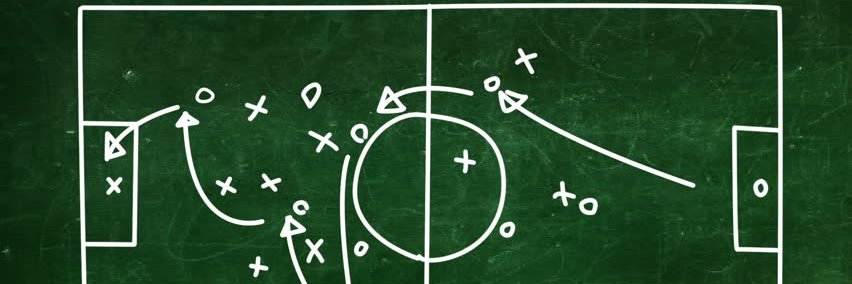
📝Tonight’s Session
Playing Forwards
Focus
-Angles to Play Forwards- Beside, Open
-Rotations- Clear Space
-Run to Disrupt- Threaten In Behind
-Play Forwards, Run Forwards
@TheCoachesZone @TheS_Resource @SessionShareNet
⚽️
Playing Forwards
Focus
-Angles to Play Forwards- Beside, Open
-Rotations- Clear Space
-Run to Disrupt- Threaten In Behind
-Play Forwards, Run Forwards
@TheCoachesZone @TheS_Resource @SessionShareNet
⚽️

1
3
27
2,192
SessionShare retweeted

A few simple games to help players attack and defend at speed.
React quickly to turnovers
Combine centrally and wide
Recovery runs
Retaining possession and fast counter attacks
From Super Six Volume One
React quickly to turnovers
Combine centrally and wide
Recovery runs
Retaining possession and fast counter attacks
From Super Six Volume One
1
11
34
3,286
SessionShare retweeted

2v1 | Pressure is Behind the Attacker
📌 Breaking fast when presented with overloads.
Set-Up:
➡️ 25 by 25 space with a 5-yard shaded zone. Each team has a pair of mini goals to attack. Add a coned gate for each team to use as a start point for the practice.
👕 Teams: Both ing into defending.
How to Play:
➡️ This is a fast-paced game of constant 2 v 1 attacks, the ⚫️’s attack first, followed by 🔴’s. The practice continues like this regardless of who scores.
➡️ The central players ⚫️ and 🔴 (1) stay on the field all of the time. They alternate between being a defender and an attacker. Each time they receive the ball as an attacker, they must play it back to their teammate before going for the goal.
➡️ ⚫️(2) starts the practice with a pass into ⚫️ (1). ⚫️ (1) must pass back to the ⚫️(2) before they can combine 2 v 1 against the defender 🔴(1).
➡️ Goals can be scored by getting into the shaded zone and finishing into a mini-goal. Defending players score by dribbling back to their start point or by passing into one of their mini goals.
➡️ Once an attack is over, roles flip so ⚫️’s now defend and the 🔴’s attack.
🚧 Constraints:
🏆Reward: 1st team to score 10 goals wins the round
👨🏫 Review: Securing possession with back to play and the decision to dribble or pass.
🚫 Restriction: Attackers have 10 touches max to score a goal.
⚽️ Created On: @SSPlanner
@Coach_Osku @205_Academy @BreakthruSoccer @TheS_Resource @JB_SoccerCoach @SessionShareNet
0
6
29
2,268
SessionShare retweeted

My @SundayShare10 this week is a session I did yesterday
Receiving isn’t just catching the ball — it’s deciding your next move 🧠⚽
Yesterday’s session with the academy lads was all about one core principle:
Receive to make the next action.
Every touch was planned before the pen‑body receiving to play a quick pass
✔️ Side‑on receiving to set for a finish
✔️ Reading the space to choose pass / shoot instantly
Too many players just receive the ball — elite players receive with purpose.
Small, sharp technical repetitions, high‑tempo decision‑making, and those little split‑second choices that separate academy standard from the next level.
Great work from every lad — the detail is showing. 💪
#Coaching #Development #Academy #Detail #Passing
1
4
7
1,407
SessionShare retweeted

6v3+2
Click here to access our activity library: 205sports.org/l/activity-lib…
Click here to access our activity library: 205sports.org/l/activity-lib…

0
2
4
1,031
SessionShare retweeted
A 1-4-3-3 training session developing striker movements, back-to-goal hold-up play, crossing patterns, and layered box finishing, building from plyometrics into conditioned match play.
205 club weekly session plan W44 - Warmup, movement patterns, rondos, SSGs
See 🧵 for links to videos + notes
@JustCoachMD @Coach_Osku @TheS_Resource @AcademySCoach @SessionShareNet @SSPlanner
205 club weekly session plan W44 - Warmup, movement patterns, rondos, SSGs
See 🧵 for links to videos + notes
@JustCoachMD @Coach_Osku @TheS_Resource @AcademySCoach @SessionShareNet @SSPlanner


2
5
16
1,620
SessionShare retweeted

What can GPS data tell you about your players’ workload?
We’ve teamed up with @PlayerData to help coaches put GPS insights into practice. In our joint webinar, @GarryMonk and Rich Buchanan discuss how GPS can shape your next session.
Watch 👀👇
youtube.com/watch?v=f6m1NE…
Data
We’ve teamed up with @PlayerData to help coaches put GPS insights into practice. In our joint webinar, @GarryMonk and Rich Buchanan discuss how GPS can shape your next session.
Watch 👀👇
youtube.com/watch?v=f6m1NE…
Data

0
6
6
757
SessionShare retweeted
Stepping In with the Ball: Possession
📌 Develop three-player connections to create scoring chances.
🧱 Set-Up:
➡️ Playing space: 40 by 30 space split in half
👕 Teams: ⚫️s vs 🔴s
⚽️ How to Play:
✔️ Blacks vs Reds: Both teams compete for possession of the ball.
✔️ Each target player steps into the practice and connects a pass. Player who passes to the target player must swap with them.
✔️ Version 1: Free play - directional possession game.
✔️ Version 2: Players must connect a pass in each half before finding the targets to step in.
🚧 Constraints:
🏆Reward: Streaks of target to target earns a bonus goal.
👨🏫 Review: Timing of the pass and quality of the support play.
🚫 Restriction: Can only go backwards to target once.
Created On: @ssplanner
@JB_SoccerCoach @TheS_Resource @205_Academy @SessionShareNet @PeterPrickett

0
2
38
1,551
SessionShare retweeted
DEFENDING ISN’T JUST TACKLING — IT’S READING THE GAME
Van Dijk’s famous line hits different: “The best tackles don’t happen because you’re fast — they happen because you’re on‑time.”
So many young defenders rush in, feet flying, trying to win the ball immediately. Van Dijk ad the run, read the body shape, pick the exact split second to step in.
✅ Read the attacker’s hips first
✅ Time your step before they commit
✅ Stay side‑on — don’t dive
✅ Patience beats desperation every single time
Defending is a thinking position. Your eyes are your best tool before your feet. 💪
#Coaching #Academy #Development #Defending
0
8
21
1,749
SessionShare retweeted

Next in this week's theme of 'Rondo Variations' is a 3v3+3+2 game representing a back 3 build-out phase!
Diagonal passes are key, teaching moments to commit, play around, turn and progress are essential.
Details: corecoaching.soccer/a/861e979a5ed4…
@SessionShareNet @CORECoachingSoc
Diagonal passes are key, teaching moments to commit, play around, turn and progress are essential.
Details: corecoaching.soccer/a/861e979a5ed4…
@SessionShareNet @CORECoachingSoc
1
6
29
1,447
SessionShare retweeted

Defending in a mid-block doesn't mean staying passive, and this situation from El Clásico is a great example. Watch how Real Madrid recognizes the opportunity to press, disrupt Barça's ball circulation and win possession.
🎓 FREE Mid-Block Webinar: Nov 11 | 7 PM CET / 1 PM ET
s://t.co/K5uJrosISM
🎓 FREE Mid-Block Webinar: Nov 11 | 7 PM CET / 1 PM ET
s://t.co/K5uJrosISM
0
2
8
675
SessionShare retweeted
Develop combinations of play, angles of support with this small-sided game
5v5 with 5 corridors
@TacticalPad video + notes: 205sports.org/l/6tmo6i6tq4
Field is organized into 5 channels. Players can dribble through any channel but can only pass to a teammate in a different channel. ositioning, use of supporting teammates to switch point of attack.
@JustCoachMD @Coach_Osku @TheS_Resource @SessionShareNet @SSPlanner
1
4
26
1,520
SessionShare retweeted
Combinations of play with 2 midfielders vs a congested center channel
4v5+2 positional play
@TacticaPad video + notes: 205sports.org/l/nklewxe3r
See 🧵 for activity details
@JustcoachMD @Coach_Osku @TheS_Resource @SessionShareNet @SSPlanner
4v5+2 positional play
@TacticaPad video + notes: 205sports.org/l/nklewxe3r
See 🧵 for activity details
@JustcoachMD @Coach_Osku @TheS_Resource @SessionShareNet @SSPlanner
1
4
10
1,250
SessionShare retweeted
4v5+2 positional play
The 205 Tactical Workbook contains 20 match scenarios. Each scenario demonstrates a moment in the game and 4 possible solutions. Coaches and players are encouraged to analyze, consider, and respond. The workbook includes video links and enrichment questions.
Click for free access and download: 205sports.org/l/tactical-wor…
@TheS_Resource @UnitedCoaches

0
3
5
762
SessionShare retweeted

Off-the-Ball Movement is one of my 9 coaching principles. And I believe it's one of the most overlooked aspects of youth football.
Watch a youth football match and pay attention to the players without the ball.
What are they doing?
Too often, I see players standing still and .
They wait for the ball to arrive.
They hide behind opponents.
They move towards the ball even when that space is already occupied.
Or they make runs without recognising what their teammates actually need.
Meanwhile, the player with the ball has limited options.
And we wonder why our team struggles to keep possession or progress forward.
This is why Off-the-Ball Movement is one of my coaching principles.
Let me explain how I approach it.
//
1. Create passing options
Whenever our team has possession, I want players without the ball to recognise how they can help.
Can they create a passing angle?
Can they move into available space?
Can they position themselves between opponents?
Can they offer a forward passing option?
For example, imagine our centre-back receiving the ball during build-up.
Our midfielder is standing directly behind an opposing player.
The centre-back can't pass to them.
What should the midfielder do?
They might move a few metres sideways into a space where the passing lane opens.
Or they might drop into the lower half-space, creating a better angle to receive.
Suddenly, our centre-back has another option.
And if the opponent follows our midfielder, that movement might open space elsewhere.
A small movement can make a big difference.
//
2. Timing matters as much as movement
This is an important distinction.
I don't want players running around constantly just to appear active.
Sometimes moving too early makes the situation worse.
Imagine our striker wants to make a run behind the opponent's defensive line.
If they start running before their teammate is ready to pass, the defender might easily follow them.
Or the striker might end up offside.
But if they recognise when their teammate has time and space to play forward, the same run becomes much more dangerous.
The timing changes everything.
I want players to recognise:
- When their teammate is ready to pass.
- When an opponent is distracted or out of position.
- When space becomes available.
- When to move towards the ball.
- When to attack the space behind.
And sometimes, staying in position is the best decision.
The goal isn't constant movement.
It's purposeful movement.
//
3. Movement can create space for teammates
This is something I believe young players should learn early.
Not every movement needs to end with receiving the ball.
Sometimes your movement creates a better opportunity for someone else.
For example, imagine our striker positioned between two centre-backs.
Our attacking midfielder has the ball.
The striker makes a movement towards the ball.
One of the centre-backs follows them.
What happens?
Space might open behind that defender.
Now our winger or another midfielder could attack that space.
The striker might never touch the ball.
But their movement helped create the opportunity.
The same principle applies in wide areas.
A fullback making an overlapping run might drag an opponent away, creating space for the winger to dribble inside.
This is why I want players to understand how their movements influence opponents and teammates.
//
4. Don't stop playing after passing
Another common problem I see is players becoming passive immediately after passing the ball.
They complete a pass.
Then they stand still and watch what happens.
But the game continues.
Imagine our midfielder passing to the winger.
What happens next?
Can the midfielder move forward to support the attack?
Can they offer a passing option inside?
Can they make a run beyond the winger?
Or should they stay behind the ball to maintain balance?
The right decision depends on the situation.
But I want players to remain involved.
Passing the ball shouldn't mean their involvement in the attack is over.
In many situations, it's the beginning of their next action.
//
5. How to develop Off-the-Ball Movement in training
I like using directional small-sided games and positional games where players constantly need to create passing options and recognise spaces.
For example, a 5v5 game with two goals.
Instead of simply telling players to move more, I want them to understand how their movement can improve the situation.
Encourage players to:
- Create passing angles and support the player with the ball.
- Recognise opportunities to receive between opponents.
- Make runs behind the defensive line.
- Create space for teammates through their movements.
- Offer new options after passing.
- Maintain good team positioning when others move.
We can adjust the playing area, player numbers, and starting positions to create different situations.
But I wouldn't automatically introduce rules that force players to move or pass in certain ways.
I want them to recognise the situation and find solutions themselves.
Some simple coaching cues:
- Where could you move to receive?
- Can you create a better passing angle?
- When is the right moment to make your run?
- Can your movement create space for a teammate?
- What can you do after passing?
- Does your team need you to move or hold your position?
I also believe we should recognise good movements even when players don't receive the ball.
A run that creates space for a teammate can be just as valuable as the pass that follows.
//
One final thought.
When we analyse youth football, we naturally focus on the player with the ball.
Their first touch.
Their passing.
Their dribbling.
Their decisions.
But the quality of those decisions often depends on what their teammates are doing.
A player can't make a forward pass if nobody offers a suitable option.
They can't combine if nobody supports them.
And they can't exploit space behind the defensive line if nobody recognises when to attack it.
This is why I believe developing intelligent off-the-ball movement is so important.
Off-the-Ball Movement isn't about running more. It's about recognising when, where, and why to move to create better opportunities for yourself and your teammates.
//
P.S. Want to build brave, fast, and competitive players?
Learn how to apply these 9 principles inside Football Coaching Hub.
Try 7 days free: skool.com/football-coach…

1
14
76
5,797
SessionShare retweeted
A complete 1-4-3-3 training session focused on progressive play through central areas, progressing from dynamic activations and back-to-pressure duels into migrating rondos and zoned match simulations.
205 club weekly session plan W43 - Warmup, movement patterns, rondos, SSGs
tes: 205sports.org/l/6pdeti
@JustCoachMD @Coach_Osku @TheS_Resource @AcademySCoach @SessionShareNet @SSPlanner
205 club weekly session plan W43 - Warmup, movement patterns, rondos, SSGs
tes: 205sports.org/l/6pdeti
@JustCoachMD @Coach_Osku @TheS_Resource @AcademySCoach @SessionShareNet @SSPlanner


1
6
28
2,313
SessionShare retweeted
Bring professional insight into your everyday coaching.
Start with our Free Limited Access to The Coaches Hub and explore selected session plans, coaching videos, goalkeeper resources, webinars, blogs and podcasts. Try relevant ideas in your own coaching environment and find your players’ next development steps.
No credit card or paid subscription is required.
Get #free access using the link in the comments.
#SoccerProfile #TheCoachesHub #SoccerCoaching #CoachDevelopment #CoachEducation

0
5
5
602
SessionShare retweeted
Clear Desire to Score & Win is one of my 9 coaching principles. And I believe it's something we should develop from a young age.
I've watched plenty of youth football matches where teams look comfortable in possession.
They pass the ball well.
They combine with teammates.
Thee side to another.
But something is missing.
They don't create enough scoring opportunities.
Players hesitate when they have a chance to shoot.
They look for another pass when they could attack the goal.
Or they don't make the runs needed to get into dangerous positions.
I want something different.
I want players who understand that scoring goals and winning games are fundamental parts of football.
Not at the expense of development.
But as an important part of it.
Let me explain how I approach this principle.
//
1. Possession should have a purpose
I believe keeping possession is important.
But possession alone isn't the objective.
We want to use the ball to create advantages, progress forward, and ultimately create scoring opportunities.
For example, imagine our team building an attack against an opponent defending in a compact shape.
We circulate the ball between our defenders and midfielders.
That's fine.
But what are we trying to achieve?
Can we move the opponent to create space?
Can we break a defensive line?
Can we find a player between the lines?
Can we create an opportunity to attack the penalty area?
I want players who recognise these opportunities and have the desire to exploit them.
Sometimes that means keeping possession patiently.
Other times, it means attacking immediately.
The important thing is that our possession has a clear purpose.
//
2. Encourage players to recognise scoring opportunities
One thing I pay attention to is how players behave when they get close to the opponent's goal.
Do they actively look for opportunities to score?
Or do they hesitate?
Imagine our attacking midfielder receiving the ball just outside the penalty area.
There's space to shoot.
But instead of taking the opportunity, they play another sideways pass.
Why?
Maybe they didn't recognise the opportunity.
Maybe they lacked confidence.
Or perhaps they've become so focused on keeping possession that shooting feels like an unnecessary risk.
I want players to recognise when they have a good opportunity to finish.
That doesn't mean shooting from every position.
Sometimes combining with a teammate creates a much better chance.
But when a good scoring opportunity appears, I want players who are willing to take responsibility.
//
3. Scoring goals requires movement without the ball
This principle isn't only about the player who shoots.
It's also about what everyone else does.
Imagine our winger receiving the ball in a wide attacking position.
They have an opportunity to deliver a cross.
What are our other players doing?
Is our striker attacking the space in front of the goal?
Is another player arriving towards the far post?
Is someone supporting around the edge of the penalty area?
Are players prepared for rebounds and second balls?
Too often, I see young players watching the ball instead of actively attacking dangerous spaces.
I want players who anticipate where scoring opportunities might appear.
Players who make runs into the penalty area.
Players who want to be first to the ball.
Players who are prepared to finish when the opportunity comes.
Because scoring goals isn't only about shooting technique.
It's also about the desire and ability to get into positions where goals can be scored.
//
4. Develop the desire to win, not the fear of losing
This is an important distinction, especially in youth football.
I want my players to want to win every match.
I want them to enjoy competing.
I want them to take responsibility when the game becomes difficult.
But I don't want them to become afraid of making mistakes because they're worried about losing.
For example, imagine we're drawing 1–1 with five minutes remaining.
What happens?
Do our players become passive because they're afraid of conceding?
Or do they continue recognising opportunities to attack and score?
I want players who have the ambition to win.
But they must still make intelligent decisions.
Sometimes we should attack quickly.
Sometimes we should keep possession and create a better opportunity.
And sometimes defending well is what gives us the chance to win.
The desire to win should influence our attitude and commitment.
It shouldn't prevent players from thinking clearly or making brave decisions.
And when we lose, I want players to learn from the experience rather than fear it.
//
5. How to develop this principle in training
I believe we should create training situations where scoring goals and competing to win are meaningful objectives.
For example, I like using directional small-sided games with goals and goalkeepers.
A 4v4 or 5v5 game can create plenty of situations where players need to recognise opportunities to score.
Encourage players to:
- Recognise good opportunities to shoot.
- Attack available spaces near the opponent's goal.
- Make purposeful runs into the penalty area.
- React quickly to rebounds and second balls.
- Create better scoring opportunities through combinations.
- Compete to win while continuing to make good decisions.
We can adjust the playing area, player numbers, and rules to create more finishing situations.
But I wouldn't simply demand that players shoot every time they get near goal.
I want them to recognise when shooting is the best decision and when creating a better opportunity makes more sense.
Some simple coaching cues:
- Can you create a scoring opportunity?
- Is there a good opportunity to shoot?
- Can you attack the space in front of goal?
- Where could the next scoring opportunity appear?
- Can you react first to the rebound?
- What can we do to create a better chance?
I also think it's important to recognise the behaviours behind goals.
A player might make an excellent run into the penalty area but never receive the ball.
Another might create a great chance for a teammate who misses.
These are still behaviours we should encourage.
//
One final thought.
In youth football, we often discuss whether winning or player development should come first.
But I don't believe they need to be opposites.
We can develop technically skilled players.
Intelligent decision-makers.
Creative attackers.
Brave defenders.
And players who genuinely want to score goals and win games.
Winning shouldn't be our only measure of successful development.
But the desire to score and win should absolutely be part of the players we're developing.
Clear Desire to Score & Win isn't about winning at all costs. It's about developing players who actively look to create goalscoring opportunities, take responsibility, and compete with the ambition to win.
//
P.S. Want to build brave, fast, and competitive players?
Learn how to apply these 9 principles inside Football Coaching Hub.
Try 7 days free: skool.com/football-coach…

0
9
17
2,430
SessionShare retweeted

⚽️2️⃣4️⃣𝙍𝙤𝙣𝙙𝙤𝙨.4️⃣𝙋𝙝𝙖𝙨𝙚𝙨. 𝙀𝙣𝙙𝙡𝙚𝙨𝙨 𝙏𝙧𝙖𝙞𝙣𝙞𝙣𝙜 𝙋𝙤𝙨𝙨𝙞𝙗𝙞𝙡𝙞𝙩𝙞𝙚𝙨⚽️
🔥 WHY GET THE COLLECTION?
✅ 24 different rondos.
✅ A variety of topics.
✅ Combine phases.
✅ More variety.
🎯SPECIAL Promo code : RONDO24
📩Get yours:
payhip.com/b/2xi8K
🔥 WHY GET THE COLLECTION?
✅ 24 different rondos.
✅ A variety of topics.
✅ Combine phases.
✅ More variety.
🎯SPECIAL Promo code : RONDO24
📩Get yours:
payhip.com/b/2xi8K

0
9
12
1,391
SessionShare retweeted
Develop progressive play, movement between thirds with this half-field structured game
8v8+GKs 3 zones 4 goals
Players are initially zone locked into thirds of the field, as ball moves between zones players may advance or drop individually
#SundayShare @SundayShare10
@TacticalPad t.co/VcCz3pQJce
@JustCoachMD @Coach_Osku @TheS_Resource @AcademySCoach @TacticalPad @SessionShareNet
8v8+GKs 3 zones 4 goals
Players are initially zone locked into thirds of the field, as ball moves between zones players may advance or drop individually
#SundayShare @SundayShare10
@TacticalPad t.co/VcCz3pQJce
@JustCoachMD @Coach_Osku @TheS_Resource @AcademySCoach @TacticalPad @SessionShareNet
1
10
60
4,664