Pinned Tweet
Our book isn't straightforwardly about "war and peace", but about the regime and identity divergence between Ru and Ukraine, which Ru refuses to accept. We'll take the "hot new releases" label, though! Thanks, Amazon. @OxanaShevel @politybooks

25
97
320
105,269
Maria Popova 🇨🇦 retweeted

Former NATO Secretary General Anders Fogh Rasmussen has laid out a five-point plan for peace in Ukraine:
1. Integrate Ukraine into NATO’s missile, air and drone defences and send all Patriots to Kyiv
2. Unfreeze Russian assets and give them to Ukraine
3. Enforce more sanctions ussian fossil fuel supplies to Europe
4. Move the Coalition of the Willing into Ukraine to defend rear areas and critical infrastructure
5. Develop ironclad security guarantees and expel countries from the Coalition that aren’t willing to fight Russia if a ceasefire breaks down

408
1,105
3,355
45,150


Maria Popova 🇨🇦 retweeted

“Russia’s violation of the principles of the European security order is a reason to enforce them, not to replace them with arrangements requiring Russian permission.”
Sound and sober analysis by Slawomir about the “ridiculous circus” presided by Kushner and Witkoff.
Sound and sober analysis by Slawomir about the “ridiculous circus” presided by Kushner and Witkoff.
The talks in Abu Dhabi have ended. A few observations.
The fundamental obstacle to ending this war is that neither belligerent currently sees an available peace settlement that would secure its essential interests at a lower cost than continuing to fight. Negotiations can arrange prisoner exchanges and address other practical questions. But they cannot manufacture a political basis for peace where none yet exists.
For Putin, ending the war with a “victory” reduced to conquering the Donbas would create an enormous problem of historical judgment. Around 1.5 million Russian casualties, killed and wounded, to acquire another devastated stretch of Ukraine? Future generations of Russians might remember Putin as the opposite of a strategic genius: the ruler who squandered his country’s people, resources and international position for gains grotesquely disproportionate to their cost.
This helps explain Moscow’s determination to turn negotiations about its war against Ukraine into negotiations about a “new European security architecture.” Russia needs a prize larger than the Donbas. Weakening NATO, pushing the Americans out of Europe and acquiring a veto over its neighbours’ sovereign choices would provide one.
The historical precedent is clear. At the Berlin Conference in February 1954, Molotov proposed a European collective security system that would have displaced the Western alliances and relegated the United States to “observer” status. Today’s vocabulary is different; the strategic ambition is familiar. If war against Ukraine could deliver the displacement of American power from Europe, the Kremlin could present it as a historic success and draw dangerous conclusions about what further wars might achieve.
For Ukraine, the calculation runs in the opposite direction. However appalling the costs of resistance, capitulation could still cost more. What is at stake is the survival of an independent state and the continued existence of Ukrainians as a distinct political nation.
Putin’s account of Ukrainian history treats a separate Ukrainian identity as something cultivated by Russia’s enemies, including Polish elites and Austrian authorities. The dangerous implication is that what was supposedly constructed can be dismantled. Deportation, killing and forced Russification become instruments for undoing a nation whose independent existence the aggressor refuses to accept. From Kyiv’s perspective, surrender would therefore offer no reliable escape from violence. It could simply remove the means of resisting it.
Europe already has a security order worth defending. Its principles include sovereignty, territorial integrity and the freedom to choose alliances. Russia’s violation of those principles is a reason to enforce them, not to replace them with arrangements requiring Russian permission.
Nor does the United States have a compelling national interest in surrendering its position in Europe to Russia. Its European presence sustains American influence, military reach and alliances. Whatever commercial opportunities Trump, Witkoff or Kushner may see in an accommodation with Moscow, those opportunities do not establish that such a retreat would benefit America. A deal attractive to individual negotiators is not necessarily a strategic bargain for their country.
That is the underlying impasse. Moscow wants a peace that converts aggression into a wider strategic victory. Ukraine needs a peace that preserves its ability to survive. Europe cannot accept Russian control over European security, and America has no sound strategic reason to facilitate it.
Until those calculations change, the war is likely to continue. Calling the process a negotiation does not make the interests compatible. Without that compatibility, we will keep getting diplomatic choreography and, around it, this ridiculous circus.
5
86
277
16,602
Maria Popova 🇨🇦 retweeted

Until Americans stop demanding what Russians are demanding--Ukraine to cede Donbas--they cannot be taken seriously. It's truly a shame that on behalf of such a country three dubious sleazy dealers are "brokering peace."
The talks in Abu Dhabi have ended. A few observations.
The fundamental obstacle to ending this war is that neither belligerent currently sees an available peace settlement that would secure its essential interests at a lower cost than continuing to fight. Negotiations can arrange prisoner exchanges and address other practical questions. But they cannot manufacture a political basis for peace where none yet exists.
For Putin, ending the war with a “victory” reduced to conquering the Donbas would create an enormous problem of historical judgment. Around 1.5 million Russian casualties, killed and wounded, to acquire another devastated stretch of Ukraine? Future generations of Russians might remember Putin as the opposite of a strategic genius: the ruler who squandered his country’s people, resources and international position for gains grotesquely disproportionate to their cost.
This helps explain Moscow’s determination to turn negotiations about its war against Ukraine into negotiations about a “new European security architecture.” Russia needs a prize larger than the Donbas. Weakening NATO, pushing the Americans out of Europe and acquiring a veto over its neighbours’ sovereign choices would provide one.
The historical precedent is clear. At the Berlin Conference in February 1954, Molotov proposed a European collective security system that would have displaced the Western alliances and relegated the United States to “observer” status. Today’s vocabulary is different; the strategic ambition is familiar. If war against Ukraine could deliver the displacement of American power from Europe, the Kremlin could present it as a historic success and draw dangerous conclusions about what further wars might achieve.
For Ukraine, the calculation runs in the opposite direction. However appalling the costs of resistance, capitulation could still cost more. What is at stake is the survival of an independent state and the continued existence of Ukrainians as a distinct political nation.
Putin’s account of Ukrainian history treats a separate Ukrainian identity as something cultivated by Russia’s enemies, including Polish elites and Austrian authorities. The dangerous implication is that what was supposedly constructed can be dismantled. Deportation, killing and forced Russification become instruments for undoing a nation whose independent existence the aggressor refuses to accept. From Kyiv’s perspective, surrender would therefore offer no reliable escape from violence. It could simply remove the means of resisting it.
Europe already has a security order worth defending. Its principles include sovereignty, territorial integrity and the freedom to choose alliances. Russia’s violation of those principles is a reason to enforce them, not to replace them with arrangements requiring Russian permission.
Nor does the United States have a compelling national interest in surrendering its position in Europe to Russia. Its European presence sustains American influence, military reach and alliances. Whatever commercial opportunities Trump, Witkoff or Kushner may see in an accommodation with Moscow, those opportunities do not establish that such a retreat would benefit America. A deal attractive to individual negotiators is not necessarily a strategic bargain for their country.
That is the underlying impasse. Moscow wants a peace that converts aggression into a wider strategic victory. Ukraine needs a peace that preserves its ability to survive. Europe cannot accept Russian control over European security, and America has no sound strategic reason to facilitate it.
Until those calculations change, the war is likely to continue. Calling the process a negotiation does not make the interests compatible. Without that compatibility, we will keep getting diplomatic choreography and, around it, this ridiculous circus.
1
10
35
3,082
Maria Popova 🇨🇦 retweeted

To the "anti-imperialists" in the back.
1. russia doesn't want peace
2. It was always about conquest and expansion
3. NATO did not "provoke" russia
4. You are all idiots
1. russia doesn't want peace
2. It was always about conquest and expansion
3. NATO did not "provoke" russia
4. You are all idiots
⚡️ “Every inch of Russian land will be returned to Russia one way or another,”
Chief Russian negotiator Vladimir Medinsky says immediately after the conclusion of peace talks.

14
148
792
6,861
Maria Popova 🇨🇦 retweeted

How Russia negotiates:
Invade and occupy.
Play the victim.
Demand a reward.
Call it a new security architecture.
Invade and occupy.
Play the victim.
Demand a reward.
Call it a new security architecture.
26
163
668
6,253
“Therefore, wherever the Russian flag has been raised, it must not be lowered.”
Unrepentant conquest and non-stop gaslighting. Don’t lose sight of the facts: in the last 30yrs, Russia keeps invading and occupying more and more neighbours. No one has invaded Russia.
Unrepentant conquest and non-stop gaslighting. Don’t lose sight of the facts: in the last 30yrs, Russia keeps invading and occupying more and more neighbours. No one has invaded Russia.
Here is the unedited translation of what Russia’s chief negotiator Vladimir Medinsky told Russian state TV today.
Q: A significant part of the territory of Kharkiv Oblast and other regions is currently under Russian control. Were exchanges of these territories discussed during the negotiations, and for which territories?
Medinsky: The topic of possible territorial exchanges is periodically floated by various sides. Let me remind you of the history. After Ukraine's incursion into Kursk Oblast, a decision was made — the president has spoken about this more than once — to create a security zone along the border with the Russian Federation.
This zone is now quite substantial. It is expanding, and it will continue to expand. I don't see any possibility of exchanging these territories.
And again, as our leader so vividly put it, wherever the foot of our Russian soldier has stepped, that is ours.
As the entire history of Russia has shown, every time we have shown a willingness to make concessions, to agree to compromises that are disadvantageous to us, to demonstrate peaceful intentions and a willingness to yield — every time we have taken steps towards our opponents to avoid certain hardships, as we thought, the result has been that we have ended up with even greater hardships.
As the saying goes, we get both war and disgrace.
But whenever Russia has demonstrated firmness and confidence in its own strength, as a result, all hardships have been overcome, and a time of lasting peace, tranquillity and development has come, both for us and for our neighbours.
Therefore, wherever the Russian flag has been raised, it must not be lowered.
The task is something else, and we talked about this today. The task is to create a system of comprehensive security in Europe that will become a new, modern Yalta and Potsdam. One that will be imbued with the spirit of Helsinki in 1975, that will reflect new, contemporary realities, and that will be fair.
If we manage to create such a security system, then we will ensure peace in Europe for decades, perhaps even centuries. That is our main task.
Q: At the very beginning of the meeting, you said some very cautious and important words: that we would try to move closer to achieving peace. Have you moved closer?
Medinsky: I think so, yes, but right now a great deal depends on all participants in the process. A lot depends on Ukraine, on the position of the United States, and on whether Europe comes to its senses.
In any case, all the objectives we have set ourselves will be achieved.
Q: Are you satisfied for now?
Medinsky: Only when we win and sign a peace agreement on our terms.

0
6
16
455
Maria Popova 🇨🇦 retweeted

‘And again, as our leader so vividly put it, wherever the foot of our Russian soldier has stepped, that is ours’
Good luck to the Quislings trying to explain this
Good luck to the Quislings trying to explain this
Here is the unedited translation of what Russia’s chief negotiator Vladimir Medinsky told Russian state TV today.
Q: A significant part of the territory of Kharkiv Oblast and other regions is currently under Russian control. Were exchanges of these territories discussed during the negotiations, and for which territories?
Medinsky: The topic of possible territorial exchanges is periodically floated by various sides. Let me remind you of the history. After Ukraine's incursion into Kursk Oblast, a decision was made — the president has spoken about this more than once — to create a security zone along the border with the Russian Federation.
This zone is now quite substantial. It is expanding, and it will continue to expand. I don't see any possibility of exchanging these territories.
And again, as our leader so vividly put it, wherever the foot of our Russian soldier has stepped, that is ours.
As the entire history of Russia has shown, every time we have shown a willingness to make concessions, to agree to compromises that are disadvantageous to us, to demonstrate peaceful intentions and a willingness to yield — every time we have taken steps towards our opponents to avoid certain hardships, as we thought, the result has been that we have ended up with even greater hardships.
As the saying goes, we get both war and disgrace.
But whenever Russia has demonstrated firmness and confidence in its own strength, as a result, all hardships have been overcome, and a time of lasting peace, tranquillity and development has come, both for us and for our neighbours.
Therefore, wherever the Russian flag has been raised, it must not be lowered.
The task is something else, and we talked about this today. The task is to create a system of comprehensive security in Europe that will become a new, modern Yalta and Potsdam. One that will be imbued with the spirit of Helsinki in 1975, that will reflect new, contemporary realities, and that will be fair.
If we manage to create such a security system, then we will ensure peace in Europe for decades, perhaps even centuries. That is our main task.
Q: At the very beginning of the meeting, you said some very cautious and important words: that we would try to move closer to achieving peace. Have you moved closer?
Medinsky: I think so, yes, but right now a great deal depends on all participants in the process. A lot depends on Ukraine, on the position of the United States, and on whether Europe comes to its senses.
In any case, all the objectives we have set ourselves will be achieved.
Q: Are you satisfied for now?
Medinsky: Only when we win and sign a peace agreement on our terms.
14
56
266
25,178
Russia admitting their ambitions extend beyond Ukraine. How embarrassing for those insisting Russia only wants Donbas (e.g Rubio) or only wants Ukraine and rest of Europe is safe (e.g Fico, Le Pen, Wagenknecht, Sakwa, Hitchens, and Lieven)
As they say in Russia, appetite grows while eating.
Russia’s top negotiator Medinsky says in Abu Dhabi that Moscow’s demands extend to all of Europe, far beyond Ukraine.
“The security system in Europe works very badly. The entire organism is sick. Ukraine is just an abscess m must be cured as a whole, a band-aid will not be enough.”
Dr Putin to the rescue of poor sick Europe…
The more Trump seeks to mollify Putin, the more megalomaniac the Russian demands become.
1
3
10
568
Maria Popova 🇨🇦 retweeted

Probably more accurate to describe this as a meeting than as negotiations, since it's pretty clear that Russia has no intention of negotiating and everyone else knows that.
Full negotiations -- Ukraine, Russia, United States -- underway in Abu Dhabi. (unclear if Europeans are off to the side).

16
74
280
5,968

Maria Popova 🇨🇦 retweeted
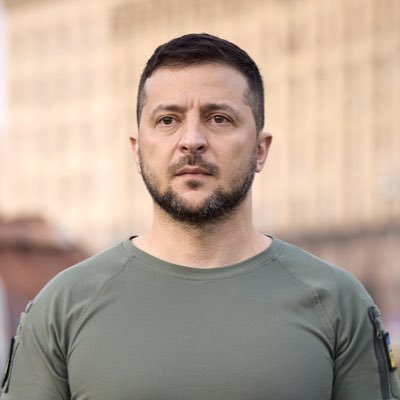
When I received the second report from our negotiating team after their meetings in Abu Dhabi, they told me that the Russians think and say they have already occupied half of Donbas, which remains under our control. These were military officers, Russian intelligence, and they Our team told them, “We don’t know how you can even say such things. We have video footage, images, other things proving that these areas are under our control.”
This is the problem. Putin lives in a different reality. Of course, he will be sharing with the Americans that he needs one or two months to fully occupy the east of Ukraine. I can draw a picture for him too where I fully occupy Russia. But it’s not true. What was good is that the American side confirmed the Ukrainian assessment of what is happening on the battlefield.
This is why we need to sit and speak at the level of leaders. There are a lot of questions. Like we spoke about the city of Kherson that is divided by the river today. The Russians control one bank, we control the other. But people want to live united on both banks. This is a Ukrainian city. Such issues are sensitive, but we have to speak about them. I think that tomorrow the teams will discuss the possibility of meeting at the level of leaders. I'm not sure that Russia is ready, but we will raise this topic.
From a conversation with journalists.

953
5,341
26,367
967,388
Trump to Zelensky: Why don't you to Moscow to negotiate?
Zelensky: It's dangerous
Russia: (sends a literal assassin with its negotiation team to Abu Dhabi)
meduza.io/en/feature/202…
Zelensky: It's dangerous
Russia: (sends a literal assassin with its negotiation team to Abu Dhabi)
meduza.io/en/feature/202…
1
20
38
1,014
Maria Popova 🇨🇦 retweeted

NEW: Zelensky’s former chief-of-staff ran a “troubling” back channel with Trump’s former chief-of-staff Susie Wiles… that was “more harmful than helpful” multiple Ukrainian and American sources tell me and @timzadorozhnyy.
kyivindependent.com/exclusive-zele…
kyivindependent.com/exclusive-zele…
22
316
958
53,017
Maria Popova 🇨🇦 retweeted

Your regular reminder that you might be an idiot if you believe it was the NATO part of Ukraine’s western aspirations that caused Putin to launch the most devastating European war in 80 years. It was that Ukraine had independent aspirations, & that Putin wanted to attack the West
8
10
64
2,415

Exactly. Read every word. Europe cannot let the fox into the hen house and it's the fox's fault.
Lots of discussion on here and elsewhere about the Kushner/Kremlin ideas for a "new European security architecture", but the idea this is the moment to rethink European security is profoundly unrealistic (and un-Realist, for what that's worth). A few points:
0
5
30
943
Maria Popova 🇨🇦 retweeted

The immediate Russian goals at this negotiations:
1) Soften western resolve to support Ukraine.
2) Get US to heighten pressure on Ukraine and EU.
3) Make ridiculous demands.
4) Blame EU and Ukraine for not accepting them and prolonging the war.
5) Prolong the war.
1) Soften western resolve to support Ukraine.
2) Get US to heighten pressure on Ukraine and EU.
3) Make ridiculous demands.
4) Blame EU and Ukraine for not accepting them and prolonging the war.
5) Prolong the war.
10
40
192
3,428
Absolutely. Read every word. As I said, Russia doesn't have security concerns. It has ambitions.
The issue is not whether European security should be discussed in future negotiations. Of course it should. The issue is the assumption that Russia's dissatisfaction with the European security order is a fundamental cause of its aggression, rather than potentially an expression, instrument, and justification of its ambitions to dominate its neighbors.
The fact that Moscow has repeatedly demanded a revision of that order does not establish that its grievances explain the war, let alone that accommodating them would prevent another one.
What if the problem is not primarily the European security architecture, but the Kremlin's unwillingness to accept the sovereignty and strategic autonomy of its neighbors? What if what Moscow presents as a security problem is, in fact, a problem of lost dominance? What if its perception of a hostile security environment is itself shaped by ambitions that no decent security arrangement could satisfy?
A durable peace requires credible deterrence, a militarily capable Ukraine, and effective security guarantees. It does not necessarily require resolving Russia's grievances about the European order, particularly when those grievances may be inseparable from its determination to dominate its neighbors.

3
5
37
803