
Pinned Tweet
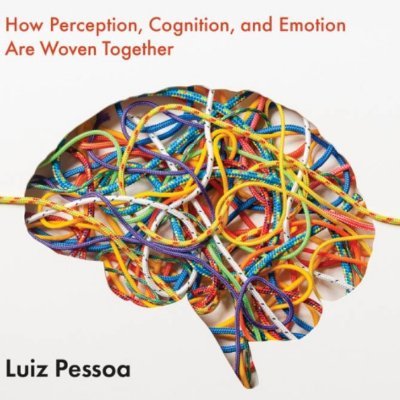
*The Entangled Brain* is out now! I wrote it with the general reader in mind, so if you want to learn about the brain from a fresh perspective give it a try.
I'll write some threads with some of the main themes soon 🧠
mitpress.mit.edu/9780262544603/…
I'll write some threads with some of the main themes soon 🧠
mitpress.mit.edu/9780262544603/…
63
198
954
Opus 5.5 (via Code) is unusable with the most basic bio things. Just asking it to look at a published brain paper to include in a paper wiki switches to Opus 5.
@lydiahallie this used to be fine until recently.
@lydiahallie this used to be fine until recently.
7
1
30
7,726
Fun dynamics
A 2×2 matrix A makes the plane flow by x′ = Ax, and each flow is one of nine kinds: points sink, escape, spiral, circle or settle on a line.
The kind is set by the eigenvalues of A, the roots of λ² − (tr A)λ + det A = 0. det A < 0 gives a saddle. Above det A = (tr A)²/4 they arecentre if tr A = 0. Below it, nodes; on it, star and degenerate node.
The stable spiral here has tr A = −1, det A ≈ 2.65, so λ = −0.5 ± 1.55i.

1
1
31
2,340
Can this be done for neuroscience???
AI is now taking on some of the hardest open problems that scientists have posed. But research is broader than solving problems. Can AI also propose research questions that experts find genuinely interesting?
We built After42 to find out. Experts judged 45 of its 135 final eresting, across mathematics, statistics, theoretical computer science, and physics, with wide variation across subfields.
The key idea: develop questions by trying to solve them.
We also asked whether AI can judge which questions are interesting. We find that model judges' top choices align with expert consensus but do not consistently capture individual experts' preferences.
We release the expert-assessed questions as an open resource for researchers to discuss, refine, and pursue, as a step toward integrating AI into the broader research enterprise.
after42.org

1
0
20
2,845
𝗖𝗮𝗻 𝗱𝘆𝗻𝗮𝗺𝗶𝗰𝘀 𝗿𝗲𝘃𝗲𝗮𝗹 𝘄𝗶𝗿𝗶𝗻𝗴?
Gaglioti, Massimini etal rewire Wilson-Cowan networks from lattice to random to modular. Perturbational complexity peaks in small-world graphs; spontan.-activity complexity tracks structure inconsistently
doi.org/10.64898/2026.…
Gaglioti, Massimini etal rewire Wilson-Cowan networks from lattice to random to modular. Perturbational complexity peaks in small-world graphs; spontan.-activity complexity tracks structure inconsistently
doi.org/10.64898/2026.…

1
12
85
4,348
The structure-function result I like the most: with the wiring held fixed, spreading sleep-like adaptation across modules lowers perturbational complexity. Structure sets which dynamics are possible; the operating regime selects among them. Same anatomy, different function!
1
0
2
780
BUT idealized graphs (binary, undirected, uniform degree), one operating point near a Hopf bifurcation; no real connectome. Perturbational complexity follows inverted U, so low value fits lattice-like, random, or sleeping networks.
Inferring structure from dynamics remains hard!
Inferring structure from dynamics remains hard!
0
0
1
549
Luiz Pessoa retweeted

So excited to share my postdoctoral work!!
How do hormones that fluctuate over hours to days reshape neural computations that guide social decisions? In this study, we investigated how estrogen alters cortical dynamics during social choice in female mice: doi.org/10.64898/2026.…
How do hormones that fluctuate over hours to days reshape neural computations that guide social decisions? In this study, we investigated how estrogen alters cortical dynamics during social choice in female mice: doi.org/10.64898/2026.…
9
91
539
27,766
Luiz Pessoa retweeted

Like many academics, my inbox is inundated with emails from prospective applicants who want to join our lab. Almost all of these emails have a summary of one of our papers, a very confident sounding proposal for future research, and highly professional tone. I’m receiving about ten such emails, seven days a week. Same monotonous style of writing, devoid of a human touch. No human can respond to them at any rate.
If I was getting a single such email even once in 3 months two years ago, I would have made a lot of effort to get them on board. I now only do a cursory read and archive them.
If you are ‘genuinely’ interested in our work, please read a paper (not necessarily ours) and share what you learnt, imperfect but uniquely yours. You will get a guaranteed response, may be delayed, but surely.
26
56
725
75,034
Luiz Pessoa retweeted
𝗦𝗽𝗮𝘁𝗶𝗮𝗹 𝗹𝗲𝗮𝗿𝗻𝗶𝗻𝗴 𝘄𝗶𝘁𝗵𝗼𝘂𝘁 𝗰𝗼𝗿𝘁𝗲𝘅 𝗼𝗿 𝗵𝗶𝗽𝗽𝗼𝗰𝗮𝗺𝗽𝘂𝘀
Cool preprint from the Meister lab. Mice learn a complex 3D maze in a few rewards. So do mutants lacking hippocampus and dorsal cortex (30% of cortical volume left).
doi.org/10.64898/2026.…
Cool preprint from the Meister lab. Mice learn a complex 3D maze in a few rewards. So do mutants lacking hippocampus and dorsal cortex (30% of cortical volume left).
doi.org/10.64898/2026.…

7
30
172
8,593
𝗦𝗽𝗮𝘁𝗶𝗮𝗹 𝗹𝗲𝗮𝗿𝗻𝗶𝗻𝗴 𝘄𝗶𝘁𝗵𝗼𝘂𝘁 𝗰𝗼𝗿𝘁𝗲𝘅 𝗼𝗿 𝗵𝗶𝗽𝗽𝗼𝗰𝗮𝗺𝗽𝘂𝘀
Cool preprint from the Meister lab. Mice learn a complex 3D maze in a few rewards. So do mutants lacking hippocampus and dorsal cortex (30% of cortical volume left).
doi.org/10.64898/2026.…
Cool preprint from the Meister lab. Mice learn a complex 3D maze in a few rewards. So do mutants lacking hippocampus and dorsal cortex (30% of cortical volume left).
doi.org/10.64898/2026.…
7
30
172
8,593
Even more striking: in a maze where a single bottleneck joins two densely connected regions, normal mice favored the bottleneck after 1–3 rewards, though tens of seconds to minutes separated that choice from reward. Mutants that learned this maze did too.
1
0
7
730
Caveat: the knockout is developmental, so subcortical circuits could have reorganized over a lifetime. But the task itself takes only hours. Another reason not to treat the subcortex as a passive substrate that cortex runs!
0
1
11
417
Luiz Pessoa retweeted

Boston University is recruiting Assistant Professors in multiple departments affiliated with our Center for Systems Neuroscience as part of the University-wide convergent search for Advancing Brain and Cognitive Health. For links to specific positions see: bit.ly/4hP8ya0
2
21
44
6,122

𝗟𝗲𝗮𝗿𝗻𝗶𝗻𝗴 𝗱𝘆𝗻𝗮𝗺𝗶𝗰𝘀
One more on learning dynamics this time from the @scott_linderman lab. Looks very cool!
One more on learning dynamics this time from the @scott_linderman lab. Looks very cool!
Coming to @NeurIPSConf 2026: Can you learn dynamics from noisy observations 𝘄𝗶𝘁𝗵𝗼𝘂𝘁 𝗻𝘂𝗺𝗲𝗿𝗶𝗰𝗮𝗹 𝘀𝗶𝗺𝘂𝗹𝗮𝘁𝗶𝗼𝗻? Yes, and just as accurately as you can with simulation!
Paper: arxiv.org/abs/2606.16138
Code: github.com/lindermanlab/h…
Thread🧵

0
2
35
2,708
Luiz Pessoa retweeted

New essai out in @Montreal_Review
I discuss why consciousness is not a thing but rather a journey that living systems do (but not Al)
Check it out 🙏😎👇🏼
Thank you for having me !
themontrealreview.com/Articles/what_…
@SarahTheHaider @dioscuri @jeffrsebo @carlorovelli @blaiseaguera milymbender @GaryMarcus @mustafasuleyman @JasonSilva @TEDchris @sapinker @michaelpollan @MatthiasMichel_ @skdh @pgodfreysmith @mmitchell_ai @michaelshermer @fchollet @camhberg @davetroy @demishassabis @azeem

45
82
347
16,643
𝗢𝗻 𝘁𝗵𝗲 𝗾𝘂𝗮𝗹𝗶𝘁𝘆 𝗼𝗳 𝗮𝗹𝗹 𝘁𝗵𝗶𝗻𝗴𝘀
Excellent book on relational aspects of knowledge and world. Inspired by physics but providing a general process + perspectival framework.
Quite convergent with The Blind Spot by Frank, Gleiser, and Thompson.
Excellent book on relational aspects of knowledge and world. Inspired by physics but providing a general process + perspectival framework.
Quite convergent with The Blind Spot by Frank, Gleiser, and Thompson.

4
41
232
8,762

Luiz Pessoa retweeted

Leading AI models appeared to predict brain activity equally well…
…until we asked them to synthesize images that precisely control neural firing, like these 👇
Across 25 neural sites, closed-loop experiments revealed striking hidden differences in model-brain alignment.
🧵
…until we asked them to synthesize images that precisely control neural firing, like these 👇
Across 25 neural sites, closed-loop experiments revealed striking hidden differences in model-brain alignment.
🧵
4
56
188
18,260