

PCrudy retweeted

@barstoolsports It’s calls like this that make you realize that what Gruden said about Roger goodell was 100 percent accurate
1
1
12
323

PCrudy retweeted

The reality is this completely devalues Starlink.
If one man can arbitrarily shut off your Internet, it's less dependable than your already hit or miss Internet connection.
If one man can arbitrarily shut off your Internet, it's less dependable than your already hit or miss Internet connection.
Umm, so does this apply to the U.S. military too? SpaceX will disable Starshield when it thinks that the U.S. military defending Taiwan, for example, is using the network for “unequivocally offensive” strikes? Or does this only apply to Ukrainians?


487
14
148
165,570
PCrudy retweeted

New College football rules? If you have no timeouts left and the other team is about to kick a field goal to win the game with under 10 seconds left…just rip the helmet off of someone on the team kicking the field goal and you will force a 10 second run off and go into OT.
59
59
1,868
212,845
PCrudy retweeted

I give up. The bots just won't stop. It's insane. I'm just a guy expressing opinions on this hellsite. I'm a nobody. Why am I getting over 700 replies, most of them insults. I can't use Notifications to respond to actual people; the bots have swamped my Mentions and rendered them unusable.
I have changed who can reply to my Starlink/StarShield posts to people who I already follow. This sucks. Why are people this way. This hellsite sucks. Why am I still paying $11 per month for the stupid blue check that I use solely for the ability to edit posts.
I have changed who can reply to my Starlink/StarShield posts to people who I already follow. This sucks. Why are people this way. This hellsite sucks. Why am I still paying $11 per month for the stupid blue check that I use solely for the ability to edit posts.
80
17
259
7,160
PCrudy retweeted

Not once, in any way, as the Republicans have gotten worse, have the Democrats responded by getting any better.
132
115
1,037
50,218
PCrudy retweeted

A few simple questions expose the holes in Starlink/Starshield story.
1. If it was a ToS violation, why is the service working again, including drones?
2. Starshield was throttled. Since it’s a military system, which ToS did it violate?
Try asking rational questions
1. If it was a ToS violation, why is the service working again, including drones?
2. Starshield was throttled. Since it’s a military system, which ToS did it violate?
Try asking rational questions
54
369
2,540
61,032
PCrudy retweeted

Incorrect. Musk allowed Russia to use commercial Starlink for YEARS to murder Ukrainians. That largely stopped earlier this year. Ukrainian military uses the DoD Starshield variant under contract. Oddly, if you replace "Ukraine" with "Russia" in Musk's post then it's true.

Majority of the Russian units occupying Ukraine, a force over 600,000 Russians, are relying on Starlink satellite internet and Discord for regular combat operations. Both are American companies.
This absolute insanity must end immediately.
62
1,053
3,002
43,292
PCrudy retweeted

The factoid that '50% of marriages end in divorce' was kinda true decades ago.
But the divorce rate peaked in 1980.
Now, less than 40% of all marriages since 2000 end in divorce.
For college graduates, it's under 30%.
For college graduates who get married after age 25, and who don't have any kids before marriage, it's under 20%.
Anybody promoting the outdated, deceptive 50% rate has some kind of anti-marriage or anti-natalist agenda.
It scares young people away from getting married and having kids. That is their goal.
the american divorce rate is at its lowest in over 50 years
congratulations to the 16% of 18-29 year olds who are married

298
665
8,091
296,128
RT @KenGardner11: BTW, I don't care whether it was Starlink or StarShield or whatever. I care that someone -- Trump 2.0, Musk, or whoever -…
0
98
0
PCrudy retweeted

Starlink, Starshield, GPS, and the Claims About “Hacking”: A Technical Explanation
A post accusing Ukraine of “hacking” #Starlink is spreading rapidly on this platform.
The technical claims in that post are incorrect. They seem based on a collection of rumors circulating on Telegram, including information from Russian channels.
Unfortunately, this post and others like it are receiving an enormous number of likes and reposts.
That's why I believe it's important to address these claims with clear technical explanations rather than allow misleading information to spread unchecked.
This is a fairly detailed post, but I think the distinction matters.
Some of the technical information below comes from my own research and detailed analysis of Starlink terminal firmware, particularly its GPS, PNT, and velocity-processing systems.
#⃣ 1. What are Starlink and Starshield?
People still frequently confuse the two.
Starlink is SpaceX's commercial satellite internet service, designed for consumers, businesses, and other commercial users.
Starlink supports operation in motion, but the permitted speed depends on the service plan, equipment, and geographic region.
Under commonly available commercial plans, the maximum authorized operating speed is 160 km/h (100 mph).
In Ukraine, Starlink terminals are subject to a specific speed restriction: they cannot operate at speeds above approximately 75–80 km/h.
This Ukraine-specific restriction was introduced less than a year ago, in coordination with Ukrainian authorities, to prevent Starlink terminals from being used on drones.
Starshield is SpaceX's government-focused product and service family, based on Starlink technology and developed for national security applications.
It includes secure communications, Earth observation, and hosted payload capabilities.
Some Starshield systems involve dedicated government spacecraft and infrastructure. However, Starshield communications services can also use the underlying Starlink satellite network.
This distinction is important: Starshield does not necessarily mean a completely separate physical satellite constellation or entirely different user terminal hardware.
SpaceX develops and operates the underlying Starlink infrastructure. The U.S. government procures Starshield capabilities through contracts, with ownership and operational control depending on the particular system and arrangement.
The division of authority between SpaceX and the U.S. government has become especially relevant following the October 2026 incident.
Unlike ordinary commercial Starlink service, Starshield configurations used for military operations in Ukraine have supported substantially higher operating speeds.
#⃣ 2. Is Starshield available in Ukraine?
Yes. Starshield is operational in Ukraine and is extensively used by the Ukrainian military.
Starshield service has been used in Ukraine since approximately mid-2023. Subsequent U.S. government contracts and public reporting also confirm its availability.
The United States has procured Starshield services specifically to support Ukrainian military operations.
An October 2026 U.S. Senate letter explicitly confirms that Ukraine receives Starshield services procured by the U.S. government.
Therefore, the idea that Ukraine is somehow obtaining Starshield capabilities by secretly modifying commercial terminals fundamentally misunderstands how these services are provided.
How does the Ukrainian military use these services?
The Ukrainian military uses both commercial Starlink and Starshield.
Commercial Starlink is widely used because of its availability, relatively low cost, and excellent performance. For stationary installations and many other applications, commercial service is entirely sufficient.
Starshield is used for specialized military applications, including drones and other platforms requiring reliable connectivity at higher operating speeds.
These are capabilities provided through the Starshield service itself, not necessarily through unauthorized modifications to commercial Starlink hardware.
Using Starshield for its intended and authorized military applications is not inherently a violation of its service terms.
#⃣ 3. Regarding the October 2026 incident
Beginning on October 13–14, Ukrainian military units encountered unexpected speed restrictions affecting Starshield connectivity.
Terminals that had previously operated at substantially higher speeds began losing connectivity at approximately 160 km/h, with some reports describing interruptions at even lower speeds.
These restrictions disrupted military operations, particularly those involving high-speed unmanned systems.
The consequences were serious. Ukrainian officials reported that the restrictions interfered with drone operations, including efforts to intercept russian attack drones.
The decision-making process remains disputed. Neither SpaceX nor the U.S. government initially accepted responsibility for imposing the restrictions. Subsequent reporting and statements from U.S. lawmakers raised questions about who authorized the changes and which organization had the ability to implement them.
As of October 24, Ukraine's Ministry of Defense has officially reported that Starlink/Starshield connectivity is once again stable at speeds exceeding 400 km/h.
#⃣ 4. Does Starshield require separate hardware?
Not necessarily.
This is one of the most important points in the entire discussion.
Starshield is a government-focused service and technology family. In the case of satellite communications provided to Ukraine, existing Starlink terminal hardware can be provisioned to use Starshield service.
In December 2024, Bloomberg reported that a Pentagon contract would provide Starshield access to an additional 2,500 Starlink terminals already deployed in Ukraine, on top of 500 terminals previously covered.
The contracts therefore provided service for a total of 3,000 terminals.
In practice, compatible commercial Starlink hardware can be reassigned to Starshield service through the appropriate authorization and provisioning process.
This requires approval. It is not something that a customer can simply enable through the ordinary Starlink application.
Are there specialized Starshield terminals?
Yes.
For example, there is a specialized variant of the Starlink Mini known internally as `mini1_rugged`.
Based on my hardware research, this model uses an improved GNSS receiver, the Teseo V, instead of the receiver found in the regular Mini.
However, despite having repaired and examined numerous terminals and maintaining contact with people working with this equipment, I have not encountered evidence of this specific variant being supplied to Ukraine.
The Starshield terminals I have encountered or received information about in Ukraine are based on regular Starlink hardware.
Some terminals arrive already configured for Starshield service. Others can be provisioned for it through the appropriate channels.
The key point is simple:
A regular Starlink terminal operating under an authorized Starshield service configuration is still a Starshield terminal from the service perspective. It does not need to be physically modified or “hacked” to obtain that service.
#⃣ 5. Why does a Starlink/Starshield terminal require GPS?
Three years ago, I published an article explaining why GPS is important for Starlink terminals and how to improve GPS reception on the hardware available at that time: olegkutkov.me/2023/11/07/con…
Some of the technical details in that article are now outdated, but the fundamental principles remain relevant.
A Starlink terminal requires sufficiently accurate position and timing information for network synchronization, beamforming, and other aspects of normal operation.
Location information can also be used for geographic service authorization.
Invalid or spoofed GPS data may interfere with these processes. Depending on the magnitude of the error and the firmware's ability to detect it, the terminal may lose connectivity or become unable to operate normally.
Modern firmware also includes mechanisms to detect suspicious or inconsistent GPS information.
When GPS data is considered unreliable, the terminal may attempt to use an alternative source of positioning, navigation, and timing (PNT) information derived from Starlink's own satellite constellation.
However, this fallback mechanism is not guaranteed to work reliably under every operating condition.
This distinction helps explain why some hardware modifications focus on improving GPS reception or supplying more reliable positioning data, rather than bypassing Starlink's network authorization mechanisms.
#⃣ 6. What is Starlink PNT?
Starlink PNT is a positioning, navigation, and timing capability that derives information from signals transmitted by Starlink satellites.
By combining satellite measurements with known orbital information, a terminal can estimate its position and movement independently of a conventional GPS receiver.
Starlink firmware contains the necessary functionality to process these measurements and use them as an alternative positioning source.
Initially, this functionality was more of an experimental feature. It was interesting from an engineering perspective, but its accuracy and reliability were limited.
Over time, it has improved significantly.
Modern implementations can provide useful positioning information, including when a terminal is moving.
There are still measurement errors, uncertainties, and limitations, but Starlink-derived PNT can serve as an alternative when GPS is unavailable or unreliable.
Nevertheless, conventional GNSS remains an important and generally preferred source of positioning and timing information in current terminal designs. For now.
Can the terminal operate without GPS?
Under certain conditions, yes.
Starlink firmware provides a gRPC request called `dish_inhibit_gps`, which controls whether GPS is used as a position source.
When GPS use is inhibited, the firmware can attempt to rely on alternative positioning information.
A similar situation occurs when GPS data becomes unavailable because of hardware or communication problems.
However, disabling GPS does not guarantee that the alternative positioning solution will be sufficiently accurate or available.
It also does not automatically change the terminal's service permissions.
#⃣ 7. How does a Starlink terminal determine its moving speed?
The GPS receiver is a primary source of position and velocity information.
Proprietary NMEA messages, including `TMPV`, carry information the terminal's motion-processing logic uses.
The firmware does not necessarily trust these measurements without additional validation.
The firmware can filter GPS-derived velocity and compare it with information from other available sources, including Starlink-derived positioning.
The terminal also contains an inertial measurement unit (IMU), whose acceleration measurements can help evaluate movement and detect inconsistencies.
The firmware applies thresholds and consistency checks to these measurements.
These mechanisms run internally and aren't exposed as user-configurable settings.
If GPS measurements differ significantly from the expected values or fail validation, the firmware can reject them.
However, GPS validation and service-speed enforcement are two different things.
Rejecting GPS data does not automatically mean that the terminal has exceeded the permitted operating speed.
The terminal's service configuration determines whether operation at a particular speed is authorized.
When the relevant speed policy is violated, the terminal may report a condition such as: `MOVING_TOO_FAST_FOR_POLICY`
This distinction is essential when evaluating claims about GPS modification.
Simply changing GPS-reported velocity does not automatically change the terminal's authorized operating speed or eliminate the firmware's internal validation mechanisms.
As explained earlier, appropriately provisioned Starshield service supports high-speed operation without the same restrictions imposed on ordinary commercial configurations.
Therefore, no additional “hacking” is required to obtain high-speed capability when that capability is already authorized as part of the service.
Reliable GNSS reception remains desirable, however.
This is one reason specialized terminal designs may incorporate improved receivers, such as the Teseo V used in the `mini1_rugged` variant.
It also explains the existence of solutions intended to improve GPS reception or provide a more reliable PNT input.
**Improving positioning reliability is not the same thing as bypassing service authorization.**
#⃣ 8. How does Starlink geofencing work?
There are two important factors: geographic service authorization and physical RF coverage.
Understanding the difference is essential.
Geographic service authorization
Starlink uses geographic information to determine where service is available and whether a particular terminal is authorized to operate.
The system uses logical geographic regions rather than relying exclusively on the physical boundaries of satellite beams.
H3 is one geographic indexing system relevant to this discussion. It divides the Earth's surface into hierarchical hexagonal cells that represent geographic locations and regions.
Geographic indexing provides a convenient way to manage coverage and service policies, but an H3 cell should not be confused with a physical satellite beam.
Network authorization can depend on several factors, including geographic location, service configuration, terminal identity, and applicable restrictions.
A terminal may be physically capable of receiving a satellite signal while still being denied access to the service.
This is an important distinction when discussing restricted territories, including russia.
Receiving a Starlink signal does not necessarily mean the terminal is authorized to connect to the network.
Physical RF coverage
Satellite beams cannot perfectly follow national borders or the boundaries of geographic indexing cells.
An RF beam has a physical footprint determined by the satellite antenna, beam steering, operating conditions, and geometry.
Its boundaries are not perfectly sharp.
Consequently, a beam may illuminate areas on both sides of a national border even though the service is authorized on only one side.
This is a normal characteristic of satellite communications, not evidence that geographic service restrictions have been disabled.
The role of GPS in geofencing
The terminal's reported location provides another source of information for determining whether it is operating in an authorized region.
The network can use terminal positioning information, together with its own authorization rules, to determine whether service should be permitted.
When operation is prohibited, the terminal may receive an appropriate disablement code from the network.
These mechanisms should be understood as parts of a broader service authorization system, rather than as a single GPS check controlling everything.
Can geofencing be bypassed by supplying modified GPS coordinates?
This question requires some nuance.
Changing the location reported by a GPS receiver may influence positioning-dependent decisions, but it does not automatically override network authorization.
Starlink also has other information available to evaluate terminal operation, and its firmware includes mechanisms for detecting inconsistent positioning data.
Large discrepancies can disrupt normal positioning and beamforming calculations, trigger validation failures, or cause the terminal to lose connectivity.
Most importantly, changing GPS coordinates does not by itself grant a terminal permission to use a service or geographic region for which it is not authorized.
#⃣ 9. So what exactly is being called a “Starlink hack”?
This is where much of the confusion comes from.
The modifications being discussed online are primarily related to improving GPS reception or providing the terminal with reliable positioning and timing information.
These are technical solutions intended to improve connectivity and stability, particularly when the terminal is moving or operating in an environment with GPS interference.
They do not automatically bypass Starlink's speed restrictions, geographic limitations, or network authorization mechanisms.
As explained earlier, regular Starlink hardware can also operate under an officially authorized Starshield service configuration, which supports high-speed military applications.
Neither improving GPS reliability nor using an authorized Starshield service constitutes hacking Starlink.
It's important to understand these differences before making accusations based on photographs, rumors, or incomplete technical information.
#⃣ Conclusion
Starlink and Starshield use closely related technologies, but they are different services with different capabilities and restrictions.
Regular Starlink hardware can operate under an officially authorized Starshield service configuration. No special hardware modifications are required.
Improving GPS reception or providing reliable positioning data does not mean bypassing Starlink's network restrictions.
Using Starshield for authorized military operations is not hacking. Neither is improving a terminal's GPS reliability.
My goal is simply to explain how these systems work and clear up the confusion surrounding them.
Technical accusations should be based on evidence, not rumors.
#starlink #starshield #gps
98
337
1,089
129,157
PCrudy retweeted

Latest inane bullshit rationalization attempting to retroactively justify the unjustifiable has dropped. This would be number 37.
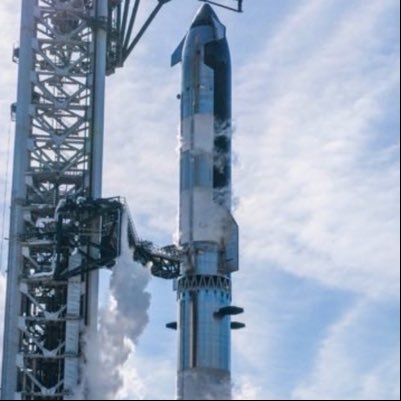
Starlink by default can only be used by Kyiv defensively. It's geofenced not to work over Russia. Ukraine only uses, CAN only use, it over Ukraine
Starlink by default can only be used by Kyiv defensively. It's geofenced not to work over Russia. Ukraine only uses, CAN only use, it over Ukraine
Correct.
Using Starlink, a civilian commercial service, for offensive drone strikes to kill people has never been allowed, nor should it be.
Starshield, a different system, is controlled by the US government. What they decide to do is up to them.
Ukraine military violated Starlink terms of service and used it for offensive drone strikes to kill people. That loophole was closed last week.
Starlink remains critical to the defense of Ukraine, as it is the only system that cannot be jammed or blown up, at least for now. Were Starlink to be turned off, the Ukrainian front line would collapse immediately. This is NOT a threat, it is simply a statement of fact.
Starlink was also crucial to preventing Russia from overrunning Ukraine in the early days of the war, as all other means of communication were destroyed or jammed by Russia.
SpaceX has done more to defend Ukraine than any private company on Earth BY FAR.
That said, I have nothing but UTTER CONTEMPT for the virtue-signaling evil warmongers who push for endless slaughter and offer no realistic solution to the conflict. May you burn in hell.
End of story.
41
39
226
3,806
PCrudy retweeted

This is more evidence for Congress, which can easily determine if Ukraine violated any terms of service. It also constitutes a tacit admission by Musk that he played a part — if not the central role — in throttling Starlink.

575
1,316
5,328
308,041
PCrudy retweeted

A new excuse dropped for the Starlink/Starshield throttling in Ukraine: "Ukraine hacked the terminals." Promoted by all the bots and paid pro-russian influencers, supported by their fever dreams and zero evidence whatsoever.

106
265
1,564
13,431
PCrudy retweeted

Musk got people killed and now he is lying to cover it up
Elon Musk claims that Ukraine allegedly violated Starlink's terms of use and used the system on combat drones.
As someone who was inside the process at the Ministry of Defense, I can say with certainty that this is not true.
In February of this year, whitelists were introduced. uld be registered by both military personnel and civilians.
But for any satellite terminal to work while on the move, it had to be added to a special list and connected to the military Starshield system. Otherwise, no satellite communication terminals in Ukraine would work.
In other words, using civilian Starlink for drone missions was technically impossible. All drone missions that required satellite communication could only be carried out using Starshield.
We are very grateful to the United States and SpaceX for access to critically important satellite communications. Ukraine did not violate the terms of use.


122
120
694
7,763
RT @KenGardner11: This is such bullshit.
For how many months or years did Ukraine use Starlink for drone strikes, which themselves are par…
For how many months or years did Ukraine use Starlink for drone strikes, which themselves are par…
0
56
0


PCrudy retweeted

U.S. intelligence indicates Iranian preparations for attacks targeting Americans across the Middle East have reached "advanced stages," prompting the urgent evacuation of personnel from U.S. embassies and military bases across the region, U.S. officials say. -WSJ
5
66
507
55,256
PCrudy retweeted

I texted my children that we got the puppy they’ve been begging me for and sent them a link with pictures. 🐶When they clicked on the link, it took them to a webpage that said YOU’RE GROUNDED. They’ll be spending the weekend retaking our family’s cybersecurity training course.
177
6,473
110,130
1,335,957
