
Whenever we place representatives of both NCAA member colleges and college athletes in the room to bargain over employment terms, we move forward. Whenever we sideline revenue-generating athletes and instead put Trump, Levine, Baker and Campbell in the room, we move in reverse.
A potentially historic move in college sports.
Following negotiations with university athletic administrators, Tennessee men's basketball players released a collective bargaining framework featuring salary caps, spending floors, guaranteed pay and transfer rules. spr.ly/6015By8w8L

0
0
0
55
Thank you to Commissioner Tisch for standing with NYC and against discrimination and hate of all kinds.
NYPD Commissioner Jessica Tisch received the Theodor Herzl Award by the World Jewish Congress tonight.
“When anti-Semitism is expressed openly, it demands an equally open condemnation,” she told the crowd.
“We should not have to wait until a Jewish New Yorker is attacked age to confront the hate directed at them.”


1
0
3
401
Unreliable narrator?
A fascinating comment here from Russini to People mag:
“The absolute best part of this situation has been the loyalty the NFL has shown me. They checked in with me almost daily while I wasn’t working to make sure I was staying connected to football”
people.com/dianna-russini…
1
0
6
1,469
I believe the No. 1 thing that has helped me to improve my teaching as a tenured professor has been continuing to take classes as a student. In doing so, I see the norms set in other courses, observe teaching strategies that work and fail, and experience the student perspective.
2
1
10
660
As an #MLB fan, I'm with Pedro. But, if the owners have an opening bargaining position that demands a salary cap, I don't see a smooth resolution.
espn.com/mlb/story/_/id…
espn.com/mlb/story/_/id…
3
0
2
1,202
Does the so-called Protect College Sports Act protect a system of youth sports that, is itself, bad. Here's a two minute and five second video from me on the topic, with a hat tip to @DionneKoller at the beginning of my reply:
instagram.com/reel/DeM_LQGgN…
instagram.com/reel/DeM_LQGgN…
0
2
3
457
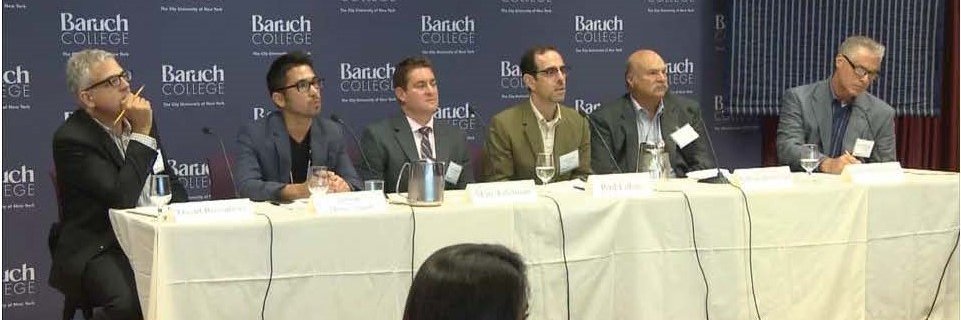
Final call to sign up (free) and hear Prof. Matt Mitten and me debate online the Trump- Cruz-Cantwell Protect College Sports Act. The debate takes place Tues. Nov. 10, 11 AM ET. Sign-up link below:
College sports are changing—and the stakes have never been higher.
Join us November 10 for a discussion on the proposed Protect College Sports Act, featuring Zicklin Prof. @MarcEdelman and Marquette Prof. Matthew Mitten!
RSVP today: zicklin.baruch.cuny.edu/zicklin-webina… #sports #webinar


1
1
6
1,026
After listening to Randy Levine on @SportsLawPod a couple of weeks ago, I finally had the chance to listen to the next episode of the show, where Gabe interviews Charlie Baker. It too was an interesting listen, but for different reasons. Charlie is smooth. He is polite. He’s civil. He clearly had a lot of media training as governor.
Charlie takes Gabe’s down the middle questions and answers in layman’s terms. He avoids the antitrust subject matter and engages solely on public policy, as if the law does not exist. In doing so, he avoids making legal misstatements as Levine does.
It is easy to understand why NCAA member colleges are willing to pay Charlie Baker, rather than let’s say Mark Emmert, to advocate for them to Congress and the public.
But, with that said, this smooth and steady demeanor is what makes Charlie Baker so dangerous for those opposed to retrograde college sports policy. Straight-faced, friendly and thoughtful in some ways, Charlie clearly can sell almost anything to anyone. And, one would have to think it is he, and not Levine, who has moved the chains with people like Maria Cantwell.
Levine, even in a vacuum, comes across as a bad advocate for the #PCSA. Baker, if given air time without debate or rebuttal, has probably been the one convincing Congresspeople that don’t naturally have their guards up.
1
1
5
1,125
For people trying to read tea leaves on status of the Protect College Sports Act, listen carefully for college leaders speaking publicly about trans issues again. Find three of these statements in any short time period and I’d say #NCAA members are done cozying up to Trump.
0
0
0
517
I shared a podium at @brooklynlaw this morning with @bcope51, who explained plans for organizing college athletes. We had never spoken before, and yet his plans matched my legal conclusions. Randy Levine claims it can't be done. Truth: Randy doesn't want it done. Big difference.
2
1
5
555
The second sentence in Darren’s tweet is such often a true statement about Rule of Reason antitrust cases. The burden of showing the economics (which often requires time and experts) is the key to victory.
This was always going to be a heavy lift for the plaintiffs. The antitrust argument, while it may be a winner at trial, is a tough one on injunction. To be clear, this has nothing to do with the 5-in-5 litigation across the country at the state court level.

0
0
2
562
A Rainy Day in Brooklyn. Sounds like the title to a Woody Allen movie. But it’s actually me, with my umbrella, heading to @brooklynlaw to speak about commercial college athletes as employees at the school’s annual sports law symposium.
As I begin thinking about the end of my week, here’s a plug for next Friday’s @brooklynlaw sports law symposium. I’ll be heading to an outer borough early in the morning because who can say no to @JodiBalsam!
sports-entertainment.brooklaw.edu/sports/brookly…
0
0
1
364
A good way to fight back would be not to sell data to gambling companies, not to sell TV rights to television stations that advertise gambling, and not to promote gambling on college campuses. That, of course, is not the way the #NCAA and its schools are choosing.
Imagine being a college athlete and getting this message from a gambler:
“If you don’t get 22 points and 12 boards everyone you know and love will be dead.”
The NCAA is fighting back against the ugly intersection of sports betting, social media and athlete harassment.
sportico.com/law/analysis/2….
4
4
14
3,814
I finally had time to get myself to Caffe Aronne before my 20th Century Berlin history course at Hunter College. I kind of love this place:

0
0
2
421
More interesting to me is why the #NCAA keeps trying cases with such bad facts. I think it’s a combination of three things: (1) hubris (sincere belief “above the law”); (2) groupthink; and (3) a conscious, goal to affirmatively create what may look to Congresspeople as chaos.
I'll say something I feel like I've said a million times over the past 6 months: bad facts make bad law.
And these are some baaaaaaaaad facts for the NCAA.

2
0
11
1,403
Hoping @SportsLawPod can post the video clip from Episode 123 where Randy Levine tells us he’s the guy to save college sports because he was “one of the authors of the Curt Flood Amendment.” It’s been a long week. Sports law professors deserve this good laugh.
“I really don’t see (that) there’s any way to do (collective bargaining) … In addition to opening up the National Labor Relations Act, which is problematic based on the political situation in this country, I think you have serious Tenth Amendment issues down the line. So, I bargaining is) possible.”
During his appearance on SportsWise with Professor Gabe Feldman, Randy Levine – President of the New York Yankees and Vice Chairman of the Saving College Sports Roundtable, a Presidential committee – discussed whether collective bargaining amongst college athletes is feasible. Levine also spoke about how student-athletes have been a key part of discussions impacting the future of college athletics.
Episode Link: sportswisepod.com/will-congress-…

2
0
6
777