

RT @LuxMeaMundiAM: Ask yourself why Helen Whately does this, literally daily.
She & her husband are both millionaires hoping to avoid a wea…
She & her husband are both millionaires hoping to avoid a wea…
0
784
0
10
Jimmy UK Veteran ⬅️🟩🇬🇧 retweeted

To understand a Military Veteran you must know:
* We left home as teenagers or in our early twenties for an unknown adventure.
* We loved our country enough to defend it and protect it with our own lives.
* We said goodbye to friends and family and everything we knew.
* We learned the basics and then we scattered in the wind to the far corners of the Earth.
* We found new friends and new family.
* We became brothers and sisters regardless of colour, race or creed.
* We had plenty of good times, and plenty of bad times.
* We didn’t get enough sleep.
* We smoked and drank too much.
* We picked up both good and bad habits.
* We worked hard and played harder.
* We didn’t earn a great wage.
* We experienced the happiness of mail call and the sadness of missing important events.
* We didn’t know when, or even if, we were ever going to see home again.
* We grew up fast, and yet somehow, we never grew up at all.
* We fought for our freedom, as well as the freedom of others.
* Some of us saw actual combat, and some of us didn’t.
* Some of us saw the world, and some of us didn’t.
* Some of us dealt with physical warfare, most of us dealt with psychological warfare.
* We have seen and experienced and dealt with things that we can’t fully describe or explain, as not all of our sacrifices were physical.
* We participated in time honored ceremonies and rituals with each other, strengthening our bonds and camaraderie.
* We counted on each other to get our job done and sometimes to survive it at all.
* We have dealt with victory and tragedy.
* We have celebrated and mourned.
* We lost a few along the way.
* When our adventure was over, some of us went back home, some of us started somewhere new and some of us never came home at all.
* We have told amazing and hilarious stories of our exploits and adventures.
* We share an unspoken bond with each other, that most people don’t experience, and few will understand.
* We speak highly of our own branch of service, and poke fun at the other branches.
* We know however, that, if needed, we will be there for our brothers and sisters and stand together as one, in a heartbeat.
* Being a Veteran is something that had to be earned, and it can never be taken away.
* It has no monetary value, but at the same time it is a priceless gift.
100
242
1,008
18,280
Jimmy UK Veteran ⬅️🟩🇬🇧 retweeted

Bloody hell! Look what a pal (who was on the Uganda) has just let me borrow ! 😄

1
1
3
92
Jimmy UK Veteran ⬅️🟩🇬🇧 retweeted

At 11am we'll pause for 2 minutes this Remembrance Sunday. Our Remembrance will be led by Oxfordshire's poppy appeal manager Yanto Evans. He served in the Parachute Regiment, in Northern Island, in the Falklands War and in other assignments over 16 years.

1
1
5
188
Jimmy UK Veteran ⬅️🟩🇬🇧 retweeted

Other builders said it wasn't possible, so I proved them wrong 🤔

22
5
54
1,461
Hi all, I am trying to locate Royal Navy CPO Med Tech (Medical Technician) (Lab) Stuart McKinley or McKinlay. He served during the Falklands War and was based at the Field Hospital at Ajax Bay. If anyone has contact with him, I'd really appreciate being put in touch. It’s just a Ajax Bay. I know it’s a long shot, but nothing ventured, nothing gained.
#Falklands @RoyalNavy
#Falklands @RoyalNavy

11
126
164
16,839


Jimmy UK Veteran ⬅️🟩🇬🇧 retweeted

A packed congregation of serving personnel, veterans and families attended The Parachute Regiment and Airborne Forces Service of Remembrance at St Lawrence Jewry next Guildhall in the City of London.
Lest we forget 🇬🇧🆎
Lest we forget 🇬🇧🆎


8
49
556
10,129
Well done to the #Veteran playing the last post at the #Everton game, a job well done mate, #LestWeForget
1
1
42
694


Jimmy UK Veteran ⬅️🟩🇬🇧 retweeted

Troops will be joining their local communities to mark Remembrance Sunday.
In the brigade's home of #Colchester, troops will be on parade for the service at the War Memorial from 10.45am, with music from The Band of The Brigade of Gurkhas.
More details: new.colchester.gov.uk/news/2026/colc…
In the brigade's home of #Colchester, troops will be on parade for the service at the War Memorial from 10.45am, with music from The Band of The Brigade of Gurkhas.
More details: new.colchester.gov.uk/news/2026/colc…

1
43
249
4,698
Jimmy UK Veteran ⬅️🟩🇬🇧 retweeted

On this day, 5 November 1854, 8,000 British soldiers on a Crimean ridge woke in fog to find 35,000 Russians climbing out of it. No general could see 20 yards. No order could be given that mattered. Sergeants fought the battle, and when the fog lifted the Russians were going back tish had been outside Sevastopol 6 weeks, hungry and sick. The ridge at Inkerman was held by 3,000 men of the 2nd Division under Brigadier-General John Pennefather, with the Guards a mile back and nothing fortified but a stone wall and an empty emplacement of sandbags. Prince Menshikov sent 2 columns at it in the night. The first the pickets knew was Sevastopol's church bells ringing in the dark, and then the fog filling with bayonets.
Pennefather did not pull back. He sent his battalions into the fog in packets of 200 and 300 to hit the Russian columns before they could form, and because the Russians could not see how few they were, it worked. The Minié rifle fired in the rain. Most Russian muskets did not.
The Sandbag Battery became the most fought-over 100 yards in the Crimea. The Guards Brigade took it, lost it and took it again — 7 times by their own count — with bayonets, butts and fists, and came out having lost 605 of 1,331 men. Sir George Cathcart was shot through the heart leading 50 men back up the hill. Raglan gave 1 order that mattered — 2 siege 18-pounders dragged up by hand — and then the French came at the double. By half past two the Russians were going back across the river.
2,357 British casualties by the official count. 10,700 to 12,000 Russian. 17 Victoria Crosses. The Russians never tried the allied line in the field again.
8,000 against 35,000, in fog, with no orders. The ridge held because the men on it did not know they were beaten.
I'm on a mission to build the largest British history brand in the world. Stand with me — become a guardian of history and help tell our story, truly and without apology: thestoicenglish.com/guardians
#history #britisharmy #crimeanwar #onthisday

25
144
1,075
44,358
A fascinating read, especially at this time of year. #lestweforget x.com/BartGonnissen/…
1/30 On the night of 6 November 1942 a U-boat surfaced among the lifeboats of the ship it had just sunk. Its captain gave them a course to the nearest land and said: "Goodnight, sorry for sinking you." This is the story of the SS City of Cairo. #maritimehistory


1
4
17
549


Jimmy UK Veteran ⬅️🟩🇬🇧 retweeted

It has been a year since Nottingham Forest supporter Stephen Crean stood up to a man with a knife on a train home after watching his side take on Manchester United. While passengers ran through the carriage, he tried to restrain the attacker so others had time to get away. He was head, back and hands while shielding people he had never met.
Later, Stephen put it plainly: “My motive was to protect people. I was scared, but then [the fear] went away.” Other Forest fans started a fundraiser aiming for £500; within a few days it had gone beyond £30,000. Twelve months later, his bravery deserves to be remembered, as do all those hurt or affected that night. He had simply gone to a football match and ended up putting his life on the line so strangers could get home.
What courage and bravery look like 👍
A true hero. ❤️

15
173
1,557
62,439
Jimmy UK Veteran ⬅️🟩🇬🇧 retweeted

🔴 Paris : des policiers pris pour cible à coups de cocktails Molotov.
➡️ Zéro impunité. Peines planchers. L'autorité de l'État ne se négocie pas.
Avec Marine, défendons la République. 🇫🇷
➡️ Zéro impunité. Peines planchers. L'autorité de l'État ne se négocie pas.
Avec Marine, défendons la République. 🇫🇷
9
57
124
6,971
Jimmy UK Veteran ⬅️🟩🇬🇧 retweeted
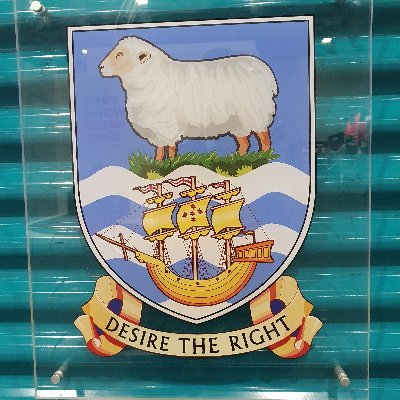
Commander Nigel "Sharkey" MacCartan-Ward was a @RoyalNavy officer who commanded 801 Naval Air Squadron in the Falklands War. Sharkey sadly died in 2024. Through Sam, his family agreed for this wonderful portrait of Sharkey to be donated to the Falkland Islands. Thank you!

8
28
246
8,936
Jimmy UK Veteran ⬅️🟩🇬🇧 retweeted

He had already escaped the burning aircraft. He could have kept running. Instead, he turned back to save a man who could not escape.
On 16 March 1944, 20-year-old RAF trainee navigator Bill Foxley was aboard a Wellington bomber that crashed shortly after take-off from Castle t out alive.
Then he heard a fellow crewman trapped inside the burning aircraft.
Without hesitation, he went back.
The flames had turned the bomber into an inferno. Bill reached his wireless operator and tried to pull him to safety. But as he escaped through the astrodome, the fire caught him. His crewmate did not survive.
Bill did, but the cost was devastating.
The fire destroyed much of his face and hands. He lost his right eye, and his remaining sight was severely damaged. At Queen Victoria Hospital in East Grinstead, surgeon Sir Archibald McIndoe and his team performed 29 operations over three and a half years, working painstakingly to repair the injuries that had changed Bill's life forever.
Yet some wounds could not be seen.
For years, strangers stared at his scars. On trains between Crawley and London, passengers sometimes approached the empty seat beside him, noticed his face and quietly moved away.
Imagine surviving a burning aircraft, enduring years of surgery, only to face another kind of pain in everyday life: being treated as though your appearance made you someone to fear.
Bill refused to let bitterness define him.
When people recoiled from his scars, he sometimes reassured them with a gentle sense of humour:
“It's all right. I'm not going to bite you.”
Even after everything he had endured, he could still offer kindness to people who did not know how to respond to him.
He returned to work, built a successful career as a facilities manager and continued running long distances well into his seventies. He also appeared in the 1969 film Battle of Britain, helping bring the experiences of badly burned airmen closer to public understanding.
But it was what he did for others that made his life especially remarkable.
As a member of the Guinea Pig Club, Bill supported fellow survivors whose lives had been transformed by devastating burns. His commitment extended to helping wounded servicemen and disabled people find opportunities to rebuild their lives.
Think about that for a moment.
The young airman who had once risked everything to save a trapped comrade spent decades helping others discover that life could still hold purpose, dignity and hope after unimaginable suffering.
He could not change that terrible night in 1944. He could not bring his crewmate back or erase the injuries he had carried for the rest of his life.
But he could decide what those injuries would mean.
Bill Foxley chose courage over bitterness, compassion over resentment and service over surrender.
His scars told the story of what he had survived. His actions told the story of who he was.
First, he walked back into the flames for another man.
Then, for the rest of his life, he helped others find their way forward.
Bill Foxley was far more than a survivor. He was a reminder that the truest measure of courage is not simply how much a person can endure, but how much kindness they can still give afterwards.
May his courage, his compassion and his extraordinary service never be forgotten.
Lest we forget.

83
575
2,834
35,665
Jimmy UK Veteran ⬅️🟩🇬🇧 retweeted

Evening from Lugabaruga,
I decided to put in an extra shift for the Poppy Appeal and it was a pleasure and a privilege to have a next generation veteran join me. Jonny Ball (no, not that one) a National voice for Veterans and more across the piste acted as my carer.
Respect 🫡👍
I decided to put in an extra shift for the Poppy Appeal and it was a pleasure and a privilege to have a next generation veteran join me. Jonny Ball (no, not that one) a National voice for Veterans and more across the piste acted as my carer.
Respect 🫡👍

12
11
118
2,925