
Pinned Tweet

Utilities are rushing to add supply for an unprecedented wave of new large loads. Many now let large customers bring their own capacity, so new load connects sooner and existing customers are protected from rate impacts. Bring-your-own-capacity (BYOC) rules have rapidly gone from now the fastest path to reliable grid power.
Firma Power is the Bring Your Own Capacity company. We're the first company purpose-built to the deliver portfolios of clean, quiet, load-enabling power over the wires to meet utility BYOC requirements and get data centers connected faster, simpler and cheaper than alternatives like behind-the-meter gas.
And this week, we're featured in @FastCompany , in an excellent profile written by @adele_peters:
"The U.S. is on track to add a record 86 gigawatts of new wind, solar, and battery storage capacity this year—roughly the size of the U.K.’s entire grid. And there’s far more clean energy in the pipeline, with low-cost proposed projects that could help meet the surging demand from data centers. So why are data centers increasingly turning to polluting gas plants instead of clean energy?
A startup called Firma Power says that the issue isn’t cost, speed, or reliability, but the difficulty of assembling enough clean energy from a patchwork of projects—a problem that it is trying to solve.
Securing enough reliable, clean electricity for a massive new data center is complex. But Firma’s software calculates what a proposed data center needs, and then automatically searches through proposed clean energy projects to suggest a portfolio that could support it. An analysis that might otherwise take a team months can now take minutes. Firma then does the hard work of pulling all of the clean energy projects together, and data center developers can sign a single contract.
The company says that the process can get data centers power faster than building new gas-fired power plants—and it can compete on cost. And at a time when Americans really don’t like data centers, using clean power could make it more feasible for some projects to be greenlit by communities."

27
16
79
8,531
Jesse D. Jenkins retweeted

SCOOP: The Trump administration is approving 3 more wind projects (2 in Illinois and 1 in Iowa) stalled by the Pentagon in a bid to win Dem support for the bipartisan permitting reform bill. It’s the 2nd tranche of ongoing approvals. Text subscribers got it first!

11
49
162
50,366
Some hot heat pumps here! @Princeton's large ground source heat pump building (with two integrated thermal energy storage tanks provide hours of demand flexibility visible at left). Clean, quiet, extremely efficient and looks nice in the glorious fall light.

4
7
68
3,963
Behind the meter gas power has become a common path for data centers to get power faster. But it turns out operating a city-scale utility is no joke (turbine shafts breaking, low uptimes). It's hell for social licenes (if you think communities hate data centers, try data centers with 40 jet engines running non-stop!). And it leaves these facilities quite exposed to future gas price risk, as Aniruddh illustrates below.
Interesting sections on energy in Anthropic's S1 filing!
There's been speculation on how data centers are managing fuel price risk from gas offtake, whether off-grid data centers will happen at scale
- 'an increasing share of data centers being developed with dedicated onsite of the grid'
- ANT exposed to fuel price volatility as they bear cost on a pass-through basis, no cap on fuel costs
- Lack of firm gas supply can delay facilities
- For grid connected assets, ANT discusses 'investing in curtailment systems' to reduce strain during peak periods
- Cooling needs may increase over time for data centers due to changing climate
- Notes risk that utilities may reallocate capacity required by ANT data centers


30
51
240
27,279
Energy dominance eh?
Turns out, you can't drill your way to energy security, as I wrote in 2022 when we were in the midst of the LAST global oil & gas supply disruption... nytimes.com/2022/05/14/opi…
Turns out, you can't drill your way to energy security, as I wrote in 2022 when we were in the midst of the LAST global oil & gas supply disruption... nytimes.com/2022/05/14/opi…
New from me: The US has faced a higher cost than any other country from the global Hormuz oil shock, with the crisis adding $160 billion to its fuel bill — or $471 per person on average — despite being the world’s largest oil producer.


3
24
81
6,523
Sim City. But realistic. And terrible...
Somebody (not me this time) vibedcoded a realistic US citybuilder where every proposed project and rezoning near others is subject to endless appeals, studies, and modifications, project denials are common, and the only easy growth is on the urban fringe.
permit.petercai.com/play/


2
8
52
6,084
Jesse D. Jenkins retweeted
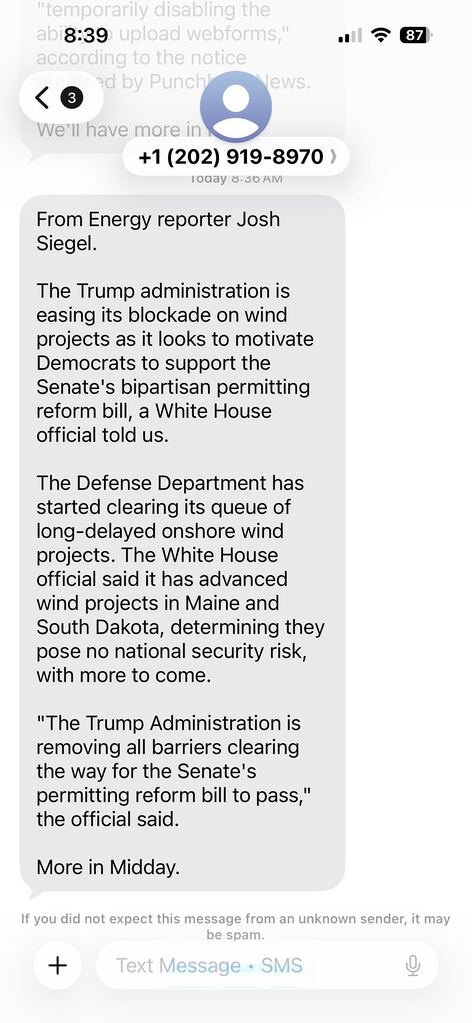
SCOOP: The Trump admin is easing its blockade on wind projects as it looks to motivate Democrats to support the Senate’s bipartisan permitting reform bill. A White House official told me DOD has advanced 2 projects in Maine & SD with more to come. Text subscribers got it 1st!
6
55
197
103,556
Jesse D. Jenkins retweeted

Very big deal in nuclear: @TheNuclearCo just unveiled plans to build 6.6 gigawatts of reactors at one site in Kentucky, with plans to break ground in 2028.
I talked to @TheNuclearJoe about the project and why, in an era where much of the industry is focused on newfangled d strategies, his company is following the model that's working so well in China.
I talked to @TheNuclearJoe about the project and why, in an era where much of the industry is focused on newfangled d strategies, his company is following the model that's working so well in China.

7
18
101
9,476
Jesse D. Jenkins retweeted

New from me and @ColumbiaUEnergy on permitting reform timelines
I wanted to understand how BAAJA could affect the time spent on permitting/construction for different energy projects compared to the status quo
Can this bill help with timelines? Potentially a lot!
A Deep dive👇
I wanted to understand how BAAJA could affect the time spent on permitting/construction for different energy projects compared to the status quo
Can this bill help with timelines? Potentially a lot!
A Deep dive👇

3
30
80
8,373
Jesse D. Jenkins retweeted

Major auto markets are overtaking and catching up to the US in battery electric car adoption 📈🇺🇸
🇮🇳 now surpasses the US in every month since Apr 2026
🇧🇷’s BEV shares reached nearly 10% as of Aug 2026
🇯🇵’s BEV sales is now close to the US share
ember-energy.org/latest-insight…
🇮🇳 now surpasses the US in every month since Apr 2026
🇧🇷’s BEV shares reached nearly 10% as of Aug 2026
🇯🇵’s BEV sales is now close to the US share
ember-energy.org/latest-insight…

5
33
112
4,951
Trump says data centers should pay host communities a dividend.
(He's right!)
reuters.com/business/retai…
(He's right!)
reuters.com/business/retai…
11
2
34
3,424
Jesse D. Jenkins retweeted
Scoop: Clean energy trades @CEBAPower, @ACORE, @AdvEnergyUnited, @USCleanPower, & @SEIA are formally endorsing the Senate's bipartisan permitting reform bill in a joint letter to congressional leaders punchbowl.news/baaja-joint-tr…
4
48
142
24,642
NIPSCO IRP says gas combined cycles (CCGTs) are $3500/kW with a Q1 2034 COD and combustion turbines (CTs) are $3000-4400/kW with Q2 2030 COD.
x.com/Ben_Inskeep/st…
This is why we built Firma Power: to offer a cleaner, cheaper, faster route to power for data centers. Find out more at FirmaPower.com or read profile on @FastCompany fastcompany.com/91623731/this-…
x.com/Ben_Inskeep/st…
This is why we built Firma Power: to offer a cleaner, cheaper, faster route to power for data centers. Find out more at FirmaPower.com or read profile on @FastCompany fastcompany.com/91623731/this-…
The costs of building a new natural gas combined cycle plant in Indiana have TRIPLED over 3 years, going from $1,225/kW in 2024 to $3,500/kW today, according to NIPSCO's IRP modeling in its 2024 vs. 2027 IRPs.
The data center demand shock is resulting in soaring prices 📈

10
5
46
4,285
Jesse D. Jenkins retweeted
The costs of building a new natural gas combined cycle plant in Indiana have TRIPLED over 3 years, going from $1,225/kW in 2024 to $3,500/kW today, according to NIPSCO's IRP modeling in its 2024 vs. 2027 IRPs.
The data center demand shock is resulting in soaring prices 📈
The data center demand shock is resulting in soaring prices 📈


3
29
78
12,493
Read the full Fast Company story here fastcompany.com/91623731/this-…
And learn more about how Firma Power works or contact us at firmapower.com
And learn more about how Firma Power works or contact us at firmapower.com
1
1
4
1,264
You can also check out our new explainer video series here firmapower.com/firmaos/how-it…
0
1
2
891
Jesse D. Jenkins retweeted

For all the talk about BTM natural gas generation at data centers, I've seen very little talk about the impact on natural gas supply, prices, and pipelines. So here's a deep dive on @CatalystPod.
Hint: it's really a large load + LNG story
Hint: it's really a large load + LNG story
3
8
44
4,617
Jesse D. Jenkins retweeted

CoreWeave CEO on loan and debt:
"What we do is we go out and we find a client. Let’s use Microsoft; you brought them up before. Microsoft comes to us and says, “We’d like to buy some compute from you.” And we say, “Okay, great. We’re going to sign a contract.” Once I have a contract in hand, I create something. It’s not a particularly creative name. It’s called the box.
And what I do with the box is I take my contract with Microsoft and I put it in the box. I go to Jensen and buy the GPUs, I put them in the box. I take my data center contract, I put it in the box. And now the box governs cash flow. It has a waterfall of cash flow that comes into it and goes out of it. So the way it works is I build the compute, I deliver the compute to Microsoft, and they pay the box. They don’t pay me. It goes into the box, and the first thing it does is pay the data center. It pays the power bill. It pays the interest and the principal. And then whatever’s left flows back to us.
So it is an incredibly well-structured, time-tested, pressure-tested vehicle to be able to borrow money against client paper and all of the other collateral around the deal. That’s why CoreWeave, a company many people had never heard of, was able to go out and raise $35 billion in 18 months to build infrastructure at scale. But what’s important to understand is the economics in this box are such that within 2.5 years of a 5-year deal, we have paid for everything."
Talked to Michael from Coreweave about debt six months ago:
18:18–23:43: Jason asks about CoreWeave’s debt; Michael answers (cleaned of filler words and stutters, otherwise as spoken)
JASON: How does all that debt work? That is something you guys specialize in. Corporate debt… I’m in the venture business, people are like, “Why should I be in venture when corporate debt pays so well?” Corporate paper’s so huge. I’m curious how this fits in, and what interest rate people are paying on, you know, a billion dollars in infrastructure. What do they pay on that?
MICHAEL: So CoreWeave has really been the innovator around a lot of the financing engines that have come to bear on this. We did the first GPU-based loans. I’m going to try to explain this in a way people can understand. What we do is we go out and we find a client. Let’s use Microsoft; you brought them up before. Microsoft comes to us and says, “We’d like to buy some compute from you.” And we say, “Okay, great. We’re going to sign a contract.” Once I have a contract in hand, I create something. It’s not a particularly creative name. It’s called the box.
JASON: Yeah.
MICHAEL: And what I do with the box is I take my contract with Microsoft and I put it in the box. I go to Jensen and buy the GPUs, I put them in the box. I take my data center contract, I put it in the box. And now the box governs cash flow. It has a waterfall of cash flow that comes into it and goes out of it. So the way it works is I build the compute, I deliver the compute to Microsoft, and they pay the box. They don’t pay me. It goes into the box, and the first thing it does is pay the data center. It pays the power bill. It pays the interest and the principal. And then whatever’s left flows back to us.
So it is an incredibly well-structured, time-tested, pressure-tested vehicle to be able to borrow money against client paper and all of the other collateral around the deal. That’s why CoreWeave, a company many people had never heard of, was able to go out and raise $35 billion in 18 months to build infrastructure at scale. But what’s important to understand is the economics in this box are such that within 2.5 years of a 5-year deal, we have paid for everything.
JASON: The principal’s been paid off.
MICHAEL: The principal’s been paid off, the interest has been paid off. The return into the box is such that we’re able to generate returns to our company at the box level, which gives the most sophisticated lenders in the world, whether banks or private equity funds or whoever, confidence that they’re going to achieve the one rule of lending, which is “give me my money back.”
JASON: Yes. Works better when that happens. So they look at this box and they’re like, “Wow, we’re really confident we’re going to get our money back.” And maybe they want 10 boxes.
MICHAEL: That’s correct.
JASON: And if any one box goes upside down, you can deal with it and it’s not as acute.
MICHAEL: That’s correct. And they don’t cross-pollinate. They don’t cause contagion across the boxes. They’re all independent and discrete. That’s one. Number two: as you do this and show the lenders how this financing mechanism works, they continue to lend you money at progressively lower rates. When you think about our cost of capital over the last two years, we have dropped it by 600 basis points.
JASON: Wow.
MICHAEL: It is enormous. So you’re seeing a company driving its cost of capital down toward where the hyperscalers borrow, which will let us be competitive with them over time. And we have been extremely militant and diligent about feeding, watering and caring for those boxes, so we continue to have access to the capital markets in a way that lets us build and drive our business.
JASON: That means you have to say no to maybe some people who want to be in the box.
MICHAEL: Yeah. We look at some deals where they want to buy GPUs for a year, and I say that’s not a deal I can do, because it’s too short for me to amortize the expenses. So I won’t do that.
JASON: And they can go to another provider who maybe wants to take that risk on, who has extra capacity.
MICHAEL: Absolutely. But our business is really built around the risk management of getting to scale. In my mind, during this period of disequilibrium, when there aren’t enough GPUs in the world to provide compute for all the different use cases in AI, what matters for my company is to get enormously large. That drives down our cost of capital, and it means information flows in from all different parts of the market: large language models, high-speed trading, search, all of these things. They feed information back to us that tells us the next product we need to build, where they need help scaling, or what type of compute they need. All of that information flow is incredibly valuable to us.
(Jason moves on to demand at 23:43.)
$CRWV youtu.be/-JBhTBu9ZbA?t=…

40
52
572
96,005
Jesse D. Jenkins retweeted

The whole world is going electric and we are way behind.

In September, China's combustion vehicle (ICE) sales dropped to just a third of the market for the first time
Battery electric vehicles are getting close to half of the market (47.3%), while Plug-ins added another 19.7%.
Only 5 years from >90% to 33% ICE.


187
283
2,178
470,521