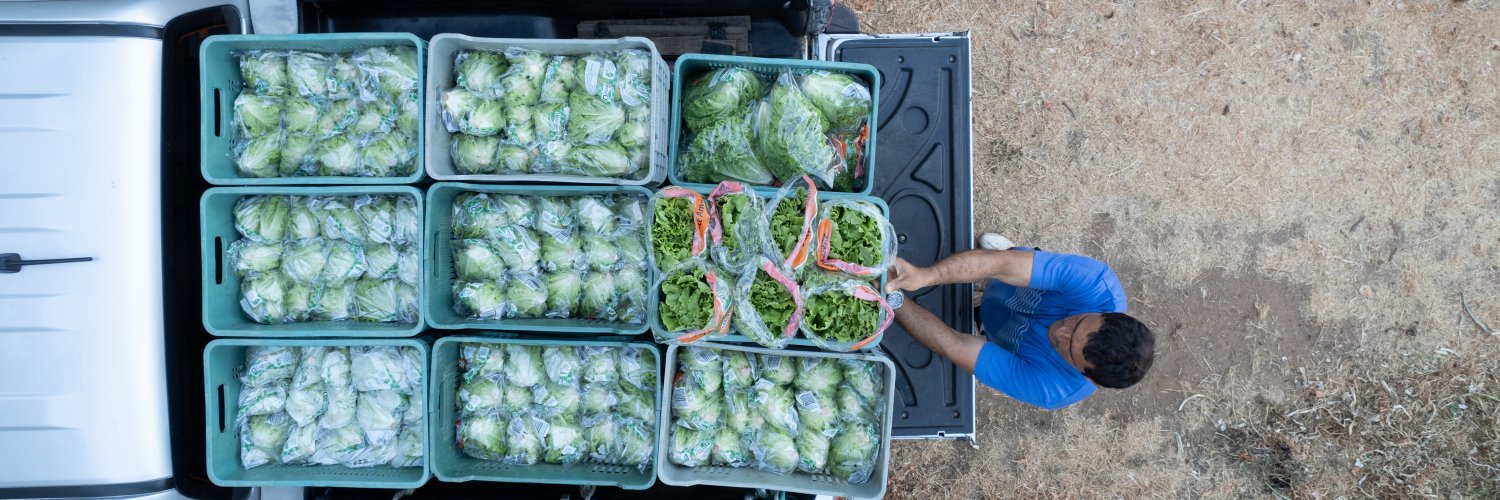

As world leaders gather today at #COP31, IFAD has three messages for how to build more climate-resilient food systems:
1. Build resilience across the whole food system. Investments in agricultural inputs must be made alongside strengthening markets, insurance and access to e investments protect nearly twice as much farm income during a bad year as finance alone
2. Close the climate finance gap for small-scale farmers. They produce around one third of the world’s food yet receive less than 1 per cent of global climate finance. Public finance must take on the risks that hold investors back to mobilize more private capital into rural communities before climate shocks hit
3. Turn healthy soils into healthy meals. The UN’s Rome-based Agencies bring different pieces of the solution: @FAO works with countries on agricultural policies and standards; IFAD invests in farmers, farmers’ organizations and the food producers that supply schools; and @WFP works with governments on national school meal programmes. Together, we can create reliable markets for farmers while bringing more nutritious food to children
“Resilience depends on bringing the whole system together: what farmers produce, where they sell it and how they finance it. Public investment can reduce risk and draw in private capital, while partnerships across the Rome-based Agencies can connect healthier soils, stronger rural economies and healthier meals for children” Pieternel Boogaard, Head of IFAD’s COP31 delegation
Learn more about IFAD at COP 31: ifad.org/en/w/events/if…
@turkiyecop31 |#FinancingTheFirstMile | #COP31Türkiye | #COP31Antalya


3
4
17
1,071
International Fund for Agricultural Development retweeted
At the @ParisPeaceForum today, I opened the high-level roundtable “Beyond the Plate: Unlocking Investment in Resilient School Meals Value Chains”, co-hosted by France and @RockefellerFdn, in partnership with the @SchoolMeals_ .
We discussed how the predictable demand from investment across farms, supply chains and finance, benefiting children, farmers and rural communities.
School meals do more than nourish children. They can help transform the rural economies that supply their food. In 2024, school meal programmes reached at least 466 million children worldwide, supported by an estimated US$84 billion in investment, 99% financed through national budgets. This purchasing power represents an enormous opportunity to connect small-scale farmers with reliable markets.
But demand alone is not enough. Farmers need finance, climate-resilient production, storage, processing and infrastructure to supply nutritious food consistently. This is where @IFAD invests, strengthening local food systems at the first mile and mobilising partnerships that connect producers to markets.
I welcome the Call to Action's emphasis on country-led investment, resilient local food supply chains and stronger coordination among financing partners. The priority now is to turn these ambitions into concrete, investable opportunities that improve nutrition, create rural jobs and strengthen resilience. Investing beyond the plate starts with financing the first mile.
@CaroitEleonore @WFP @WorldBankGroup @AFD_en @the_IDB @AKF_Global @Enabel_Belgium @GPforEducation @CIFFchild @SF4Nutrition @nopovertyhunger @EU_Commission @francediplo_EN @Itamaraty_EN @ItamaratyGovBr @AmbFinlandePAR @TZWaziriMkuu @mfa_tanzania
#FinancingTheFirstMile #SchoolMeals #PPF2026 #ChildSummit


0
4
16
662
Investable pipelines enable scale, reduce transaction costs and help unlock the private capital needed to drive rural economic transformation.
This approach is at the centre of "Rural Supply Chains Under Stress: Integrating Food Systems Through a Bundled Approach", launched by stry of Agriculture and Forestry at #COP31.
In #Egypt, the Nexus of Water, Food and Energy (NWFE) platform brings together partners across agriculture, water and energy through a coordinated investment pipeline worth more than US$2 billion.
The report shows that, under compounding shocks, bundled investments in inputs, markets and finance can prevent nearly twice as much farm income loss as the strongest standalone intervention.
As shocks become more interconnected, so should our solutions. With El Niño's potential cost to the global economy estimated at US$11 trillion, bundled investments offer a pathway to transform resilience into a scalable investment opportunity.
Read more at ifad.org/en/w/news/cop3…
@turkiyecop31| @TCTarim | @MFATurkiye | #FinancingTheFirstMile | #COP31Türkiye | #COP31Antalya
3
12
19
1,086
El Niño’s potential US$11 trillion cost to the global economy underscores the growing pressures on food systems from interconnected challenges, including rising fertilizer and energy costs.
Launched at #COP31 by IFAD and Türkiye’s Ministry of Agriculture and Forestry, "Rural ess: Integrating Food Systems Through a Bundled Approach" examines how coordinated investments in agricultural inputs, finance and markets can strengthen rural resilience to #ElNiño and other overlapping shocks.
Strengthening the links between production, finance and markets can help rural households absorb shocks, sustain their livelihoods and continue contributing to economic growth.
The findings demonstrate the value of this approach: climate shocks can cause farm-level income losses of up to 62%. Bundled interventions reduced these losses by 18.7%, compared with 9.8% for the most effective standalone intervention.
Read more at ifad.org/en/w/news/cop3…
@turkiyecop31 | @TCTarim | @MFATurkiye | #FinancingTheFirstMile | #COP31Türkiye | #COP31Antalya


0
8
15
1,022
When risks overlap and reinforce one another, investments must be equally integrated to deliver lasting rural resilience.
At #COP31, IFAD and Turkiye's Ministry of Agriculture and Forestry launched "Rural Supply Chains Under Stress: Integrating Food Systems Through a Bundled eport warning of the potential trillion-dollar economic cost of El Niño and highlighting the unique strength of bundled interventions.
By combining interventions across inputs, markets and finance, the impact on income loss can be nearly doubled compared to the strongest standalone intervention. Across IFAD-supported projects, bundled approaches have delivered measurable results.
Read the full report at ifad.org/en/w/news/cop3…
@turkiyecop31 | @TCTarim | @MFATurkiye | #FinancingTheFirstMile | #COP31Türkiye | #COP31Antalya
1
8
15
1,082
International Fund for Agricultural Development retweeted
Yesterday at #COP31, I launched @IFAD's first US$70 million Climate Adaptation Bond, privately placed with Japan's Zenkyoren. This first-of-its-kind global bond focused on rural communities opens a new channel for institutional capital to support rural development worldwide, with ts core.
Closing the climate adaptation gap of US$305 billion annually for developing countries by 2035 requires new approaches to mobilizing finance at scale, with public resources playing a catalytic role in attracting private capital.
The launch, co-hosted with @TheOPECFund, brought together leaders from development finance, philanthropy and investment sector to explore how capital markets, multilateral financing and catalytic resources can work together to scale adaptation finance and deliver measurable results. I thank Zenkyoren for its confidence and partnership.
With an AA+ credit rating and over US$1 billion in sustainable bonds issued since 2022, IFAD is demonstrating how international financial institutions can connect capital markets with rural development.
I also met with Mikko Ollikainen, Head of the @adaptationfund, to discuss strengthening our longstanding partnership, advancing locally led adaptation and exploring how grants, concessional finance and innovative financial instruments can complement each other.
Mobilizing capital is only the beginning. The real measure of success is whether investment reaches the first mile, strengthens rural economies and delivers lasting resilience.
Read the full press release: ifad.org/en/w/news/ifad…
@EIB | @the_IDB | @RockefellerFdn | @BSTDB @BritishIntInv | @turkiyecop31 | #FinancingTheFirstMile | #COP31Türkiye | #COP31Antalya


2
6
14
678
Through its sustainable bond programme, IFAD is mobilizing private capital to support climate resilience and sustainable rural development. A recent US$70 million climate adaptation bond, privately placed with Japanese agricultural cooperative insurer Zenkyoren and announced at ce IFAD’s rural development projects worldwide, supporting small-scale farmers as they adapt to climate change.
The bond builds on IFAD’s longstanding experience in rural climate adaptation, including through its Adaptation for Smallholder Agriculture Programme (ASAP), which has mobilized US$429 million since its launch in 2012 and catalyzed eight times that amount in additional resources.
By opening new channels for private investment, IFAD’s adaptation bond programme is helping expand the financing available for rural resilience and demonstrate the potential of capital markets to support climate adaptation in agriculture.
Read more at ifad.org/en/w/news/ifad…
@turkiyecop31 | #FinancingTheFirstMile | #COP31Türkiye | #COP31Antalya


1
10
22
1,851
International Fund for Agricultural Development retweeted
Today at #COP31 in Antalya, I joined Türkiye's Minister of Agriculture and Forestry, @ibrahimyumakli, to launch two new reports examining how to strengthen rural resilience and close critical financing gaps:
• Food Systems Under Stress: Building Resilience from the First Mile vestments in agricultural inputs, markets and finance can reduce farmers' income losses from overlapping shocks by over 18%
• The Unfunded Half: Financing Rural Women's Resilience makes the investment case for using climate finance instruments such as adaptation bonds, guarantees and insurance to address the financing gap of rural women and strengthen their resilience.
The reports draw on @IFAD evidence from across our portfolio and build on results achieved under the IFAD-Türkiye partnership. Since 1982, we have jointly invested in strengthening agricultural productivity, natural resource management, market access and climate resilience, particularly in underserved rural communities where we have reach more than 1.3 million rural households.
Building on this foundation, we discussed expanding cooperation through Türkiye's agricultural expertise and regional knowledge exchange. I also expressed appreciation for Türkiye's continued support across IFAD replenishments. As we advance #IFAD14, our priorities of markets, jobs and resilience, supported by innovation and private sector engagement, provide further opportunities to deepen this partnership.
My thanks to Minister Yumaklı, the Government of Türkiye and the COP31 Presidency Office TÜRKİYE for their leadership and collaboration.
#FinancingTheFirstMile | #COP31Türkiye | #COP31Antalya | @turkiyecop31 | @TCTarim


0
6
12
596
At #COP31, IFAD and the Ministry of Agriculture and Forestry of Türkiye launched a new report highlighting the need to scale up climate finance for rural women, who play a central role in food production, natural resource management and rural economies, yet continue to face accessing finance.
Women make up about four in ten farm workers worldwide but have less access to land and agricultural inputs and earn 82 cents for every dollar earned by men in farm wage work.
While lenders tend to see women as costly to serve, the report, “The Unfunded Half – Financing Rural Women’s Resilience: From the Bond Market to the Farm”, describes them as “the investable half,” pointing to evidence that they are reliable borrowers who, with sufficient finance, can help their farms and families adapt to a changing climate.
The report reveals that while 80% of all international public climate finance for agrifood systems takes gender equality into account in some way, only 3%, or US$855 million a year, has gender equality as its main objective.
“When women's economic empowerment is the main objective of climate finance, investments can be structured around barriers that disproportionately affect women farmers. That could mean credit that does not require a land title, insurance distributed through women's groups, or financial support that allows women to invest in equipment and productive assets they control,” said @IFADPresident Alvaro Lario.
Read more at ifad.org/en/w/news/new-…
@turkiyecop31 | @TCTarim | @MFATurkiye | #FinancingTheFirstMile | #COP31Türkiye | #COP31Antalya

0
9
19
1,154
International Fund for Agricultural Development retweeted

#CANLI 📡
Bakanımız Sayın @ibrahimyumakli, IFAD Baskı Altındaki Kırsal Tedarik Zincirleri Raporu Tanıtımında hitaplarını gerçekleştiriyor.
📍 #COP31 | Antalya x.com/i/broadcasts/2…
Bakanımız Sayın @ibrahimyumakli, IFAD Baskı Altındaki Kırsal Tedarik Zincirleri Raporu Tanıtımında hitaplarını gerçekleştiriyor.
📍 #COP31 | Antalya x.com/i/broadcasts/2…
105
92
213
8,350
International Fund for Agricultural Development retweeted
I have arrived in Antalya for #COP31 with a clear message that climate adaptation is not a development cost but an investment in economic resilience and stability.
New @IFAD analysis warns that #ElNiño could cost the global economy an estimated US$11 trillion, underscoring the resilience before crises strike.
Evidence from our portfolio shows that combining investments in agricultural inputs, market access and finance can reduce farmers' income losses from overlapping shocks by more than 18%, nearly twice the protection provided by finance-focused interventions alone.
At COP31, IFAD is putting this approach into practice through a first-of-its-kind US$70 million climate adaptation bond, privately placed with Japan's Zenkyoren, to finance rural development globally, with adaptation at its core.
Scaling these efforts requires stronger partnerships between governments, multilateral development banks and private investors to mobilize capital, reduce risks and deliver measurable results for small-scale producers who grow one third of the world's food.
#FinancingTheFirstMile | #COP31Türkiye | #COP31Antalya | @turkiyecop31
1
5
23
833
El Niño could cost the global economy up to US$11 trillion, with significant and long-lasting consequences for food security and rural livelihoods, according to a new report released today at #COP31 by IFAD and Türkiye’s Ministry of Agriculture and Forestry.
The report, "Food uilding Resilience from the First Mile", highlights how overlapping climate and economic shocks, from droughts to rising energy and fertilizer costs, are putting increased pressure on the small-scale farmers who produce a third of the world’s food.
“This report makes an important argument based on evidence from our IFAD investments: resilience is not built by investing in single interventions, but by connecting investments in inputs, markets and finance so that gains in one area are not lost in another,” said @IFADPresident.
Evidence from IFAD’s investment portfolio shows that when these interventions are combined, the results are significantly stronger. When drought and price shocks occur simultaneously, finance-focused interventions can reduce farm income losses by 9.8%, while bundled investments across inputs, markets and finance can reduce losses by 18.7% – nearly twice as much.
"Preparedness means acting before a crisis strikes. Farmers' resilience is determined by the steps taken beforehand: access to water, affordable inputs, finance and insurance and reliable links to markets. When these elements move together, food producers stand far stronger in the face of shocks," said @ibrahimyumakli, Minister of Agriculture and Forestry of the Republic of Türkiye.
Experiences across Kenya, Bangladesh and Türkiye demonstrate the impact of this approach. From drought insurance and improved market access to solar-powered irrigation, credit and better storage facilities, integrated investments have helped farmers strengthen resilience and increase households’ incomes by up to 50%.
Read more at ifad.org/en/w/news/cop3…
@turkiyecop31 | @TCTarim | @MFATurkiye | #FinancingTheFirstMile | #COP31Türkiye | #COP31Antalya

0
4
14
1,299
IFAD has announced a US$70 million climate adaptation bond privately placed with Japanese agricultural cooperative insurer Zenkyoren, marking the first global adaptation bond focused on rural communities.
Announced at #COP31, the bond opens a channel for private capital to mers' adaptation to climate change.
Proceeds of the note, issued under IFAD's Sustainable Development Finance Framework, will help finance IFAD’s rural development projects worldwide, supporting climate adaptation for small-scale farmers and more resilient rural economies.
The transaction comes against a wide adaptation financing gap. Developing countries will need US$305 billion annually by 2035, while international public adaptation finance reached just US$28.2–31.7 billion in 2024.
“We trust this milestone will catalyze a broader market for adaptation bonds, particularly in agriculture. Scaling the market requires investor confidence that capital delivers measurable impact,” said Alvaro Lario, @IFADPresident.
With an AA+ rating, IFAD is the only United Nations fund authorized to issue sustainable bonds on capital markets. Since 2022, it has issued over US$1 billion in sustainable bonds.
Read more at ifad.org/en/w/news/ifad…
@turkiyecop31 | #FinancingTheFirstMile | #COP31Türkiye | #COP31Antalya

2
5
19
1,275
At #COP31, IFAD will highlight its work to advance climate adaptation and strengthen resilience in the face of growing climate and economic challenges.
Through new partnerships, investments and knowledge products, we will showcase approaches to mobilizing finance, supporting romoting more resilient food systems.
Together with partners, IFAD will also contribute new insights on the economic impacts of climate shocks, the importance of long-term resilience in rural areas, and the need for greater investment in rural women.
In addition, IFAD will convene discussions on the role of partnerships in building resilient food systems in a changing climate.
Learn more about IFAD at COP31 at ifad.org/en/w/events/if…
@turkiyecop31 | @TCTarim | @MFATurkiye | @CanadaDev | #FinancingTheFirstMile | #COP31Türkiye | #COP31Antalya

4
13
40
1,854
International Fund for Agricultural Development retweeted
In 2026, small-scale farmers have faced a convergence of severe droughts and other climate extremes alongside energy and fertilizer price shocks, threatening harvests and increasing the risks of higher food prices and food insecurity.
Strengthening partnerships and scaling al to @IFAD’s efforts to build resilience and accelerate rural transformation. Our new co-financing framework agreement with @WorldBankGroup, IFAD’s largest multilateral development bank partner, builds on longstanding collaboration across financing, policy engagement and global initiatives.
The agreement will help scale joint investments, combining global financing capacity and reach with IFAD’s expertise at the first mile. It builds on initiatives including #AgriConnect, which aims to help transform agriculture for 300 million smallholder farmers by 2030, and #WaterForward, which seeks to improve water security for up to 1 billion people by 2030.
As we approach #COP31, we must recognize adaptation as an investment, not a cost.
With developing countries needing an estimated US$305 billion annually for adaptation by 2035, stronger partnerships and mobilizing public and private capital are essential to building resilience at the first mile, before shocks strike.
To learn more about the co-financing agreement: ifad.org/en/w/news/worl…
#FinancingTheFirstMile | #COP31Türkiye | #COP31Antalya | @turkiyecop31


0
3
10
550
Ahead of #COP31, IFAD looks at how investing in resilient rural economies can strengthen climate adaptation, protect development gains and sustain economic opportunities in the face of climate shocks, rising input costs and market volatility.
IFAD invests in the environmental f rural systems, expanding access to finance, markets, infrastructure and inputs that support productivity, income growth and rural people’s capacity to withstand climate shocks.
More than half of IFAD project participants live in fragile or conflict-affected situations or areas exposed to climate extremes. According to recent impact assessments, IFAD-supported investments in these contexts have delivered average income and production gains of around 30%.
These findings underscore why investing in rural resilience before climate shocks occur is essential to COP31’s agenda: it addresses immediate vulnerabilities while protecting the foundations of long-term development.
Read more about IFAD at COP31 at ifad.org/en/w/events/if…
@turkiyecop31 | #FinancingTheFirstMile | #COP31Türkiye | #COP31Antalya
1
11
22
1,526
Globally, every dollar invested in improving nutrition is estimated to generate US$23 in economic returns. The cost of inaction could reach US$41 trillion over the next decade.
Like other small island developing states (SIDS), São Tomé and Príncipe remains heavily dependent on g it to external shocks and limiting opportunities for rural producers. Strengthening local food production and value chains, alongside targeted nutrition interventions, can help address these challenges.
The IFAD-supported Commercialization, Agricultural Productivity and Nutrition Project (COMPRAN) demonstrates the value of nutrition-sensitive investments.
By pairing support for local production with greater nutrition knowledge, the project helped translate increased food availability into healthier diets. COMPRAN-supported small-scale poultry farmers now supply eggs to schools through the National School Feeding Programme, improving access to nutritious local foods while creating reliable demand for rural producers.
COMPRAN highlights how integrating nutrition into agricultural investments can improve diets, strengthen local markets and support long-term economic and social resilience.
Read more at ifad.org/en/w/rural-voi…
#FinancingTheFirstMile

1
11
29
1,546
International Fund for Agricultural Development retweeted
When we talk about agricultural finance, the focus is often on large agribusinesses and commodity exports. But how do we ensure small-scale producers can participate in these markets and benefit from the opportunities they create?
At the @FT Africa Summit, I highlighted why nd production. Cold storage, access to markets, and stronger producer organizations and cooperatives are essential to helping producers aggregate their products, connect with buyers and access working capital.
This is where @IFAD plays a critical role, investing in remote rural areas where economic opportunities and access to finance are often limited. The challenge is not simply to attract more capital, but to create the conditions for investment to reach the first mile, connecting small-scale producers to larger markets and enabling them to capture more value.
#FinancingTheFirstMile #FTAfrica @ftlive
0
3
14
627
The Government of #Egypt and IFAD signed two agreements yesterday to help small-scale farmers improve water management, increase their incomes and adapt to climate change, while strengthening Egypt’s role in sharing agricultural expertise across Africa and the Middle East.
The imate-Resilient On-Farm Water Management in the Nile Valley (CROWN) project, supported by US$64.85 million in IFAD financing, and the Positioning Egypt for Agricultural Resilience and Leadership (PEARL) project, backed by a US$470,000 grant.
By combining modern irrigation and drainage infrastructure with climate-smart farming, stronger farmers’ organizations and improved access to markets and finance, CROWN will support around 90,000 rural households and improve water management across 12,600 hectares.
PEARL complements these investments by strengthening Egypt’s capacity for agricultural innovation and South–South and Triangular Cooperation.
The project is expected to benefit 2,000 people. Through regional knowledge exchange and policy dialogue, it will enable Egypt to share its expertise while adapting relevant experiences from other countries in Africa and the Middle East.
Read more at ifad.org/en/w/news/egyp…
#FinancingTheFirstMile

1
6
14
1,373